Human Skeleton

Human Skeleton

WELCOME TO STRONTIUM FOR BONES BLOG

Have you experienced negative, and even dangerous, side effects from Fosamax (alendronate), Boniva (ibandronate), Actonel (risedronate), Reclast (zoledronic acid), Prolia (denosumab), Forteo (teriparatide), Tymlos (abaloparatide), or other drugs prescribed for osteoporosis? If you have, then rest assured there is a safe, effective treatment for this condition. Strontium, primarily in the form of strontium citrate, is taken orally once a day.

Visitors to my blog can leave comments or ask questions and can remain anonymous, if they wish. Their comments are relayed to my g-mail inbox. Below each post, the number of comments for that post is cited and underlined because it is a link. By clicking on that link below any post, a window opens so that a visitor can leave a comment. Ideally, visitors leave comments on posts most relevant to their comments. All comments to my posts are moderated by me.

Browse the posts and visit the link library of references.


Blog Archive

Showing posts with label vitamin D. Show all posts

Monday, March 16, 2026

Slowing Biological Aging

Several studies have shown that it is possible to slow biological aging by taking certain supplements. Strength-training exercises may also help. 

One study gave participants 2000 IU/day of vitamin D and 1 g per day of omega-3s (330 mg EPA plus 660 mg DHA from marine algae) and asked them to follow an at-home, strength-training exercise program for 30 minutes 3X/week. To calculate biological ages, the team analysed five epigenetic ‘clocks’ in the blood samples. These clocks are biomarkers that measure DNA methylation — patterns of molecular tags on DNA — at specific sites in the genome. Methylation levels increase or decrease at particular sites in a relatively predictable manner with age. 

Omega-3 alone slowed the DNAm clocks, PhenoAge, GrimAge2 and DunedinPACE, and all three treatments had additive benefits on PhenoAge. 

https://www.nature.com/articles/s43587-024-00793-y

Another study showed that taking a daily multivitamin can slow signs of biological aging. Centrum Silver was used in the study. The supplement's anti-aging effect was greater in people who were already biologically older than their years.

https://www.nature.com/articles/s41591-026-04239-3 (original article)

https://www.nature.com/articles/d41586-026-00741-3 (summary article about the study)


Sunday, August 14, 2022

Calcium Intake and BMD

The following report is a systematic review and meta-analysis (the highest level of scientific proof) on calcium intake and bone mineral density. 

Abstract

Objective To determine whether increasing calcium intake from dietary sources affects bone mineral density (BMD) and, if so, whether the effects are similar to those of calcium supplements.

Design Random effects meta-analysis of randomised controlled trials.

Data sources Ovid Medline, Embase, Pubmed, and references from relevant systematic reviews. Initial searches were undertaken in July 2013 and updated in September 2014.

Eligibility criteria for selecting studies Randomised controlled trials of dietary sources of calcium or calcium supplements (with or without vitamin D) in participants aged over 50 with BMD at the lumbar spine, total hip, femoral neck, total body, or forearm as an outcome.

Results We identified 59 eligible randomised controlled trials: 15 studied dietary sources of calcium (n=1533) and 51 studied calcium supplements (n=12 257). Increasing calcium intake from dietary sources increased BMD by 0.6-1.0% at the total hip and total body at one year and by 0.7-1.8% at these sites and the lumbar spine and femoral neck at two years. There was no effect on BMD in the forearm. Calcium supplements increased BMD by 0.7-1.8% at all five skeletal sites at one, two, and over two and a half years, but the size of the increase in BMD at later time points was similar to the increase at one year. Increases in BMD were similar in trials of dietary sources of calcium and calcium supplements (except at the forearm), in trials of calcium monotherapy versus co-administered calcium and vitamin D, in trials with calcium doses of ≥1000 versus <1000 mg/day and ≤500 versus >500 mg/day, and in trials where the baseline dietary calcium intake was <800 versus ≥800 mg/day.

Conclusions Increasing calcium intake from dietary sources or by taking calcium supplements produces small non-progressive increases in BMD, which are unlikely to lead to a clinically significant reduction in risk of fracture.

Conclusions

In summary, increasing calcium intake from dietary sources increases BMD by a similar amount to increases in BMD from calcium supplements. In each case, the increases are small (1-2%) and non-progressive, with little further effect on BMD after a year. Subgroup analyses do not suggest greater benefits of increasing calcium intake on BMD in any subpopulation based on clinically relevant baseline characteristics. The small effects on BMD are unlikely to translate into clinically meaningful reductions in fractures. Therefore, for most individuals concerned about their bone density, increasing calcium intake is unlikely to be beneficial.

https://www.ncbi.nlm.nih.gov/pmc/articles/PMC4784773/


Friday, July 3, 2020

My Current Supplements

I take one capsule/day of each of the following supplements, with the exception of strontium and lutein (two capsules/day) and D3 (one capsule three times/week). 

I do not take any supplements, except strontium, on Sundays to prevent getting too much of any one of them. I do not take strontium on Sundays if I feel I have not had sufficient calcium-containing foods that day. Vitamins, minerals, and other supplements taken in excess can cause problems.Too much calcium from supplements can contribute to the formation of kidney stones and has been implicated (inconclusively) in heart disease. Try to get most of your calcium from food. Excess amounts of water-soluble vitamins are eliminated in the urine. Supplemental vitamin C, a water-soluble vitamin, increases urinary oxalate concentrations, but whether an increase in urinary oxalate elevates the risk for kidney stones is not yet known. Those predisposed for kidney stone formation may consider avoiding high-dose (greater than or equal to 1 g/day) vitamin C supplementation. I am not predisposed to kidney stones but take only 500 mg/day vitamin C in pill form.

The fat-soluble vitamins are A, D, E and K. They are soluble in organic solvents and are absorbed and transported in a manner similar to that of fats. Excess amounts of fat-soluble vitamins accumulate in the liver, adipose (fat) tissue, and skeletal muscle. Because these vitamins are stored for long periods, dangerous levels can build up. Excess intake of fat-soluble vitamins is more likely to cause you harm than excess intake of water-soluble vitamins. For these reasons, I do not take extra vitamin A, except for the 750 mcg in my multivitamin. I do not take any K2 and only the 80 mcg K1 (as Phytonadione) in my multivitamin. I do take 400 IU natural vitamin E. I do take vitamin D (1000 IU) in my multivitamin. I recently added another D3 supplement with 1000 IU/capsule, but I am only taking it three times per week. If I add up the 1000 IU/day for six days/week in my multi and the 1000 IU for three days/week in the separate D3 supplement, I get 9000 IU vitamin D/week, or about 1286 IU/day. Unless you have a vitamin-D deficiency or insufficiency, as shown by a 25(OH)D blood test,1000 to 2000 IU/day of vitamin D should be plenty. 

Bioflavonoids (Antioxidants)

Solgar Citrus Bioflavonoid Complex, 1000 mg per tablet

Digestive Aids

Nature’s Way Primadophilus bifidus (probiotic)

NOW Super Enzymes (breaks down fats, carbs and protein)

Minerals

AOR Strontium Support II, 341 mg strontium (from citrate) per capsule (two capsules daily)

Country Life, Gluten Free, Calcium Magnesium Complex (500 mg Ca, 250 mg Mg per tablet)

KAL Magnesium Glycinate 400 (400 mg in 2 softgels; I take one.) 

Solary Selenium, 100 mcg

Vitacost Chelated Zinc (zinc glycinate chelate), 30 mg

Vitamins

Doctor’s Best Lutein with Optilut (20 mg lutein, 4 mg zeaxanthin in two capsules)

Nature Made D3, 1000 IU (one capsule three times/week)

Nature Made Multi Men's 50+, No Iron (OK for men and women; contains 1000 IU vitamin D3 and 21 other nutrients)

Nature Made Vitamin C, 500 m

Solgar Natural Vitamin E (as d-Alpha Tocopherol plus d-Beta, d-Delta and d-Gamma Tocopherols), 400 IU

Solgar Sublingual Methylcobalamin (Vitamin B12), 5000 mcg


Friday, February 16, 2018

BMD Increases by Varying Amounts with Strontium Citrate and Decreases by Varying Amounts after Discontinuation


A study published September 13, 2016, presents three case studies of patients who took strontium citrate (680 mg strontium per day) for six years, five years, and four years (Cases 1, 2, and 3, respectively) and then stopped taking it for two years, one year, and one year (Cases 1, 2, and 3, respectively). The study gives the increases in BMD with SrC and the decreases when the supplement was discontinued.  Of note is the fact that both the increases and decreases vary with the site (lumbar spine or total hip), the individual, and the number of years of use or discontinuation of SrC. Also, keep in mind that stopping any of the osteoporosis drugs will also result in loss of some of the BMD gains because there is no cure for osteoporosis.

Case 1
A 76-year-old female with osteoporosis (OP) took alendronate weekly for 10 years till 2006, then every other week for another year and was initiated on a drug holiday. She started self-administrating SrC (680mg/day) in 2006 and continued to take daily calcium (600mg bid) and vitamin D (2000units). Serum calcium and Vitamin D (32-66ng/ml) remained normal. She continued SrC on her own till 2012, when she agreed to stop taking it due to concerns about accumulation and toxicity.

On dual-energy X-ray absorptiometry (DXA) scan, total hip mean BMD increased 2.7% in the first 2 years on SrC after stopping alendronate, and continued to increase to a maximum of 9.2% after 6 years of treatment with SrC (1.53%/year). Lumbar Spine (LS) BMD was non-diagnostic due to degenerative changes in the spine.

In the first 2 years off of SrC, total hip mean BMD decreased by 5.7%.

Case 2
A 64-year-old female with history of OP, which was diagnosed in 2001, took Actonel 35mg weekly for 5 years, stopped for more than a year and resumed Actonel intermittently for another 2 years before starting drug holiday. She was taking Calcium 500 mg in the multivitamin and 2500 mg of vitamin D. Serum calcium and vitamin D were within normal range. She started strontium citrate (680mg strontium) daily in 2009 and took it for 5 years, stopping it in 2014.

Yearly assessment of her BMD via DEXA scan showed an increase of 4.3% at LS spine (L1-L4 vertebrae), and 7.6 % at total hip within 1 year of SrC treatment. At 5 years, BMD increase was 6.5 % at LS and 12% for mean total hip. She agreed to stop SrC at this time.

One year after stopping SrC, LS BMD decreased by 9.1 % and total hip BMD decreased by 4.2%.

Case 3
A 59-year-old female with OP was treated with weekly alendronate for 4 years till 2007, when she stopped it due to concerns for osteonecrosis of jaw. She was advised to resume alendronate in 2008 due to declining BMD, but opted not to take it.

She started self-administration of 680mg of SrC daily in February 2009 and continued it for four years till January 2013, when she stopped it due to myalgias and concern about risk for toxicity. Due to her history of ulcerative colitis, she was limited in dairy intake, although she averaged half a cup of almond milk daily and took calcium supplements. Serum calcium and vitamin D were within normal range.

BMD via DEXA scan showed an increase of 10.7 % at LS (L1-L4) at 2 years after starting SrC, and 4.3 % at total hip.

BMD decreased by 14% at LS and by 6.4% at total hip a year after stopping SrC.

Mirza FS, Azim S, Bhargava A (2016) Change in Bone Mineral Density with Strontium Citrate: An Illusion or Reality. J Nutrition Health Food Sci 4(3): 1-3. DOI: http://dx.doi.org/10.15226/jnhfs.2016.00167

Sunday, November 12, 2017

Strontium and Calcium and Vitamin D


Anyone concerned with bone health, whether taking strontium or not, should have an adequate daily intake of calcium from food or supplements or a combination of the two. In other words, if an individual can get all her calcium from food, she does not need to supplement. However, most people probably will need some calcium supplementation.

The risks of inadequate intake of calcium and vitamin D are reduced calcium absorption, increased serum parathyroid hormone (PTH) concentrations, and bone loss. Low bone mass is a strong predictor of fracture.

There is a rationale for supplementing the diets of elderly subjects with a combination of calcium and vitamin D. Absorption of calcium and possibly of vitamin D and production of vitamin D by the skin decline with aging. Diets deficient in calcium tend also to be deficient in vitamin D because a single food, milk, is the principal dietary source of both these nutrients.


There is no clinical study of strontium with inadequate calcium and vitamin D because such a study would violate the ethical medical standard of doing no harm to patients.

Before inclusion in the TROPOS study of strontium ranelate, patients were subjected to a run-in study to initiate normalization of their calcium and vitamin D status. The duration of this run-in study was 2 wk to 6 months, depending on the severity of calcium and 25-OH vitamin D (25-OH D) deficiency. All enrolled women received daily supplements of up to 1000 mg of elemental calcium adapted to their needs according to their dietary intake (0, 500, or 1000 mg to reach a total daily intake above 1000 mg), and vitamin D according to their serum 25-OH D levels (800 IU for patients having serum 25-OH D lower than 45 nmol/liter and 400 IU for all the others). For patients with severe vitamin D deficiency (25-OH D lower than 30 nmol/liter) the duration of the run-in period was at least 3 months.
 
https://academic.oup.com/jcem/article-lookup/doi/10.1210/jc.2004-1774

Wednesday, January 6, 2016

Fall Prevention and Vitamin D in the Elderly

Abstract


Preventing falls and fall-related fractures in the elderly is an objective yet to be reached. There is increasing evidence that a supplementation of vitamin D and/or of calcium may reduce the fall and fracture rates. A vitamin D-calcium supplement appears to have a high potential due to its simple application and its low cost. However, published studies have shown conflicting results as some studies failed to show any effect, while others reported a significant decrease of falls and fractures. Through a 15-year literature overview, and after a brief reminder on mechanism of falls in older adults, we reported evidences for a vitamin D action on postural adaptations - i.e., muscles and central nervous system - which may explain the decreased fall and bone fracture rates and we underlined the reasons for differences and controversies between published data. Vitamin D supplementation should thus be integrated into primary and secondary fall prevention strategies in older adults.

Conclusions

Falls in the elderly, as well as fall-related adverse outcomes such as low trauma bone fractures, are events that could be prevented. Epidemiological studies conducted over the past 15 years provide an increasing number of arguments in favor of an action of vitamin D on muscles and CNS. Vitamin D improves postural balance, propulsion and also executive functions and navigation abilities among older adults. Vitamin D supplementation thus not only determines gait performance, but also prevents the occurrence of falls and their complications among older adults. Mixed data regarding the absence of effect of vitamin D and calcium supplementation are mainly due to the fact that some confounders were not taken into account, but also to the baseline serum vitamin D concentration on initiation of treatment, as a low serum vitamin D concentration appears to be associated with better efficacy. The prescription of at least 800 IU of vitamin D daily in insufficient elderly subjects is a simple intervention that should be incorporated into new strategies for postural rehabilitation, primary and secondary fall prevention, strength training, integration of body schema, automation of gait and adaptation to the environment.

For the entire study, click here:  http://www.ncbi.nlm.nih.gov/pmc/articles/PMC2959005/

Friday, July 3, 2015

Treating Sarcopenia


Sarcopenia is, in its most literal sense, the loss of muscle mass, strength and function related to aging.  Most commonly seen in inactive people, sarcopenia also affects those who remain physically active throughout their lives. This indicates although a sedentary lifestyle contributes to this disease, it's not the only factor. In addition, as we age:
  • hormone levels change
  • protein requirements alter
  • motor neurons die
  • and we tend to become more sedentary 
 Sarcopenia

These factors in combination are thought to cause sarcopenia. The figure shows normal muscle mass on left, muscle wasting on right.

 
There are currently no approved drug treatments for sarcopenia. Research is now focusing on the role of physical activity, nutrition, supplements, and potential future medications that may be used to treat or prevent sarcopenia.


In a review of literature, worsening sarcopenia followed trends in losses of muscle strength as well as impairment of daily functioning. In one study, the prevalence of sarcopenia increased dramatically with age from 4 % of men and 3 % of women aged 70-75 to 16 % of men and 13 % of women aged 85 or older.

More importantly, when sarcopenia is coupled with other diseases associated with aging, its effects can be even more pronounced. Loss of muscle mass and strength is a significant risk factor for disability in the aging population. When patients suffer from both sarcopenia and osteoporosis, the risk of falling and subsequent fracture incidence is higher. Therefore, treating sarcopenia will in turn help to lessen its burden on co-existing diseases.

 Exercise
After a program of resistance training is introduced, research shows that motor neuron firing and protein synthesis (both of which are needed in building muscle mass) increase even in the elderly. These changes indicate it is possible to rebuild muscle strength even at an advanced age.

Aerobic exercise also appears to aid in the fight against sarcopenia.

Nutrition
Adequate nutrition plays a major role in treating sarcopenia. Research has shown older adults may need more protein per kilogram than their younger counterparts to maintain proper levels that reinforce muscle mass. Protein intake of 1.0-1.2 g/kg of body weight per day is probably optimum for older adults. This theory, coupled with the fact that older adults tend to take in fewer calories in general, may lead to pronounced protein deficiency as well as deficiency of other important nutrients. Therefore, maintaining adequate protein intake as well as adequate caloric intake is an important facet of the treatment of this disease.

Diets rich in acid producing foods (meat and cereal grains) and low in non-acid producing foods (fruits and vegetables) have been shown to have negative effects on muscle mass. As mentioned above, protein is important, but a diet high in meat and cereal grains should be balanced with a diet high in fruits and vegetable (nonacid-producing foods) in order to be effective in treating sarcopenia.

Supplements
There is some evidence to support that creatine supplements can also aid in muscle development for older adults that are following a resistance training program.

Maintaining appropriate blood levels of vitamin D may also aid in maintaining muscle strength and physical performance.


Thursday, June 11, 2015

My Daily Supplements


I have written about my supplements in previous posts but have made several changes since then. The following list is an update of all my supplements. I have alphabetized them by brand name. I take one of each daily unless otherwise noted. The Ca/Mg (#3) and strontium (#5) are primarily for bone health. The multivitamin (#6) is for general health, as are most of the other supplements. The probiotic (#9) is for digestive health. I take lecithin (#1) as an aid in preventing cholesterol buildup in the arteries and to combat heart disease. I take a large dose (5000 mcg) of methylcobalamin (#10) (vitamin B12) daily because taking a statin drug to reduce cholesterol also reduces vitamin B12. My husband takes B12 to keep from getting the canker sores that once plagued him. Methylcobalamin is more effective than cyanocobalamin; he tried both.

No one should copy my supplement protocol because each person’s needs are unique to him or her. I hope publishing this list will give others a place to start in forming their own protocol.  
  
  1. Bluebonnet Lecithin, 1365 mg in one softgel (I take two softgels daily.)
  2. Country Life Citrus Bioflavonoids, 1000 mg
  3. Country Life, Gluten Free, Calcium Magnesium Complex (500 mg Ca, 250 mg Mg per tablet)
  4. Doctor’s Best Lutein, 20 mg lutein esters yielding 10 mg minimum free lutein, 2 mg zeaxanthin
  5. Doctor’s Best Strontium Bone Maker, 2194 mg strontium citrate, 680 mg elemental strontium in two capsules (two capsules daily)
  6. Nature Made Multi for Him, No Iron (Not a typo. My husband and I both take this multivitamin.)
  7. Nature Made Vitamin C, 500 mg
  8. Nature’s Bounty Vitamin E, 100 % Natural, 400 IU
  9. Nature’s Way Primadophilus bifidus (This is a probiotic.)
10. Solgar Sublingual Methylcobalamin, 5000 mcg
11. Twin Labs Zinc, 50 mg

Notes on My Supplements

I always keep a couple of bottles of Nature’s Bounty Ginger Root capsules, 550 mg, in my refrigerator and take them for nausea and upset stomach as needed. If I don’t have fresh ginger and need ginger for a recipe, I just open a few, usually three, capsules and use the ginger powder for cooking.

I don’t take a separate vitamin D supplement because my multivitamin contains 1000 IU. I also try to get some sun each week. Some people may need more vitamin D if a 25(OH)D test shows they have a deficiency or insufficiency of this vitamin.

I do not take vitamin K2. Many people take this vitamin for bone and cardiac health. There is some debate about which form (MK4 or MK7) and what dosage of this vitamin one should take. The Japanese studies used 45 mg MK4, and patients are prescribed this dosage by physicians in Japan. The MK7 is taken in microgram dosages. Some people experience sleeplessness when taking MK7. No RDA/RDI has been established for vitamin K2 of either form. Studies in the US and Europe have not confirmed the efficacy of vitamin K2 for bone or cardiac health.

Notes on My Multivitamin

Nature Made has a Multi for Her, Multi for Him, Multi for Her 50+, and Multi for Him 50+. All the formulations are similar except the Multi for Her, which I will not take because it contains iron. Supplemental iron is not needed by men and postmenopausal women unless they have been diagnosed with iron deficiency anemia. Excessive iron can lead to iron toxicity. I have taken the other three formulations at one time or another, depending on what was available. 

What I like about the Nature Made multivitamins is that they are USP-verified, and that is rare to find. It gives me assurance that the multis contain the vitamins and minerals in the dosages specified and have no impurities.  Nature Made Vitamin C is also USP-verified, as are many of that brand’s other vitamins.

My Supplement History

On 8/5/2010, I posted all my supplements on my blog.  http://strontiumforbones.blogspot.com/2010/08/my-daily-supplements.html
On 09/30/2011, I posted about the three supplements I was taking specifically for bone health.
On 03/2/2012, I posted an update on my calcium/magnesium supplement.

COMB Study

You might also be interested in the protocol used in the COMB study.

Wandering Skeleton

Wandering Skeleton
Artist: Joel Hoekstra

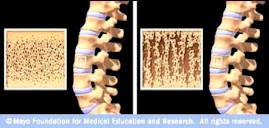
Osteoporotic Bone

Osteoporotic Bone
Source: www.mayoclinic.com

How Strontium Builds Bones

Strontium is a mineral that tends to accumulate in bone. Studies have shown that oral doses of strontium are a safe and effective way to prevent and reverse osteoporosis. Doses of 680 mg per day appear to be optimal. See my "For More Information About Strontium" links section.

Osteoporosis is caused by changes in bone production. In healthy young bones there is a constant cycle of new bone growth and bone removal. With age, more bone is removed and less new bone is produced. The bones become less dense and thus more fragile.

Scientists believe that strontium works in two ways. It may stimulate the replication of pre-osteoblasts, leading to an increase in osteoblasts (cells that build bone). Strontium also directly inhibits the activity of osteoclasts (cells that break down bone). The result is stronger bones.

When taking strontium, be sure to take 1200 mg calcium, 1000 IU vitamin D3, and 500 mg magnesium daily. It is best to take strontium late at night on an empty stomach. Calcium and strontium may compete with each other for absorption if taken together.