Human Skeleton

Human Skeleton

WELCOME TO STRONTIUM FOR BONES BLOG

Have you experienced negative, and even dangerous, side effects from Fosamax (alendronate), Boniva (ibandronate), Actonel (risedronate), Reclast (zoledronic acid), Prolia (denosumab), Forteo (teriparatide), Tymlos (abaloparatide), or other drugs prescribed for osteoporosis? If you have, then rest assured there is a safe, effective treatment for this condition. Strontium, primarily in the form of strontium citrate, is taken orally once a day.

Visitors to my blog can leave comments or ask questions and can remain anonymous, if they wish. Their comments are relayed to my g-mail inbox. Below each post, the number of comments for that post is cited and underlined because it is a link. By clicking on that link below any post, a window opens so that a visitor can leave a comment. Ideally, visitors leave comments on posts most relevant to their comments. All comments to my posts are moderated by me.

Browse the posts and visit the link library of references.


Blog Archive

Showing posts with label elemental strontium. Show all posts

Wednesday, December 22, 2021

Summary Safety Review - Strontium - Risk of Heart and Circulatory Side Effects

Product

Oral natural health products containing strontium

Potential Safety Issue

Serious heart and circulatory side effects

Key Messages

·       Strontium is a naturally occurring mineral available as an ingredient in over-the-counter (OTC) natural health products. It is sold in various salt forms and can be used to help support bone health.

·       As a result of a European Medicines Agency's safety review (EMA) on the prescription dose of the ranelate form of strontium (strontium ranelate), Health Canada conducted a review of strontium. The EMA safety review found that the dose of 680 mg per day was beneficial for severe osteoporosis, but that it should not be used in patients who have pre-existing heart or circulatory problems.

·       Health Canada's review did not find information available on cardiovascular risk with the strontium ranelate form at doses less than 680 mg strontium per day, or with other non-ranelate forms of strontium at any dose. While uncertainties remain, Health Canada is taking a precautionary approach and recommending updates to the labels of products containing strontium, including informing consumers not to use these products if they have pre-existing heart or circulatory problems, such as heart attack, stroke or blood clot.

Overview

The European Medicines Agency completed a safety review of strontium ranelate, a drug available by prescription only in Europe at a dose of 680 mg per day and used to treat osteoporosis that is considered severe due to the high risk of fracture. Analysis demonstrated that the increased risk of heart and circulatory effects was only significant in patients with a current or past history of heart and circulatory problems. Health Canada started its safety review because the risk of heart and circulatory side effects is a serious health issue, and because strontium is found in licensed natural health products as strontium salts, including strontium citrate, strontium lactate, and strontium gluconate.

Use in Canada

·       In Canada, strontium is a mineral and classified as a natural health product ingredient. It is found in licensed natural health products in various salt forms, including strontium citrate, strontium lactate, and strontium gluconate.

·       At the time of the review, Health Canada had licensed 30 natural health products containing strontium (included in oral multi-ingredient products and in toothpastes). Of these, 16 provided daily doses of elemental strontium ranging from 4 mg up to 682 mg, in the forms of strontium citrate, strontium lactate, or strontium gluconate.

Safety Review Findings

·       There were no CanadianFootnote a or international reports of heart or circulatory side effects associated with the strontium salt forms licensed in Canada, including strontium citrate, strontium lactate, and strontium gluconate, at the time of the review.

·       Health Canada's review determined that strontium is the only component of strontium salt combinations that plays an active role in the body, while the salt parts like ranelate, lactate, citrate, and gluconate help with absorption of the strontium. There is not enough information available to compare how the different strontium salt combinations are absorbed in the body or the safety risk of heart or circulatory side effects with low dose strontium.

·       Health Canada's review did not find information available on cardiovascular risk with the strontium ranelate form at doses less than 680 mg/ day, or with other non-ranelate forms of strontium at any dose. While uncertainties remain, Health Canada is taking a precautionary approach and considers that strontium, regardless of the form it comes in, may have a potential risk of cardiovascular side effects in people who are already at risk.

Conclusions and Actions

·       Although available evidence for heart and circulatory side effects involved strontium ranelate taken at 680 mg per day only, a risk at lower doses of strontium ranelate and with other strontium salt combinations could not be ruled out.

·       While uncertainties remain, Health Canada is taking a precautionary approach and recommending that licence holders of those products providing adults with more than 4 mg of elemental strontium per day update the labelling to inform consumers not to use these products if they have, or are at high risk for heart disease, circulatory problems, or blood clots.

·       Health Canada has issued an Information Update to inform Canadians about the label revisions and potential risk of cardiovascular side effects.

·       Health Canada will continue to monitor safety information involving all salt forms of strontium, as it does for all health products on the Canadian market, and will take additional actions, if warranted.

Additional Information

The analysis that contributed to this safety review included scientific and medical literature, Canadian and international reports of side effects, and what is known about the use of this strontium both in Canada and internationally.

For additional information, contact the Marketed Health Products Directorate.

Footnote a

Canadian reports can be accessed through the Canada Vigilance Online Database.


https://www.canada.ca/en/health-canada/services/drugs-health-products/medeffect-canada/safety-reviews/summary-safety-review-strontium-risk-heart-circulatory.html


Thursday, June 11, 2015

My Daily Supplements


I have written about my supplements in previous posts but have made several changes since then. The following list is an update of all my supplements. I have alphabetized them by brand name. I take one of each daily unless otherwise noted. The Ca/Mg (#3) and strontium (#5) are primarily for bone health. The multivitamin (#6) is for general health, as are most of the other supplements. The probiotic (#9) is for digestive health. I take lecithin (#1) as an aid in preventing cholesterol buildup in the arteries and to combat heart disease. I take a large dose (5000 mcg) of methylcobalamin (#10) (vitamin B12) daily because taking a statin drug to reduce cholesterol also reduces vitamin B12. My husband takes B12 to keep from getting the canker sores that once plagued him. Methylcobalamin is more effective than cyanocobalamin; he tried both.

No one should copy my supplement protocol because each person’s needs are unique to him or her. I hope publishing this list will give others a place to start in forming their own protocol.  
  
  1. Bluebonnet Lecithin, 1365 mg in one softgel (I take two softgels daily.)
  2. Country Life Citrus Bioflavonoids, 1000 mg
  3. Country Life, Gluten Free, Calcium Magnesium Complex (500 mg Ca, 250 mg Mg per tablet)
  4. Doctor’s Best Lutein, 20 mg lutein esters yielding 10 mg minimum free lutein, 2 mg zeaxanthin
  5. Doctor’s Best Strontium Bone Maker, 2194 mg strontium citrate, 680 mg elemental strontium in two capsules (two capsules daily)
  6. Nature Made Multi for Him, No Iron (Not a typo. My husband and I both take this multivitamin.)
  7. Nature Made Vitamin C, 500 mg
  8. Nature’s Bounty Vitamin E, 100 % Natural, 400 IU
  9. Nature’s Way Primadophilus bifidus (This is a probiotic.)
10. Solgar Sublingual Methylcobalamin, 5000 mcg
11. Twin Labs Zinc, 50 mg

Notes on My Supplements

I always keep a couple of bottles of Nature’s Bounty Ginger Root capsules, 550 mg, in my refrigerator and take them for nausea and upset stomach as needed. If I don’t have fresh ginger and need ginger for a recipe, I just open a few, usually three, capsules and use the ginger powder for cooking.

I don’t take a separate vitamin D supplement because my multivitamin contains 1000 IU. I also try to get some sun each week. Some people may need more vitamin D if a 25(OH)D test shows they have a deficiency or insufficiency of this vitamin.

I do not take vitamin K2. Many people take this vitamin for bone and cardiac health. There is some debate about which form (MK4 or MK7) and what dosage of this vitamin one should take. The Japanese studies used 45 mg MK4, and patients are prescribed this dosage by physicians in Japan. The MK7 is taken in microgram dosages. Some people experience sleeplessness when taking MK7. No RDA/RDI has been established for vitamin K2 of either form. Studies in the US and Europe have not confirmed the efficacy of vitamin K2 for bone or cardiac health.

Notes on My Multivitamin

Nature Made has a Multi for Her, Multi for Him, Multi for Her 50+, and Multi for Him 50+. All the formulations are similar except the Multi for Her, which I will not take because it contains iron. Supplemental iron is not needed by men and postmenopausal women unless they have been diagnosed with iron deficiency anemia. Excessive iron can lead to iron toxicity. I have taken the other three formulations at one time or another, depending on what was available. 

What I like about the Nature Made multivitamins is that they are USP-verified, and that is rare to find. It gives me assurance that the multis contain the vitamins and minerals in the dosages specified and have no impurities.  Nature Made Vitamin C is also USP-verified, as are many of that brand’s other vitamins.

My Supplement History

On 8/5/2010, I posted all my supplements on my blog.  http://strontiumforbones.blogspot.com/2010/08/my-daily-supplements.html
On 09/30/2011, I posted about the three supplements I was taking specifically for bone health.
On 03/2/2012, I posted an update on my calcium/magnesium supplement.

COMB Study

You might also be interested in the protocol used in the COMB study.

Wednesday, September 24, 2014

Strontium Products, Inert Ingredients, and Dosages


I have used Doctor's Best Strontium Bone Maker successfully for six and a half years. For people who cannot tolerate magnesium stearate, which is in Doctor's Best and most vitamins and supplements, I recommend AOR Strontium Support II or Pure Encapsulations Strontium Citrate because they contain no fillers. These three brands are reputable. There are other reputable brands. These are three I know of. Do not purchase supplements solely on the basis of cost. Some brands of strontium citrate may not even contain the amount of strontium stated on the label.

When you read that 2 grams of strontium ranelate were used, that means 2 grams (2000 mg) of the strontium salt. Strontium is the bone-active component and makes up 34% by weight of the whole molecule; so, each 2-g dose of strontium ranelate delivers 680 mg of elemental strontium.

I mention sr. ranelate because many people have read the clinical trials on this prescription drug, which is unavailable in the USA and Canada. The following is information on three brands of strontium citrate:


One serving (2 capsules) of Doctor’s Best Strontium Bone Maker contains 680 mg elemental strontium from 1,944 mg (a little less than 2 grams) strontium citrate.

Each capsule of Pure Encapsulations Strontium Citrate contains 227 mg elemental strontium. The serving size is 1-3 capsules per day for 227, 454, or 681 mg strontium per day.

For Advanced Orthomolecular Research AOR, Advanced Series, Strontium Support II, the serving size is one to two capsules, with each capsule containing 341 mg elemental strontium from strontium citrate. Two capsules contain 682 mg strontium.

These are the serving sizes given by the manufacturers. Most research suggests 680 mg is the optimal amount of strontium to treat osteoporosis; 340 mg is probably sufficient for osteopenia.
Doctor’s Best Strontium Bone Maker
Inert Ingredients
Modified cellulose (vegetarian capsule), cellulose, magnesium stearate (vegetable source).
Contains nothing other than listed ingredients
AOR
Inert Ingredients
None. Capsule: hypromellose, water.
AOR guarantees that no ingredients not listed on the label have been added to the product. Contains no wheat, gluten, corn, nuts, dairy, soy, eggs, fish, shellfish or any animal byproduct.

Pure Encapsulations
Other Active Ingredients
Ascorbyl palmitate (fat-soluble vitamin C)
20 mg/capsule
Inert  Ingredients
Hypo-allergenic plant fiber (cellulose), vegetarian capsule (cellulose, water)
This encapsulated product contains no hidden coatings, excipients, binders, fillers, shellacs, artificial colors or fragrance. Contains no dairy, wheat, yeast, gluten, corn, sugar, starch, soy, preservatives or hydrogenated oils.

Friday, September 5, 2014

Recommended Amounts of Strontium and Calcium


The recommended amount of elemental strontium for osteoporosis is 680 mg daily. For osteopenia, 340 mg strontium may be adequate. There is no adjustment for weight.

The recommended amount of calcium for women age 51 and older and for men age 71 and older is 1200 mg daily; for women age 19-50 the amount is 1000 mg; and for men age 19-70 the amount is 1000 mg. Check the chart in the link for those who are pregnant or lactating or younger than 19. Figure out how much you are getting from food, and then supplement the rest, but try to get most of it from food. Try not to take more than about 500 mg calcium at a time because that is about the most you can absorb.

http://www.nlm.nih.gov/medlineplus/magazine/issues/winter11/articles/winter11pg12.html

Separate your calcium and strontium by at least three hours because calcium will reduce the absorption of strontium. The amount of calcium to take does not vary with the amount of strontium you are taking, just be sure to take both at separate times. The total amount of calcium needed depends on your age, sex, and whether you are pregnant or lactating. There is no adjustment for weight except what is already built into the calcium recommendations, which are much lower for infants and very young children. The amount of calcium to supplement depends on how much you are getting from your diet.

Wandering Skeleton

Wandering Skeleton
Artist: Joel Hoekstra

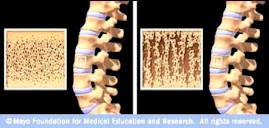
Osteoporotic Bone

Osteoporotic Bone
Source: www.mayoclinic.com

How Strontium Builds Bones

Strontium is a mineral that tends to accumulate in bone. Studies have shown that oral doses of strontium are a safe and effective way to prevent and reverse osteoporosis. Doses of 680 mg per day appear to be optimal. See my "For More Information About Strontium" links section.

Osteoporosis is caused by changes in bone production. In healthy young bones there is a constant cycle of new bone growth and bone removal. With age, more bone is removed and less new bone is produced. The bones become less dense and thus more fragile.

Scientists believe that strontium works in two ways. It may stimulate the replication of pre-osteoblasts, leading to an increase in osteoblasts (cells that build bone). Strontium also directly inhibits the activity of osteoclasts (cells that break down bone). The result is stronger bones.

When taking strontium, be sure to take 1200 mg calcium, 1000 IU vitamin D3, and 500 mg magnesium daily. It is best to take strontium late at night on an empty stomach. Calcium and strontium may compete with each other for absorption if taken together.