Human Skeleton

Human Skeleton

WELCOME TO STRONTIUM FOR BONES BLOG

Have you experienced negative, and even dangerous, side effects from Fosamax (alendronate), Boniva (ibandronate), Actonel (risedronate), Reclast (zoledronic acid), Prolia (denosumab), Forteo (teriparatide), Tymlos (abaloparatide), or other drugs prescribed for osteoporosis? If you have, then rest assured there is a safe, effective treatment for this condition. Strontium, primarily in the form of strontium citrate, is taken orally once a day.

Visitors to my blog can leave comments or ask questions and can remain anonymous, if they wish. Their comments are relayed to my g-mail inbox. Below each post, the number of comments for that post is cited and underlined because it is a link. By clicking on that link below any post, a window opens so that a visitor can leave a comment. Ideally, visitors leave comments on posts most relevant to their comments. All comments to my posts are moderated by me.

Browse the posts and visit the link library of references.


Blog Archive

Showing posts with label vitamin D insufficiency. Show all posts

Thursday, October 12, 2017

Combined Strontium and Vitamin D Therapy for Osteoporosis

The following abstract is for a clinical study titled "Correction of Vitamin D Insufficiency with Combined Strontium Ranelate and Vitamin D3 in Osteoporotic Patients" by R. Rizzoli et al. It was made available online 9 December 2013. Please note that I have converted the 25-hydroxyvitamin D units from nmol/l to ng/mL (1 ng/mL = 2.5 nmol/L) and added those units in parentheses. My personal daily osteoporosis therapy includes 2 grams strontium citrate (680 mg strontium) and 1000 IU vitamin D (included in my Nature Made Multi for Him multivitamin).

Objective This study aims to investigate the efficacy and safety of oral fixed-dose combination of strontium ranelate 2 g/vitamin D3 1000 IU daily vs strontium ranelate 2 g daily for correcting vitamin D insufficiency in osteoporosis.

Design A 6-month international, randomized, double-blind, parallel-group, phase 3 study.

Methods A total of 518 men and postmenopausal women aged greater than or equal to 50 years with primary osteoporosis (T-score less than or equal to −2.5 s.d.) and serum 25-hydroxyvitamin D (25(OH)D)greater than 22.5 nmol/l (9 ng/mL) were included. Patients were allocated to strontium ranelate 2 g/vitamin D3 1000 IU daily (n=413) or strontium ranelate 2 g daily (n=105). The participants received calcium 1 g daily. The primary endpoint was serum 25(OH)D at last post-baseline evaluation during 3 months.

Results Both groups were comparable at baseline. Mean baseline of 25(OH)D was 44.1 plus or minus 14.6 nmol/l (17.6 ng/mL plus or minus 5.8 ng/mL). After 3 months, the percentage of patients with 25(OH)D greater than or equal to 50 nmol/l (20 ng/mL) was higher with strontium ranelate/vitamin D3 vs strontium ranelate (84 vs 44%, P less than 0.001; adjusted between-group odds ratio=6.7; 95% CI, 4.2–10.9). The efficacy of the fixed-dose combination on 25(OH)D was maintained at 6 months (86 vs 40%, P less than 0.001). Mean 25(OH)D was 65.1nmol/l (26 ng/mL) and 49.5 nmol/l (19.8 ng/mL), respectively, after 3 months and 66.9 nmol/l (26.8 ng/mL) and 45.4 nmol/l (18.2 ng/mL) after 6 months. Physical performance improved in both groups. Falls were 17 and 20% in the strontium ranelate/vitamin D3 and strontium ranelate groups respectively. Parathyroid hormone levels were inversely correlated with 25(OH)D. No clinically relevant differences in safety were observed.

Conclusions This study confirms the efficacy and safety of fixed-dose combination of strontium ranelate 2 g/vitamin D3 1000 IU for correction of vitamin D insufficiency in osteoporotic patients. 

http://www.eje-online.org/content/170/3/441.short

Wednesday, January 6, 2016

Fall Prevention and Vitamin D in the Elderly

Abstract


Preventing falls and fall-related fractures in the elderly is an objective yet to be reached. There is increasing evidence that a supplementation of vitamin D and/or of calcium may reduce the fall and fracture rates. A vitamin D-calcium supplement appears to have a high potential due to its simple application and its low cost. However, published studies have shown conflicting results as some studies failed to show any effect, while others reported a significant decrease of falls and fractures. Through a 15-year literature overview, and after a brief reminder on mechanism of falls in older adults, we reported evidences for a vitamin D action on postural adaptations - i.e., muscles and central nervous system - which may explain the decreased fall and bone fracture rates and we underlined the reasons for differences and controversies between published data. Vitamin D supplementation should thus be integrated into primary and secondary fall prevention strategies in older adults.

Conclusions

Falls in the elderly, as well as fall-related adverse outcomes such as low trauma bone fractures, are events that could be prevented. Epidemiological studies conducted over the past 15 years provide an increasing number of arguments in favor of an action of vitamin D on muscles and CNS. Vitamin D improves postural balance, propulsion and also executive functions and navigation abilities among older adults. Vitamin D supplementation thus not only determines gait performance, but also prevents the occurrence of falls and their complications among older adults. Mixed data regarding the absence of effect of vitamin D and calcium supplementation are mainly due to the fact that some confounders were not taken into account, but also to the baseline serum vitamin D concentration on initiation of treatment, as a low serum vitamin D concentration appears to be associated with better efficacy. The prescription of at least 800 IU of vitamin D daily in insufficient elderly subjects is a simple intervention that should be incorporated into new strategies for postural rehabilitation, primary and secondary fall prevention, strength training, integration of body schema, automation of gait and adaptation to the environment.

For the entire study, click here:  http://www.ncbi.nlm.nih.gov/pmc/articles/PMC2959005/

Wandering Skeleton

Wandering Skeleton
Artist: Joel Hoekstra

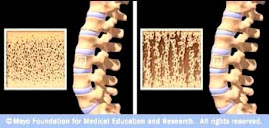
Osteoporotic Bone

Osteoporotic Bone
Source: www.mayoclinic.com

How Strontium Builds Bones

Strontium is a mineral that tends to accumulate in bone. Studies have shown that oral doses of strontium are a safe and effective way to prevent and reverse osteoporosis. Doses of 680 mg per day appear to be optimal. See my "For More Information About Strontium" links section.

Osteoporosis is caused by changes in bone production. In healthy young bones there is a constant cycle of new bone growth and bone removal. With age, more bone is removed and less new bone is produced. The bones become less dense and thus more fragile.

Scientists believe that strontium works in two ways. It may stimulate the replication of pre-osteoblasts, leading to an increase in osteoblasts (cells that build bone). Strontium also directly inhibits the activity of osteoclasts (cells that break down bone). The result is stronger bones.

When taking strontium, be sure to take 1200 mg calcium, 1000 IU vitamin D3, and 500 mg magnesium daily. It is best to take strontium late at night on an empty stomach. Calcium and strontium may compete with each other for absorption if taken together.