Human Skeleton

Human Skeleton

WELCOME TO STRONTIUM FOR BONES BLOG

Have you experienced negative, and even dangerous, side effects from Fosamax (alendronate), Boniva (ibandronate), Actonel (risedronate), Reclast (zoledronic acid), Prolia (denosumab), Forteo (teriparatide), Tymlos (abaloparatide), or other drugs prescribed for osteoporosis? If you have, then rest assured there is a safe, effective treatment for this condition. Strontium, primarily in the form of strontium citrate, is taken orally once a day.

Visitors to my blog can leave comments or ask questions and can remain anonymous, if they wish. Their comments are relayed to my g-mail inbox. Below each post, the number of comments for that post is cited and underlined because it is a link. By clicking on that link below any post, a window opens so that a visitor can leave a comment. Ideally, visitors leave comments on posts most relevant to their comments. All comments to my posts are moderated by me.

Browse the posts and visit the link library of references.


Blog Archive

Saturday, April 4, 2026

My BMD Results from 2007 to 2024

2007 (my first DXA scan; osteoporosis diagnosis)

My T-score at the lumbar spine was -3.0 (-2.0 at L1, -2.7 at L2, -3.4 at L3 and -3.8 at L4).

My T-score at the left hip was -2.2 (-2.8 at neck, -2.0 at troch, -1.9 at inter).

My BMD results in g/cm2 were 0.712 at the spine (L1-L4), 0.53 at the left hip (neck), and 0.670 at the left hip (total).

2009 My second scan was done 07/06/09 after the following treatment: Fosamax 70 mg weekly from 06/18/07 to 12/24/07, two capsules Doctor's Best Strontium Bone Maker daily from 01/21/08 to 07/06/09.

Spine (L1-L4): BMD 0.749, T-Score -2.7

Lt. Hip (neck): BMD 0.563, T-Score -2.6

Lt. Hip (total): BMD 0.739, T-Score -1.7

2013 (4 years from previous scan; scores in osteopenia range)

0.871 g/cm2 at the spine from L1- L4 (T-score -1.6)

0.692 g/cm2 at the left femoral neck (-1.4 T-score),

0.775 g/cm2 at the left total hip (-1.4 T-score).

2016 (BMD scores improved but still in osteopenia range)

Spine: Total BMD of the spine (L1-4) is 0.897 g/cm2, with a T-score of -1.4.

Left Femoral Neck: BMD is 0.729 g/cm2, with a T-score of -1.1.

Left Total Hip: BMD is 0.812 g/cm2, with a T-score of -1.1.

Compared to the prior study (August 21, 2013), there was a 3% increase in BMD of the lumbar spine and a 5% increase in BMD of the left total hip.

January 2019 (Spine, left total hip, right total hip, right femoral neck show normal BMD; left femoral neck in osteopenia range)

Compared to the prior study, there has been 9% increase in spine density, 6% increase in left total hip density, but no change in left femoral neck density.

August 2022 (showed normal BMD at all sites)

November 2024. The 2024 scan included a TBS, which found normal bone microarchitecture! The only value that was slightly worse than my previous scan of 18 August 2022, was my left femoral neck BMD of 0.728 g/cm2 and a T-score of -1.1 (osteopenia) in 2024, compared to left femoral neck BMD of 0.741 g/cm2 and a T-score of -1.0 (normal density) in 2022.

For almost a year and a half (3/5/2023 through 8/17/2024), I reduced my daily dosage of strontium citrate from 682 mg of strontium per day to 341 mg 4X per week and 682 mg 3X per week. I resumed the full dosage on 8/18/2024.

Originally (2007), my worst BMD scores were for my spine. My most recalcitrant area now is my left femoral neck.

Monday, March 16, 2026

Slowing Biological Aging

Several studies have shown that it is possible to slow biological aging by taking certain supplements. Strength-training exercises may also help. 

One study gave participants 2000 IU/day of vitamin D and 1 g per day of omega-3s (330 mg EPA plus 660 mg DHA from marine algae) and asked them to follow an at-home, strength-training exercise program for 30 minutes 3X/week. To calculate biological ages, the team analysed five epigenetic ‘clocks’ in the blood samples. These clocks are biomarkers that measure DNA methylation — patterns of molecular tags on DNA — at specific sites in the genome. Methylation levels increase or decrease at particular sites in a relatively predictable manner with age. 

Omega-3 alone slowed the DNAm clocks, PhenoAge, GrimAge2 and DunedinPACE, and all three treatments had additive benefits on PhenoAge. 

https://www.nature.com/articles/s43587-024-00793-y

Another study showed that taking a daily multivitamin can slow signs of biological aging. Centrum Silver was used in the study. The supplement's anti-aging effect was greater in people who were already biologically older than their years.

https://www.nature.com/articles/s41591-026-04239-3 (original article)

https://www.nature.com/articles/d41586-026-00741-3 (summary article about the study)


Sunday, February 8, 2026

Balance, Core, and Grip Strength Exercises and Sit-to-Stand (STS) Test

Based on fitness guidelines and studies, here are the recommended durations and benchmarks for balance, core, and grip strength exercises. Also included is the sit-to-stand (STS) test for measuring lower body strength, balance, and fall risk. 
1. Balancing on One Foot (Single-Leg Stand)
  • Target Time: Aim for 30–60 seconds per leg.
  • Benchmarks by Age (Goal):
    • Under 40: ~45 seconds.
    • 40–49: ~40 seconds.
    • 50–59: ~37 seconds.
    • 60–69: ~30 seconds.
    • 70–79: ~14–20 seconds.
    • 80+: ~6–10 seconds.
  • Tip: If you cannot hold for at least 10 seconds, it may indicate a higher risk for fall-related injury.
2. Holding a Plank (Core Strength)
  • Target Time: 30 to 60 seconds is a solid, effective goal for most people.
  • Advanced Goal: 2 minutes (considered a benchmark for excellent core stability).
  • Benchmarks by Age:
    • 20s-30s: 1–2 minutes.
    • 40s: 1 minute or more.
    • 50s: 30–60 seconds.
    • 60+: 20–30 seconds.
  • Note: If your form fails (back sags) before 30 seconds, hold for shorter intervals (e.g., 10-20 seconds) in multiple sets.
3. Wall Sit (Lower Body/Quad Endurance)
  • Target Time: Aim for 30–60 seconds, repeated 2-3 times.
  • Advanced Goal: 90–120 seconds.
  • Health Goal: A common protocol to lower blood pressure is 4 sets of 2-minute holds.
  • Tips: Keep knees at 90 degrees and back flat against the wall.
4. Grip Strength (Each Hand)
  • Measurement: Usually tested with a handheld dynamometer in kilograms (kg) or pounds (lbs). (You can buy dynamometers from Amazon for as low as $25.99.) 
  • Average Standards (Adults):
    • Men: 40–50 kg (88–110 lbs).
    • Women: 24–32 kg (53–70 lbs).
  • Age Factor: Grip strength peaks between ages 25-39 and gradually declines.
  • Significance: Low grip strength is a key indicator of overall health and mortality risk in older adults.
The sit-to-stand test (STS) measures lower body strength, balance, and fall risk by counting how many times a person can stand up from a chair and sit back down in a set time (often 30 seconds), or by timing how long it takes to do 5 repetitions, using an armless chair with feet flat and arms crossed over the chest to isolate leg musclesA lower number of repetitions or longer time indicates poorer fitness, higher fall risk, and potential links to poorer health outcomes, making it a valuable tool for assessing functional fitness, especially in older adults or those with neurological conditions. 

How to Perform the 30-Second Sit-to-Stand Test (CDC Version)
  1. Equipment: Use a standard armless chair with a straight back (about 17 inches high).
  2. Position: Sit in the middle of the chair, feet flat and shoulder-width apart, arms crossed over your chest with hands on opposite shoulders.
  3. Action: On "Go," stand up fully, then sit back down, repeating for 30 seconds.
  4. Count: Count the total number of full stands in 30 seconds. 
  5. Important: If you use your arms for support, stop the test and score 0.

Tuesday, October 21, 2025

DXA vs. REMS Scans

A 75-year-old lady who had been taking strontium citrate (680 mg strontium) for three years, had both a DXA scan and a REMS Echolight scan of her bones. When strontium is incorporated into bone, DXA scan BMD results are falsely elevated because strontium has a higher atomic number than calcium and therefore greater X-ray attenuation. The degree to which the BMD results are falsely elevated depends on the dosage of strontium, the number of years taken, how well the strontium is absorbed and incorporated into bone, the individual bones scanned, and the model of DXA scanner used. REMS is unaffected by strontium in bone. These are her results. You can see that the bone strontium effect varies for each bone scanned. The higher numbers are the DXA scan BMD numbers in g/cm2 and the lower numbers are the REMS scan numbers in g/cm2. The percentages are the difference between DXA numbers and the REMS numbers.

L1-L4   0.775, 0.673, 13.16%

L1   0.698, 0.525, 24.79%

L2   0.763, 0.636, 16.64%

L3  0.805, 0.720, 10.56%

L4. 0.815, 0.773, 5.15% (minimum difference)

Femoral Neck Left  0.772, 0.462, 40.16% (greatest difference)

Hip Total Left  0.750, 0.611, 18.53%

Femoral Neck Right  0.736, 0.467, 36.55%

Hip Total Right. 0.828, 0.617, 25.48%

So, the differences between her DXA and REMS scans varied from a low of 5.15% for L4 to a high of 40.16% for the left femoral neck. 


Monday, July 28, 2025

REMS Scans and Strontium

REMS, which is unaffected by strontium, will show increases in BMD for someone on strontium, but the increases will be real, and, therefore, more modest. I just read a post by a British woman who has been taking strontium citrate (not strontium ranelate, although available in the UK). She has been taking a half dose (340 mg strontium). She just had her third REMS scan, and her spine bone density and fragility scores both improved significantly. Her hip scores stayed the same as those from two years earlier but the hip fragility score was slightly worse. Had she been on the full dose of strontium, her hip scores would most likely have been better. She is a patient of Dr. Nick Birch, the founder of Osteoscan UK, He uses the Echolight REMS system to offer bone health assessments. 

https://healthunlocked.com/bonehealth/posts/149823299/rems-scan-and-strontium-citrate


Tuesday, July 15, 2025

REMS Reports from BoneForte and Dr. Andy Bush

BoneForte was founded in 2022 by Dr. Andy Bush, who partnered with Dr. Susan Jones and others.

Dr. Bush is a Board-Certified Orthopedic Surgeon, practicing for almost 30 years. He trained at the University of Medicine and Dentistry - NJMS, University Hospital in Newark, NJ.  He has been providing orthopedic surgery care in Sanford, North Carolina for the past 17 years as an independent private practitioner. Recently, he shifted the scope of his orthopedic practice from fracture fixation to fracture prevention. He is a member of the International Society of Clinical Densitometry and he has trained to be proficient in DXA interpretation; however, what sets his Bone Health practice apart from other practices is his embracing of REMS (Radiofrequency Echographic Multi Spectrometry) technology for densitometry and fracture risk determination. Currently, his practice is the largest clinical REMS practice in North America.


Boneforte's website includes six sample REMS reports from actual patients. 


https://www.boneforte.com/for-providers


Wandering Skeleton

Wandering Skeleton
Artist: Joel Hoekstra

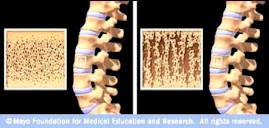
Osteoporotic Bone

Osteoporotic Bone
Source: www.mayoclinic.com

How Strontium Builds Bones

Strontium is a mineral that tends to accumulate in bone. Studies have shown that oral doses of strontium are a safe and effective way to prevent and reverse osteoporosis. Doses of 680 mg per day appear to be optimal. See my "For More Information About Strontium" links section.

Osteoporosis is caused by changes in bone production. In healthy young bones there is a constant cycle of new bone growth and bone removal. With age, more bone is removed and less new bone is produced. The bones become less dense and thus more fragile.

Scientists believe that strontium works in two ways. It may stimulate the replication of pre-osteoblasts, leading to an increase in osteoblasts (cells that build bone). Strontium also directly inhibits the activity of osteoclasts (cells that break down bone). The result is stronger bones.

When taking strontium, be sure to take 1200 mg calcium, 1000 IU vitamin D3, and 500 mg magnesium daily. It is best to take strontium late at night on an empty stomach. Calcium and strontium may compete with each other for absorption if taken together.