Human Skeleton

Human Skeleton

WELCOME TO STRONTIUM FOR BONES BLOG

Have you experienced negative, and even dangerous, side effects from Fosamax (alendronate), Boniva (ibandronate), Actonel (risedronate), Reclast (zoledronic acid), Prolia (denosumab), Forteo (teriparatide), Tymlos (abaloparatide), or other drugs prescribed for osteoporosis? If you have, then rest assured there is a safe, effective treatment for this condition. Strontium, primarily in the form of strontium citrate, is taken orally once a day.

Visitors to my blog can leave comments or ask questions and can remain anonymous, if they wish. Their comments are relayed to my g-mail inbox. Below each post, the number of comments for that post is cited and underlined because it is a link. By clicking on that link below any post, a window opens so that a visitor can leave a comment. Ideally, visitors leave comments on posts most relevant to their comments. All comments to my posts are moderated by me.

Browse the posts and visit the link library of references.


Blog Archive

Thursday, June 11, 2015

My Daily Supplements


I have written about my supplements in previous posts but have made several changes since then. The following list is an update of all my supplements. I have alphabetized them by brand name. I take one of each daily unless otherwise noted. The Ca/Mg (#3) and strontium (#5) are primarily for bone health. The multivitamin (#6) is for general health, as are most of the other supplements. The probiotic (#9) is for digestive health. I take lecithin (#1) as an aid in preventing cholesterol buildup in the arteries and to combat heart disease. I take a large dose (5000 mcg) of methylcobalamin (#10) (vitamin B12) daily because taking a statin drug to reduce cholesterol also reduces vitamin B12. My husband takes B12 to keep from getting the canker sores that once plagued him. Methylcobalamin is more effective than cyanocobalamin; he tried both.

No one should copy my supplement protocol because each person’s needs are unique to him or her. I hope publishing this list will give others a place to start in forming their own protocol.  
  
  1. Bluebonnet Lecithin, 1365 mg in one softgel (I take two softgels daily.)
  2. Country Life Citrus Bioflavonoids, 1000 mg
  3. Country Life, Gluten Free, Calcium Magnesium Complex (500 mg Ca, 250 mg Mg per tablet)
  4. Doctor’s Best Lutein, 20 mg lutein esters yielding 10 mg minimum free lutein, 2 mg zeaxanthin
  5. Doctor’s Best Strontium Bone Maker, 2194 mg strontium citrate, 680 mg elemental strontium in two capsules (two capsules daily)
  6. Nature Made Multi for Him, No Iron (Not a typo. My husband and I both take this multivitamin.)
  7. Nature Made Vitamin C, 500 mg
  8. Nature’s Bounty Vitamin E, 100 % Natural, 400 IU
  9. Nature’s Way Primadophilus bifidus (This is a probiotic.)
10. Solgar Sublingual Methylcobalamin, 5000 mcg
11. Twin Labs Zinc, 50 mg

Notes on My Supplements

I always keep a couple of bottles of Nature’s Bounty Ginger Root capsules, 550 mg, in my refrigerator and take them for nausea and upset stomach as needed. If I don’t have fresh ginger and need ginger for a recipe, I just open a few, usually three, capsules and use the ginger powder for cooking.

I don’t take a separate vitamin D supplement because my multivitamin contains 1000 IU. I also try to get some sun each week. Some people may need more vitamin D if a 25(OH)D test shows they have a deficiency or insufficiency of this vitamin.

I do not take vitamin K2. Many people take this vitamin for bone and cardiac health. There is some debate about which form (MK4 or MK7) and what dosage of this vitamin one should take. The Japanese studies used 45 mg MK4, and patients are prescribed this dosage by physicians in Japan. The MK7 is taken in microgram dosages. Some people experience sleeplessness when taking MK7. No RDA/RDI has been established for vitamin K2 of either form. Studies in the US and Europe have not confirmed the efficacy of vitamin K2 for bone or cardiac health.

Notes on My Multivitamin

Nature Made has a Multi for Her, Multi for Him, Multi for Her 50+, and Multi for Him 50+. All the formulations are similar except the Multi for Her, which I will not take because it contains iron. Supplemental iron is not needed by men and postmenopausal women unless they have been diagnosed with iron deficiency anemia. Excessive iron can lead to iron toxicity. I have taken the other three formulations at one time or another, depending on what was available. 

What I like about the Nature Made multivitamins is that they are USP-verified, and that is rare to find. It gives me assurance that the multis contain the vitamins and minerals in the dosages specified and have no impurities.  Nature Made Vitamin C is also USP-verified, as are many of that brand’s other vitamins.

My Supplement History

On 8/5/2010, I posted all my supplements on my blog.  http://strontiumforbones.blogspot.com/2010/08/my-daily-supplements.html
On 09/30/2011, I posted about the three supplements I was taking specifically for bone health.
On 03/2/2012, I posted an update on my calcium/magnesium supplement.

COMB Study

You might also be interested in the protocol used in the COMB study.

Monday, May 11, 2015

TBS iNsight® – a Novel Osteoporotic Fracture Assessment Diagnostic Tool


Medimaps Group announced that a novel method for improving osteoporotic fracture risk assessment, TBS iNsight®, is now globally available to clinicians through a distribution partnership with General Electric Healthcare (NYSE: GE). GE Healthcare provides transformational medical technologies and services to meet the demand for increased access, enhanced quality and more affordable healthcare around the world and is the market leader in the development and manufacture of Dual Energy X-Ray Absorptiometry (DXA) bone densitometry systems.

On June 10, 2014, Medimaps Group – developers of the TBS iNsight® diagnostic tool – and General Electric Healthcare signed a distribution agreement to distribute TBS iNsight® on a global basis leveraging GE Healthcare’s extensive direct sales and distribution organization.

TBS iNsight® is a unique, easy-to-use software application that assesses bone texture - an index of bone microarchitecture – which in turn is expressed as the Trabecular Bone Score (TBS). The measurement is performed seamlessly using DXA images acquired from a bone mineral densitometry (BMD) scan. No additional patient scan time or radiation exposure is required and results are easily interpreted by physicians to enable them to better manage patients with high risk of fractures. TBS iNsight® has been cleared for marketing by the U.S. Food and Drug Administration.

Prof. Didier Hans, Chairman and Chief Executive Officer of Medimaps Group states; “It is well documented that 40-50% of osteoporotic fracture occurs in patients who are not determined to be osteoporotic by BMD alone, yet BMD remains the only diagnostic method available to most clinicians. A significant body of literature, including a recent study of over 29,000 women, has demonstrated that TBS, when combined with hip and/or spine BMD and FRAX® clinical factors, can help improve the prediction of future osteoporotic fracture risk in a clinically meaningful way. We’re very pleased to partner with General Electric Healthcare to bring this valuable new predictive tool for better management of osteoporotic patients across the globe.”

For more information on Medimaps and TBS iNsight®, please visit www.medimapsgroup.com and www.tbsinsight.com

About Medimaps Group
Medimaps group – a Swiss company founded by a group of clinical practitioners and researchers - is a developer of innovative imaging software used in clinical practice for improved patient management with minimum impact on the workflow of the practitioner. The company has raised several rounds of venture capital to further commercialize TBS iNsight® in the osteoporosis treatment market and for product development of the TBS iNsight® tool for optimizing implant surgery in the dental and orthopedic markets.

Contacts
Medimaps Group
Oscar Lazaro, +1 781-492-2012
Chief Commercial Officer
olazaro@medimapsgroup.com


Thursday, May 7, 2015

TBS Result Not Affected by Lumbar Spine Osteoarthritis

Abstract

The effect of lumbar osteoarthritis on bone density and trabecular bone score (TBS) was evaluated cross-sectionally and prospectively in postmenopausal women. Lumbar spine osteoarthritis was graded according to Kellgren and Lawrence grades. Lumbar osteoarthritis was found to increase lumbar spine bone density, but not TBS.

INTRODUCTION:

Lumbar osteoarthritis overestimates lumbar bone density (areal bone mineral density (aBMD)). A new texture parameter, the TBS, has been proposed. Calculation of aBMD uses grey level value, while TBS uses grey level variation. Therefore, our hypothesis was that TBS is not influenced by lumbar spine osteoarthritis.

METHODS:

Menopausal women participating in osteoporosis and ultrasound (OPUS) study were included. They had an aBMD measurement of the spine and hip at baseline and 6-year visit. TBS was calculated on lumbar spine dual-energy X-ray absorptiometry (DXA) scans in an automated manner. The presence of lumbar osteoarthritis was evaluated on baseline radiographs using Kellgren and Lawrence (K&L) classification. Grades range from 0 to 4. In our study, osteoarthritis was defined by at least K&L grade 2.

RESULTS:

This study included 1,254 menopausal women (66.7 ± 7.1 years). Among them, 727 attended the 6-year follow-up visit. Patients with lumbar osteoarthritis had an aBMD higher than those without lumbar osteoarthritis at the lumbar spine, but not at the hip. However, the aBMD significantly increased in all sites with the grade of K&L. In contrast, spine TBS was not different between patients with and without lumbar osteoarthritis (p = 0.70), and it was not correlated with K&L grade. Spine TBS and aBMD at all sites were negatively correlated with age (p < 0.0001). Body mass index was correlated positively with aBMD and negatively with spine TBS (p < 0.0001). The 6-year change of aBMD was significant in the hip and nonsignificant in the lumbar spine. That of TBS was significant, with a 3.3 % decrease (p < 0.0001), independent of K&L grade (p = 0.28).

CONCLUSION:

In postmenopausal women, lumbar osteoarthritis leads to an increase in lumbar spine aBMD. In contrast, spine TBS is not affected by lumbar osteoarthritis.

 http://www.ncbi.nlm.nih.gov/pubmed/24687386

Wednesday, May 6, 2015

Trabecular Bone Score

"The trabecular bone score (TBS) is a gray-level textural metric that can be extracted from the two-dimensional lumbar spine dual-energy X-ray absorptiometry (DXA) image. TBS is related to bone microarchitecture and provides skeletal information that is not captured from the standard bone mineral density (BMD) measurement. Based on experimental variograms of the projected DXA image, TBS has the potential to discern differences between DXA scans that show similar BMD measurements. An elevated TBS value correlates with better skeletal microstructure; a low TBS value correlates with weaker skeletal microstructure. Lumbar spine TBS has been evaluated in cross-sectional and longitudinal studies."

"The following conclusions are based upon publications reviewed in this article:
1) TBS gives lower values in postmenopausal women and in men with previous fragility fractures than their nonfractured counterparts;
2) TBS is complementary to data available by lumbar spine DXA measurements;
3) TBS results are lower in women who have sustained a fragility fracture but in whom DXA does not indicate osteoporosis or even osteopenia;
4) TBS predicts fracture risk as well as lumbar spine BMD measurements in postmenopausal women;
5) efficacious therapies for osteoporosis differ in the extent to which they influence the TBS;
6) TBS is associated with fracture risk in individuals with conditions related to reduced bone mass or bone quality."

"Based on these data, lumbar spine TBS holds promise as an emerging technology that could well become a valuable clinical tool in the diagnosis of osteoporosis and in fracture risk assessment."
http://www.ncbi.nlm.nih.gov/pubmed/24443324

FRAX Modified by TBS


FRAX®, launched by the WHO Collaborating Centre for Metabolic Bone Diseases in 2008, calculates the10-year probability of osteoporotic fracture based on clinical risk factors, including bone mineral density (BMD) as an optional input.

A new feature of the online FRAX risk assessment tool was launched in April 2014. The output of FRAX can now be adjusted for Trabecular Bone Score (TBS™). Calculated by TBS iNsight™ software which installs on existing DXA scanners, TBS is a simple method that estimates fracture risk based on a determination of bone texture (an index correlated to bone microarchitecture). The predictive ability of TBS is independent of FRAX clinical risk factors and femoral neck bone mineral density (BMD) values. Educational information and scientific publications about TBS are available at www.medimapsgroup.com.

By adding the patient’s TBS value after the FRAX calculation, users will get a 10-year probability of risk of hip fracture and major osteoporotic fracture adjusted for TBS. Clinical advantages of using TBS-adjusted FRAX scores include:
  • Increased accuracy of fracture prediction in the individual
  • Reclassification of  patients’ risk for future fracture above or below an intervention threshold
Following the calculation of FRAX probabilities (at www.shef.ac.uk/FRAX) the TBS value can be manually input by clicking on the TBS button below the calculation results box. Entry of the TBS value, automatically calculated by TBS iNsight™ V.3.0, if installed on your densitometer, produces a ‘FRAX Adjusted for TBS’ score.”

Tuesday, April 14, 2015

Strontium and Kidney Stones


Should you take strontium citrate if you have hypercalciuria (high urine calcium) or a history of kidney stones? Perhaps you should not. A recent study identified strontium in all calcium-based stones, present as strontium apatite. This finding may be critical since apatite is thought to be the initial nidus for calcium stone formation. Strontium is found in small amounts in food and water. The paper does not state if any of the stone formers had taken strontium supplements. I wrote to one of the researchers, the contact person, to find out if he knew the source of the strontium found in the kidney stones. He answered that he did not know if those with elevated strontium in their diet or those with strontium intake (tablets) were the ones with elevated strontium in their stones. What follows is the abstract from the research paper, “Strontium Substitution for Calcium in Lithogenesis.” Use the link at the end to read the entire paper.

Purpose
Strontium has chemical similarity to calcium, which enables the replacement of calcium by strontium in biomineralization processes. Incorporating strontium into human bone and teeth has been studied extensively but little research has been performed of the incorporation of strontium into urinary calculi. We used synchrotron based x-ray fluorescence and x-ray absorption techniques to examine the presence of strontium in different types of human kidney stones.

Materials and Methods
Multiple unique human stone samples were obtained via consecutive percutaneous nephrolithotomies/ureteroscopies. A portion of each stone was sent for standard laboratory analysis and a portion was retained for x-ray fluorescence and x-ray absorption measurements. X-ray fluorescence and x-ray absorption measurements determined the presence, spatial distribution and speciation of strontium in each stone sample.

Results
Traditional kidney stone analyses identified calcium oxalate, calcium phosphate, uric acid and cystine stones. X-ray fluorescence measurements identified strontium in all stone types except pure cystine. X-ray fluorescence elemental mapping of the samples revealed co-localization of calcium and strontium. X-ray absorption measurements of the calcium phosphate stone showed strontium predominately present as strontium apatite.

Conclusions
Advanced x-ray fluorescence imaging identified strontium in all calcium based stones, present as strontium apatite. This finding may be critical since apatite is thought to be the initial nidus for calcium stone formation. Strontium is not identified by standard laboratory stone analyses. Its substitution for calcium can be reliably identified in stones from multiple calcium based stone formers, which may offer opportunities to gain insight into early events in lithogenesis.
http://www.ncbi.nlm.nih.gov/pmc/articles/PMC4124908/

Wandering Skeleton

Wandering Skeleton
Artist: Joel Hoekstra

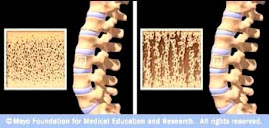
Osteoporotic Bone

Osteoporotic Bone
Source: www.mayoclinic.com

How Strontium Builds Bones

Strontium is a mineral that tends to accumulate in bone. Studies have shown that oral doses of strontium are a safe and effective way to prevent and reverse osteoporosis. Doses of 680 mg per day appear to be optimal. See my "For More Information About Strontium" links section.

Osteoporosis is caused by changes in bone production. In healthy young bones there is a constant cycle of new bone growth and bone removal. With age, more bone is removed and less new bone is produced. The bones become less dense and thus more fragile.

Scientists believe that strontium works in two ways. It may stimulate the replication of pre-osteoblasts, leading to an increase in osteoblasts (cells that build bone). Strontium also directly inhibits the activity of osteoclasts (cells that break down bone). The result is stronger bones.

When taking strontium, be sure to take 1200 mg calcium, 1000 IU vitamin D3, and 500 mg magnesium daily. It is best to take strontium late at night on an empty stomach. Calcium and strontium may compete with each other for absorption if taken together.