I will be asking that a Trabecular Bone Score (TBS) be included with my next DXA scan. The doctor who read my latest scan wrote, "Follow up with DEXA and TBS: As needed."
I found a review of TBS. The review includes a section on "Changes in TBS with Treatment of Osteoporosis." Below is the paragraph comparing the effects of strontium ranelate and alendronate (Fosamax) on TBS.
"The effects of strontium ranelate (SrRan) and alendronate on TBS were evaluated in a post hoc analysis performed in 79 women with postmenopausal osteoporosis of 189 included in a double‐blind, double‐dummy, randomized study. Women were randomized to either SrRan 2 g/day or alendronate 70 mg/week for 2 years. TBS and BMD parameters were assessed in the LS after 12 and 24 months of treatment. Over 1 and 2 years, LS BMD increased significantly by 5.6% and 9.0% in the SrRan group and by 5.2% and 7.6%, respectively, in the alendronate group. LS TBS increased by 2.3% (p < 0.001) and 3.1% (p < 0.001) in the SrRan group, but the change in the alendronate group was not significant (0.5% and 1.0%, respectively). There was a significant between‐group difference with SrRan showing larger TBS increases than alendronate."
Let me reiterate: Over one and two years, Lumbar Spine (LS) BMD increased in both the SrRan (5.6%, 9.0%) and alendronate groups (5.2%, 7.6%). You will note that the SrRan BMD numbers are higher, especially after the second year, than the alendronate numbers. The results are as expected because strontium results in an overestimation of BMD.
HERE IS THE KICKER: LS TBS increased by 2.3% and 3.1% in the SrRan group, but the change in the alendronate group was not significant (0.5% and 1.0%, respectively). There was a significant between‐group difference with SrRan showing larger TBS increases than alendronate.
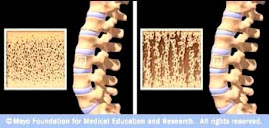
Keep in mind that TBS is related to bone microarchitecture and provides skeletal information that is not captured from the standard BMD measurement. TBS may be a better predictor of fracture risk than BMD alone.
https://www.panoramaortho.com/wp-content/uploads/2019/03/TBS-Rev...
Human Skeleton

Tuesday, August 23, 2022
Trabecular Bone Score (TBS)


Tuesday, April 26, 2022
Theories on How Strontium Prevents Fractures
Physiochemical Mechanisms/Sacrificial Bonds
Physiochemical mechanisms describe "how Sr (strontium) is able to affect the intrinsic tissue quality of bone by directly incorporating into bone at multiple levels, including the organic matrix and the hydrated layer surrounding hydroxyapatite (HA) crystals, forming sacrificial bonds and stabilizing hydration shells."
Cellular Mechanisms/Ca-sensing Receptor (CaSR)
"The cellular mechanisms are centered mainly around the Ca-sensing receptor (CaSR) and its ability to mediate bone cell function and respond to Sr, providing evidence for the dual-acting mechanism."
"Osteoclast precursors and mature osteoclasts express the CaSR on their cell membrane..."
Enhanced Bone Microarchitecture
"Microarchitecture is an important aspect of bone strength and increased fracture risk in patients with osteoporosis is associated with trabecular thinning and increased cortical porosity."
"Clinical studies have shown SR treatment increased cortical thickness and trabecular number and decreased trabecular spacing from baseline, determined using high-resolution peripheral quantitative computed tomography (HR-pQCT)."
https://www.sciencedirect.com/science/article/pii/S2352187220300334
Wednesday, May 6, 2015
FRAX Modified by TBS
- Increased accuracy of fracture prediction in the individual
- Reclassification of patients’ risk for future fracture above or below an intervention threshold
Monday, May 12, 2014
Fracture Healing with Current and Emerging Osteoporosis Therapies
Wandering Skeleton
Artist: Joel Hoekstra
Osteoporotic Bone
Source: www.mayoclinic.com