_ 3,790 patients were exposed to strontium ranelate during phase II and III trials. The overall incidence rates of adverse effects did not differ significantly from placebo. Adverse effects seen were generally mild and transient. The most common were:
_ headache (3.0% v 2.4%), nausea (6.6% v 4.3%), diarrhea (6.5% v 4.6%), loose stools (1.1% v 0.2%) dermatitis (2.1% v 1.6%) and eczema (1.5% v 1.2%)
_ In phase III studies, the annual incidence of venous thromboembolism (VTE) observed over 4 years was approximately 0.7%, with a relative risk of 1.42 (CI 1.02; 1.98, p=0.036) in strontium ranelate treated patients as compared to placebo treated patients. The cause of this finding is unknown. Strontium ranelate should be used with caution in patients at increased risk of VTE, including patients with a past history of VTE. The risk for strontium ranelate appears to be less than that seen with Selective Estrogen Receptor Modulator (SERM) or hormone replacement therapy (HRT).
_ Disturbances in consciousness, memory loss and seizures were all reported with higher frequency in the strontium ranelate group.
http://www.haad.ae/HAADDeps/Portals/7/Drug%20Monograph/strontium.ran%20final.pdf
Human Skeleton

Wednesday, September 23, 2009


Improvement Of Bone Microarchitecture By Strontium Ranelate
The analysis of transiliac bone biopsy samples from phase 2 and 3 clinical trials of strontium ranelate has provided further evidence of the good bone safety of strontium ranelate in the treatment of postmenopausal osteoporosis. Strontium ranelate improves both trabecular and cortical bone.
At the trabecular level, strontium ranelate significantly increases trabecular number by 14% and decreases trabecular separation by 16%, shifting trabeculae from rod-like structures to plate-like patterns. At the cortical level, strontium ranelate enlarges cortical bone dimensions by increasing cortical thickness by 18%.
Strontium ranelate is the first oral treatment to improve both trabecular and cortical bone in postmenopausal osteoporotic women. The change in 3D trabecular and cortical microarchitecture may improve bone biomechanical competence and explain the decreased fracture rate after strontium use.
http://www.servier.com/pro/osteoporosis/Osteoscoop/pdf/Osteoscoop_Issue61.pdf
At the trabecular level, strontium ranelate significantly increases trabecular number by 14% and decreases trabecular separation by 16%, shifting trabeculae from rod-like structures to plate-like patterns. At the cortical level, strontium ranelate enlarges cortical bone dimensions by increasing cortical thickness by 18%.
Strontium ranelate is the first oral treatment to improve both trabecular and cortical bone in postmenopausal osteoporotic women. The change in 3D trabecular and cortical microarchitecture may improve bone biomechanical competence and explain the decreased fracture rate after strontium use.
http://www.servier.com/pro/osteoporosis/Osteoscoop/pdf/Osteoscoop_Issue61.pdf
Monday, September 14, 2009
Measuring Risk Of Fracture
An individual's risk of fracture over a given period of years can be predicted using one of two models. Both are simple to use by individuals with no medical training. A patient simply answers a few questions.
The FRAX tool was developed by the World Health Organization (WHO) and gives the 10-year probability of hip fracture and the 10-year probability of a major osteoporotic fracture (spine, forearm, hip or shoulder fracture). It includes height, weight, personal history of fracture, family history of fracture, smoking, alcohol consumption, use of corticosteroids, rheumatoid arthritis and secondary osteoporosis. This model ignores falls. It is the most commonly used fracture-risk algorithm worldwide. To access it, follow this link, click on "Calculation Tool," and select your location and race/ethnicity:
http://www.shef.ac.uk/FRAX/
A second model is used in Australia to determine whether Pharmaceutical Benefits Scheme reimbursements for osteoporosis therapy apply. It was developed by the Garvan Institute of Medical Research in Sydney. The Garvan fracture risk calculator is based on gender, bone mineral density, age, history of personal fracture, and history of falls over the last 12 months. It is incredibly simple but is believed to incorporate the most critical risk factors. It provides five and 10 year risk assessments for hip fracture and for any osteoporosis/fragility fracture. The T-score and BMD in g/cm2 used in this tool refer to the values at the femoral neck, which will read Hip (neck) on most DXA scan reports. To access this calculator:
http://www.garvan.org.au/promotions/bone-fracture-risk/
The FRAX tool was developed by the World Health Organization (WHO) and gives the 10-year probability of hip fracture and the 10-year probability of a major osteoporotic fracture (spine, forearm, hip or shoulder fracture). It includes height, weight, personal history of fracture, family history of fracture, smoking, alcohol consumption, use of corticosteroids, rheumatoid arthritis and secondary osteoporosis. This model ignores falls. It is the most commonly used fracture-risk algorithm worldwide. To access it, follow this link, click on "Calculation Tool," and select your location and race/ethnicity:
http://www.shef.ac.uk/FRAX/
A second model is used in Australia to determine whether Pharmaceutical Benefits Scheme reimbursements for osteoporosis therapy apply. It was developed by the Garvan Institute of Medical Research in Sydney. The Garvan fracture risk calculator is based on gender, bone mineral density, age, history of personal fracture, and history of falls over the last 12 months. It is incredibly simple but is believed to incorporate the most critical risk factors. It provides five and 10 year risk assessments for hip fracture and for any osteoporosis/fragility fracture. The T-score and BMD in g/cm2 used in this tool refer to the values at the femoral neck, which will read Hip (neck) on most DXA scan reports. To access this calculator:
http://www.garvan.org.au/promotions/bone-fracture-risk/
Wednesday, August 19, 2009
Comparison of Strontium Malonate to Strontium Ranelate
Currently, Osteologix’s primary goal is to obtain approval for NB S101 (strontium malonate) for the treatment and prevention of osteoporosis. Their phase I study of the pharmacokinetic, or PK, properties of NB S101 revealed that a one gram tablet dose of NB S101 resulted in approximately the same level of strontium in human serum as a European company's approved product containing two grams of strontium ranelate in sachet formulation, which must be mixed with water before ingestion. Thus, at a significantly lower dose, their tablet formulation of strontium has shown bioequivalent levels of strontium to a marketed sachet product that has been proven safe and effective in osteoporotic patients in Europe.
More importantly, the recent results of their phase II study demonstrated that NB S101 decreased an established biomarker of bone resorption, CTX-1, in a dose-dependent manner by an amount statistically equivalent to or superior to the product approved in Europe. The phase II results also showed that NB S101 significantly increased bone mineral density at the lumbar spine and hip with only 12 weeks of treatment, and no significant side effects were noted in the trial.
More importantly, the recent results of their phase II study demonstrated that NB S101 decreased an established biomarker of bone resorption, CTX-1, in a dose-dependent manner by an amount statistically equivalent to or superior to the product approved in Europe. The phase II results also showed that NB S101 significantly increased bone mineral density at the lumbar spine and hip with only 12 weeks of treatment, and no significant side effects were noted in the trial.
Saturday, July 11, 2009
Improved T-Scores After Treatment
My first DEXA scan on 05/08/07 diagnosed me with osteoporosis. My second scan was done 07/06/09 after the following treatment: Fosamax 70 mg weekly from 06/18/07 to 12/24/07, two capsules Doctor's Best Strontium Bone Maker daily from 01/21/08 to 07/06/09. Here are my BMD results in g/cm2 and my T-scores for my second scan:
Spine (L1-L4): BMD 0.749, T-Score -2.7
Lt. Hip (neck): BMD 0.563, T-Score -2.6
Lt. Hip (total): BMD 0.739, T-Score -1.7
Despite my best efforts, my scores were not corrected for strontium intake by the radiologist. My first and second scans were not on the same DEXA machine, but they were both on DXA Hologic scanners. Even so, I am very happy with my results. My T-scores improved 10.0% at the spine, 7.1% at the left hip (neck), and 22.7% at the left hip (total). I plan to continue taking strontium citrate.
Spine (L1-L4): BMD 0.749, T-Score -2.7
Lt. Hip (neck): BMD 0.563, T-Score -2.6
Lt. Hip (total): BMD 0.739, T-Score -1.7
Despite my best efforts, my scores were not corrected for strontium intake by the radiologist. My first and second scans were not on the same DEXA machine, but they were both on DXA Hologic scanners. Even so, I am very happy with my results. My T-scores improved 10.0% at the spine, 7.1% at the left hip (neck), and 22.7% at the left hip (total). I plan to continue taking strontium citrate.
Monday, June 22, 2009
Study Shows Protelos Builds Better Bone Than Fosamax
A two-year double-blind study included 88 women over age 50 with postmenopausal osteoporosis who were treated with either Protelos (strontium ranelate) 2 g. daily or Fosamax (alendronate) 70 mg. weekly. The study, which used high-resolution computerized tomography, showed that Protelos increased cortical bone thickness, bone volume and trabecular bone density to a significantly greater extent than Fosamax over a one-year period.
The one-year interim results on bone microstucture, a determinant of bone strength, showed a +5.3% increase in cortical thickness and a +2.0% increase in bone volume in the Protelos-treated group. There was no change in the Fosamax-treated group.
For more information and references, see www.medicalnewstoday.com/printerfriendlynews.php?newsid=132149
The one-year interim results on bone microstucture, a determinant of bone strength, showed a +5.3% increase in cortical thickness and a +2.0% increase in bone volume in the Protelos-treated group. There was no change in the Fosamax-treated group.
For more information and references, see www.medicalnewstoday.com/printerfriendlynews.php?newsid=132149
Subscribe to:
Posts (Atom)
Wandering Skeleton

Artist: Joel Hoekstra
Osteoporotic Bone
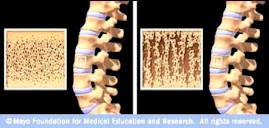
Source: www.mayoclinic.com