Human Skeleton

Human Skeleton

WELCOME TO STRONTIUM FOR BONES BLOG

Have you experienced negative, and even dangerous, side effects from Fosamax (alendronate), Boniva (ibandronate), Actonel (risedronate), Reclast (zoledronic acid), Prolia (denosumab), Forteo (teriparatide), Tymlos (abaloparatide), or other drugs prescribed for osteoporosis? If you have, then rest assured there is a safe, effective treatment for this condition. Strontium, primarily in the form of strontium citrate, is taken orally once a day.

Visitors to my blog can leave comments or ask questions and can remain anonymous, if they wish. Their comments are relayed to my g-mail inbox. Below each post, the number of comments for that post is cited and underlined because it is a link. By clicking on that link below any post, a window opens so that a visitor can leave a comment. Ideally, visitors leave comments on posts most relevant to their comments. All comments to my posts are moderated by me.

Browse the posts and visit the link library of references.


Blog Archive

Showing posts with label Protelos. Show all posts

Monday, March 28, 2016

Strontium Interaction with Calcium and Food and Antacids


Most of us taking strontium know that for maximum absorption strontium must be taken at least two hours away from calcium supplements and dairy foods. Actually, strontium is best absorbed on an empty stomach, defined as at least two hours after eating. Food, milk and derivative products, and medicinal products containing calcium may reduce the bioavailability of strontium by about 60-70%.

Many are unaware that antacids should be taken at least two hours AFTER strontium. A study has shown that taking antacids containing magnesium hydroxide or aluminum hydroxide either together with strontium or two hours before strontium causes a 20-25% decrease in strontium absorption.

Here is a direct quote from Servier’s Summary of Product Characteristics (SPC) for Protelos (strontium ranelate):

“An in vivo clinical interaction study showed that the administration of aluminium and magnesium hydroxides either two hours before or together with strontium ranelate caused a slight decrease in the absorption of strontium ranelate (20-25% AUC decrease), while absorption was almost unaffected when the antacid was given two hours after strontium ranelate. It is therefore preferable to take antacids at least two hours after Protelos. However, when this dosing regimen is impractical due to the recommended administration of Protelos at bedtime, concomitant intake remains acceptable.”


Friday, February 21, 2014

Strontium Ranelate to Remain Available in EU

As of February 21, 2014, the European Medicines Agency (EMA) has concluded its review of strontium ranelate (Protelos/Osseor). The EMA is recommending the medication remain available in the European Union (EU) but further restricting its use to patients who cannot be treated with other medicines approved for osteoporosis due to contraindications or intolerance. These patients should continue to be evaluated regularly by their doctor, and treatment should be stopped if patients develop heart or circulatory problems. Patients with established, current or past history of ischemic heart disease, peripheral arterial disease and/or cerebrovascular disease, or those with uncontrolled hypertension should not use the medicine.

Study data showed a beneficial effect in preventing fractures, including in patients at high risk of fracture. Available data do not show evidence of an increased cardiovascular risk with Protelos/Osseor in patients who did not have a history of heart or circulatory problems.


Saturday, January 25, 2014

Final Opinion on Possible Suspension of Strontium Ranelate to Be Made in February

The recommendation of the European Medicine Agency's Pharmacovigilance Risk Assessment Committee that strontium ranelate (Protelos and Osseor) should no longer be used to treat osteoporosis is still under consideration by the Committee for Medicinal Products for Human Use (CHMP). At its January 2014 meeting the Committee requested additional information from the company to inform its scientific decision making. A final opinion will be made by the CHMP at its meeting in February 2014. http://www.nos.org.uk/

Tuesday, January 14, 2014

What’s Behind the EMA’s Possible Suspension of Strontium Ranelate?


Here’s the official explanation:

"The EMA’s recommendations are based on an analysis of pooled data from randomized studies in about 7,500 post-menopausal women with osteoporosis. The results showed an increase in the risk of heart attack with Protelos/Osseor as compared with placebo (1.7% versus 1.1 %), with a relative risk of 1.6 (95% confidence interval, 1.07 to 2.38). There was also an imbalance in the number of serious heart events seen with the medicine in two other studies, one in men with osteoporosis and another in patients with osteoarthritis. No increased risk in mortality was observed."


The increased risk of heart attacks did not show up in the clinical trials of strontium ranelate, but it did show up in this analysis of pooled dated from the trials. The results showed a relative risk of 1.6 for heart attacks for the group on Protelos/Osseor compared to placebo. That result means someone taking strontium ranelate has a 60 percent higher risk of heart attacks than someone not taking the drug. That is quite significant.

Another reason the European Medicines Agency is considering suspending strontium ranelate may be that the EMA is worried about the possibility of experiencing with strontium ranelate what the French experienced with Mediator, a drug manufactured by Servier, which also manufactures strontium ranelate. The Mediator scandal became one of France’s biggest medical scandals of recent years. French health experts now believe that Mediator, developed for treating overweight diabetics, could have killed between 500 and 2,000 people between 1976 and November 2009, when it was finally banned for causing heart valve problems and deaths. These numbers are disputed by Servier, which says there are only three documented cases where death can be clearly attributed to Mediator. In other cases, it says, aggravating factors were at work.


A final reason some believe is behind the EMA’s recommendations and possible suspension is simply costs. Strontium ranelate is much more expensive than alendronate (alendronic acid, generic Fosamax) for osteoporosis.


Monday, April 29, 2013

EMA Confirms Recommendations to Restrict Strontium Ranelate

The European Medicines Agency (EMA) has confirmed the recommendations to restrict the use of strontium ranelate (Protelos/Osseor, Servier) due to concerns about the risk of adverse cardiac events. The EMA's Pharmacovigilance Risk Assessment Committee (PRAC) recommended the restrictions earlier this month, and the Committee for Medicinal Products for Human Use (CHMP) has now endorsed these following its meeting of April 22-25, 2013. The CHMP opinion will be sent to the European Commission, the executive branch of the European Union, which will issue a legally binding decision.
 

Thursday, September 23, 2010

Strontium Ranelate Available In Mexico As Protos

I had been asked if strontium ranelate is available in Mexico. I knew the drug was available in different countries (not the U.S.) under various brand names. A spokesperson from Servier International just replied to my question: "Is Protelos available in Mexico? If it is available, what brand name is it sold under?" Here is the reply:

"Thank you for your interest for strontium ranelate/Protelos. In response to your question below, please be advised that strontium ranelate is available in Mexico under the brand name of Protos, however, please note that strontium ranelate has not been submitted to the FDA and, thus, is not approved for use in the USA."
Sincerely, M. Rebuffe-Scrive
Servier International

Friday, November 6, 2009

Strontium Ranelate Reduces Fracture Risk

The TROPOS study of strontium ranelate (Protelos) reached the following conclusions about fracture risk reduction:

The number of patients experiencing a hip fracture was reduced by 36% (P=0.046) over 3 years of treatment in postmenopausal women over 74 years of age.

Protelos also reduced the relative risk of nonvertebral fracture by 16% (P=0.04) over 3 years compared with placebo.

Protelos reduced the risk of major fragility fractures (fracture of the hip, wrist, pelvis and sacrum, ribs and sternum, clavicle, humerus) by 19% (P=0.031) over 3 years compared with placebo.

In patients without prevalent vertebral fracture at baseline, Protelos reduced their risk of experiencing a first fracture by 45% (P<0.001).

Monday, June 22, 2009

Study Shows Protelos Builds Better Bone Than Fosamax

A two-year double-blind study included 88 women over age 50 with postmenopausal osteoporosis who were treated with either Protelos (strontium ranelate) 2 g. daily or Fosamax (alendronate) 70 mg. weekly. The study, which used high-resolution computerized tomography, showed that Protelos increased cortical bone thickness, bone volume and trabecular bone density to a significantly greater extent than Fosamax over a one-year period.

The one-year interim results on bone microstucture, a determinant of bone strength, showed a +5.3% increase in cortical thickness and a +2.0% increase in bone volume in the Protelos-treated group. There was no change in the Fosamax-treated group.

For more information and references, see www.medicalnewstoday.com/printerfriendlynews.php?newsid=132149

Friday, March 6, 2009

Adjustments To BMD Unnecessary With Strontium Therapy

Per Servier, the manufacturer of Protelos (strontium ranelate), their product increases BMD and decreases the risk of vertebral fracture. They also state on their website at www.servier.com, that doctors do not need to adjust BMD measurements in individual patients:

How much does Protelos increase BMD?

"The increase in BMD with Protelos is superior to that of other treatments. It is proven that Protelos is effective against vertebral and hip fractures, and a correlation up to 74% has been established between the increase in BMD with Protelos and vertebral fracture risk reduction, therefore it is not necessary to adjust BMD for each patient. This serves as a tool to measure compliance (allowing you to confirm that your patient is taking treatment) and a marker of clinical efficacy (for motivating them to continue taking treatment)."

In practice do I have to adjust BMD measurements in individual patients?

"No, it is not necessary to adjust BMD for each patient because each increase in BMD is highly correlated (up to 74%) with the decrease in the risk of sustaining a vertebral fracture. In other words with Protelos, the more the increase of BMD in your patient, the more your patient is protected from fracture. Moreover, BMD is a useful monitoring tool to confirm the compliance of your patient."

Wednesday, May 21, 2008

Availability Of Protelos In U.S.

Is your company seeking approval of Protelos (strontium ranelate)for osteoporosis in the United States of America? If so, at what stage in the process is it?

BoneLady

Thank you for your interest for Protelos. Protelos is registered in 84 countries worldwide but has not yet been filed to the FDA and thus, for the time being, it is not possible to give you any indication on availability date in the USA.

Sincerely,

M. Rebuffé-Scrive
Scientific Director Servier International Canada, USA, Northern, Central & Eastern Europe

Wandering Skeleton

Wandering Skeleton
Artist: Joel Hoekstra

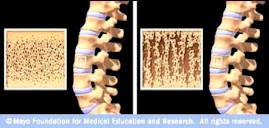
Osteoporotic Bone

Osteoporotic Bone
Source: www.mayoclinic.com

How Strontium Builds Bones

Strontium is a mineral that tends to accumulate in bone. Studies have shown that oral doses of strontium are a safe and effective way to prevent and reverse osteoporosis. Doses of 680 mg per day appear to be optimal. See my "For More Information About Strontium" links section.

Osteoporosis is caused by changes in bone production. In healthy young bones there is a constant cycle of new bone growth and bone removal. With age, more bone is removed and less new bone is produced. The bones become less dense and thus more fragile.

Scientists believe that strontium works in two ways. It may stimulate the replication of pre-osteoblasts, leading to an increase in osteoblasts (cells that build bone). Strontium also directly inhibits the activity of osteoclasts (cells that break down bone). The result is stronger bones.

When taking strontium, be sure to take 1200 mg calcium, 1000 IU vitamin D3, and 500 mg magnesium daily. It is best to take strontium late at night on an empty stomach. Calcium and strontium may compete with each other for absorption if taken together.