Human Skeleton

Human Skeleton

WELCOME TO STRONTIUM FOR BONES BLOG

Have you experienced negative, and even dangerous, side effects from Fosamax (alendronate), Boniva (ibandronate), Actonel (risedronate), Reclast (zoledronic acid), Prolia (denosumab), Forteo (teriparatide), Tymlos (abaloparatide), or other drugs prescribed for osteoporosis? If you have, then rest assured there is a safe, effective treatment for this condition. Strontium, primarily in the form of strontium citrate, is taken orally once a day.

Visitors to my blog can leave comments or ask questions and can remain anonymous, if they wish. Their comments are relayed to my g-mail inbox. Below each post, the number of comments for that post is cited and underlined because it is a link. By clicking on that link below any post, a window opens so that a visitor can leave a comment. Ideally, visitors leave comments on posts most relevant to their comments. All comments to my posts are moderated by me.

Browse the posts and visit the link library of references.


Blog Archive

Showing posts with label BMD. Show all posts

Thursday, September 8, 2022

Beneficial Effects of Strontium Ranelate vs. Alendronate on TBS and Bone Architecture

The following abstract was published on Osteoporosis International (2012) 23: (Supplement 2):S85S386. 

Abstract P471, Pages S266-S267

Didier Hans1, Marc-Antoine Krieg1, Olivier Lamy1, Dieter Felsenberg2
1
Lausanne University Hospital Center of Bone Diseases, Bone and Joints Department, Lausanne, Switzerland, 2Charité Campus Benjamin Franklin, Klinik und Poliklinik für Radiologue und Muklearmedizin, Berlin, Germany

Objective(s): Trabecular Bone Score (TBS, Med-Imaps, France) is an index of bone architecture independent of BMD calculated by quantifying local variations in grey level from anteroposterior spine DXA scan and reported to be associated with fracture in prior case-control and prospective studies1. We compared the effects of strontium ranelate (SrRan) and alendronate (ALN) on spine architecture patterns as assessed by TBS in women with postmenopausal osteoporosis.

Material & Methods: A post hoc analysis was performed on DXAs (Hologic and GE Lunar Devices) from 79 women out of 189 included in a double blind, double dummy study and randomized to SrRan 2 g/day or ALN 70 mg/week during 2 years2. Spine TBS parameters were assessed by TBS iNsight (v1.9) at the spine after 12 and 24 months of treatment. We applied ISCD rules for individual vertebrae exclusion independently for BMD and TBS, respectively. Since duplicate measurements were performed at baseline, precision were calculated as CV%.

Results: Baseline characteristics (mean ± SD) were similar between groups in term of age, 69.2 ± 4.4 years; BMI, 23.8±4.4 kg/m2; L1-L4 T-score, -2.9±0.9 and TBS 1.230 ± 0.09. As expected, the correlation between Spine BMD and TBS was very low with r= 0.12. Precision errors were 1.1% and 1.6% for spine BMD and TBS, respectively. Over 1 and 2 years, L1-L4 BMD increased significantly by 5.6% and 9% in SrRan group and by 5.2% and 7.6%, respectively in ALN group. Similarly, spine TBS increased by 2.3% (p < 0.001) and 3.1% (p < 0.001) in SrRan group and by 0.5% (ns) and 1.0% (ns) respectively in ALN group with a significant between-group difference in favor of SrRan (p = 0.04 and p = 0.03). There were no correlation between delta BMD and TBS at 1 year or at 2 years. The two treatments were well tolerated. 

Conclusion(s): SrRan has greater effects on bone architecture index at the spine compared to alendronate in women with postmenopausal osteoporosis after 2-year treatment. These results consolidate previous studies supporting a benefit of SrRan on bone architecture.

References: 1. Hans D. et al. J Bone Miner Res 2011;26:2762. 

2. Felsenberg D. et al. Osteoporos Int 2011;22(suppl. 1):S102.

https://sci-hub.se/https://doi.org/10.1007/s00198-012-1928-7

Sunday, September 27, 2020

What Determines How Much Strontium Is in Your Bones?

It is generally said that, for every 1% of strontium incorporated into bone crystal, BMD is overestimated by 10%. However, we do not know how much strontium has been incorporated into each of your bones. 

The amount of strontium in your bones will depend on several factors: 

(1) the dosage (680 mg, as in the COMB study; 340 mg, which is a half dose; or 450 mg, the dosage used in the MOTS study; 

(2) the length of time you have been taking strontium (The COMB and MOTS studies lasted only one year. Therefore, the strontium effect on those DXA scans was less than had the subjects been studied for three years or longer. 

(3) how well you absorb the strontium (Absorption of strontium salts is about 25% for most people with normal absorption, but, as we age, our ability to absorb nutrients, supplements, and medications is often reduced.); 

(4) the individual bones (Some bones absorb strontium better than others.); 

(5) the DXA equipment used to measure BMD.


Friday, January 11, 2019

Axial DXA 8 January 2019

The report of my axial DXA scan taken on 8 January 2019 appears below. I have been on 2 grams strontium citrate/day for 11 years. I also take a calcium/magnesium tablet (500 mg Ca/250 mg Mg), a multivitamin with 1000 IU vitamin D3, and several other supplements. I get plenty of protein in my diet. I exercise daily.

As you can see, my DXA results were excellent, except for my left femoral neck, which showed no change from the previous scan.

I am happy with my results, although I know the comparison of this year's results to those of 2.5 years ago contains some built-in error because two different brands of DXA machines were used. My 2016 scan was on a Hologic and the 2019 scan was on a GE Lunar Prodigy.

Changing testing sites, and, therefore, machines, was not my choice. I had been getting my scans in the outpatient radiology department of a large hospital medical center, but the provider is now pushing patients into its freestanding imaging centers. I was told my insurance would not pay for a DXA unless it was done at a freestanding center, but my insurance denied that assertion.

The risk factor for secondary osteoporosis mentioned, but not specified, in the report is early menopause.

INDICATION: Postmenopausal. Follow-up of osteopenia on prior DXA.
Patient reports risk factors for secondary osteoporosis.

COMPARISON: 8/4/2016

FINDINGS:

Spine: Total BMD of the spine (L1-4) is 1.108 g/cm2, with a T-score of
-0.7 and a Z-score of 1.0.

Left Femoral Neck: BMD is 0.883 g/cm2, with a T-score of -1.1 and a
Z-score of 0.6.

Left Total Hip: BMD is 0.928 g/cm2, with a T-score of -0.6 and a Z-score
of 0.9.

Right Femoral Neck: BMD is 0.919 g/cm2, with a T-score of -0.9 and a
Z-score of 0.9.

Right Total Hip: BMD is 0.963 g/cm2, with a T-score of -0.4 and a Z-score
of 1.1.

Compared to the prior study, there has been 9% increase in spine density, 6% increase in left total hip density, but no change in left femoral neck density.

FRAX evaluation calculates 10-year probability of fracture:

Major Osteoporotic: 7.8%

Hip: 1.0%

IMPRESSION:

Based on BMD, diagnosis is consistent with osteopenia.

FOLLOWUP: In 2 years is recommended.


Friday, February 16, 2018

BMD Increases by Varying Amounts with Strontium Citrate and Decreases by Varying Amounts after Discontinuation


A study published September 13, 2016, presents three case studies of patients who took strontium citrate (680 mg strontium per day) for six years, five years, and four years (Cases 1, 2, and 3, respectively) and then stopped taking it for two years, one year, and one year (Cases 1, 2, and 3, respectively). The study gives the increases in BMD with SrC and the decreases when the supplement was discontinued.  Of note is the fact that both the increases and decreases vary with the site (lumbar spine or total hip), the individual, and the number of years of use or discontinuation of SrC. Also, keep in mind that stopping any of the osteoporosis drugs will also result in loss of some of the BMD gains because there is no cure for osteoporosis.

Case 1
A 76-year-old female with osteoporosis (OP) took alendronate weekly for 10 years till 2006, then every other week for another year and was initiated on a drug holiday. She started self-administrating SrC (680mg/day) in 2006 and continued to take daily calcium (600mg bid) and vitamin D (2000units). Serum calcium and Vitamin D (32-66ng/ml) remained normal. She continued SrC on her own till 2012, when she agreed to stop taking it due to concerns about accumulation and toxicity.

On dual-energy X-ray absorptiometry (DXA) scan, total hip mean BMD increased 2.7% in the first 2 years on SrC after stopping alendronate, and continued to increase to a maximum of 9.2% after 6 years of treatment with SrC (1.53%/year). Lumbar Spine (LS) BMD was non-diagnostic due to degenerative changes in the spine.

In the first 2 years off of SrC, total hip mean BMD decreased by 5.7%.

Case 2
A 64-year-old female with history of OP, which was diagnosed in 2001, took Actonel 35mg weekly for 5 years, stopped for more than a year and resumed Actonel intermittently for another 2 years before starting drug holiday. She was taking Calcium 500 mg in the multivitamin and 2500 mg of vitamin D. Serum calcium and vitamin D were within normal range. She started strontium citrate (680mg strontium) daily in 2009 and took it for 5 years, stopping it in 2014.

Yearly assessment of her BMD via DEXA scan showed an increase of 4.3% at LS spine (L1-L4 vertebrae), and 7.6 % at total hip within 1 year of SrC treatment. At 5 years, BMD increase was 6.5 % at LS and 12% for mean total hip. She agreed to stop SrC at this time.

One year after stopping SrC, LS BMD decreased by 9.1 % and total hip BMD decreased by 4.2%.

Case 3
A 59-year-old female with OP was treated with weekly alendronate for 4 years till 2007, when she stopped it due to concerns for osteonecrosis of jaw. She was advised to resume alendronate in 2008 due to declining BMD, but opted not to take it.

She started self-administration of 680mg of SrC daily in February 2009 and continued it for four years till January 2013, when she stopped it due to myalgias and concern about risk for toxicity. Due to her history of ulcerative colitis, she was limited in dairy intake, although she averaged half a cup of almond milk daily and took calcium supplements. Serum calcium and vitamin D were within normal range.

BMD via DEXA scan showed an increase of 10.7 % at LS (L1-L4) at 2 years after starting SrC, and 4.3 % at total hip.

BMD decreased by 14% at LS and by 6.4% at total hip a year after stopping SrC.

Mirza FS, Azim S, Bhargava A (2016) Change in Bone Mineral Density with Strontium Citrate: An Illusion or Reality. J Nutrition Health Food Sci 4(3): 1-3. DOI: http://dx.doi.org/10.15226/jnhfs.2016.00167

Thursday, August 11, 2016

My DXA Scan on August 4, 2016

My scores improved, but I am still in the osteopenia range. Therefore, I will keep taking 680 mg strontium per day from strontium citrate, along with my other supplements. Here are my results:

Spine: Total BMD of the spine (L1-4) is 0.897 g/cm2, with a T-score of -1.4.

Left Femoral Neck: BMD is 0.729 g/cm2, with a T-score of -1.1.

Left Total Hip: BMD is 0.812 g/cm2, with a T-score of -1.1.

Compared to the prior study (August 21, 2013), there was a 3% increase in BMD of the lumbar spine and a 5% increase in BMD of the left total hip.

My lumbar spine T-scores have always been worse than my left total hip T-scores.
 
My lumbar spine T-scores went from -3.0 (osteoporosis) in May 2007 to -2.7 (still osteoporosis but better) in July 2009 to -1.6 (osteopenia) in August 2013 to -1.4 (osteopenia) in August 2016.


Monday, February 15, 2016

My Progress with Strontium Citrate


I’ve been taking Doctor’s Best Strontium Bone Maker (680 mg strontium) once daily since January 2008. That’s eight years of taking strontium continuously. My back is stronger than it’s been in years. This morning I did yard work—pulling up oak seedlings and weeds and burying a cable that keeps being uncovered by the rain. I bent over numerous times with no pain. I should have taken a work bench and not bent over, but, sometimes I forget to avoid forward bending because I feel well. I’ve had no fractures, although I keep getting older. My BMD has continued to improve. I love strontium citrate!

My lumbar spine T-scores went from -3.0 (osteoporosis) in May 2007 to -2.7 (still osteoporosis but better) in July 2009 to -1.6 (osteopenia) in August 2013. I documented my scores on this blog:


I have orders for another DXA scan this year (2016). I haven’t made an appointment yet. I’m hoping for normal (-1.0 and above) T-scores this time. I’ll keep you posted.

Wednesday, November 11, 2015

Amino Acid Intake and BMD


Jennings et al reported analyses of female identical twins with different amino acid intakes.

Twins with higher intakes of alanine and glycine had higher BMD at the spine than their co-twins, with within-pair differences in spine BMD of 0.012 g/cm2 and 0.014 g/cm2, respectively.

In cross-sectional multivariable analyses of 3,160 females aged 18-79 years, a higher intake of total protein was associated with higher BMD at the spine (quartile Q4 to quartile Q1: 0.017 g/ cm2) and forearm (Q4 to Q1: 0.010 g/cm2.

Intake of alanine, arginine, glutamic acid, leucine, lysine, and proline was associated with higher BMD at the spine and forearm, with the strongest association observed for leucine (Q4 to Q1: 0.024 g/cm2).

When intakes were stratified by source, vegetable or animal, prevalence of osteoporosis or osteopenia was 13% to 19% lower comparing extreme quartiles of vegetable intake for five amino acids (not glutamic acid or proline).

Jennings A, MacGregor A, Spector T, Cassidy A. Amino acid intakes are associated with bone mineral density and prevalence of low bone mass in women: Evidence from discordant monozygotic twins. J Bone Miner Res 2015; doi:10.1002/jbmr.2703.


Thursday, August 27, 2015

BMD and Strontium Artifact


“The greater increases in BMD are in part due to combined anti-catabolic and bone anabolic effects of strontium ranelate and in part due to the higher atomic number of strontium in bone as compared to calcium. The higher atomic number of strontium (Z = 38) than calcium (Z = 20) leads to greater attenuation of X-rays and consequently an overestimation of BMD as measured by DXA (and expressed as calcium hydroxyapatite equivalent). The greater changes in BMD are clinically useful, allowing the clinician to more easily demonstrate positive changes in BMD as an indication of patient response to therapy. With most osteoporosis therapies, BMD changes in individual patients are likely to fall within the precision error for the densitometer.”

“Although various algorithms for adjusting the bone density in patients on strontium ranelate therapy have been proposed, none are validated. There are likely to be differences in strontium incorporation in bone at different skeletal sites for many reasons. Strontium is preferentially distributed in bone newly formed during strontium ranelate treatment rather than in older bone, formed before treatment initiation. Strontium exchanges more readily on the surface of bone than in deeper bone. It is therefore likely that at different bone sites (trabecular and cortical bone), and with different levels of bone turnover, bone strontium content would be quite variable between individuals. Consequently, adjustment algorithms will not be clinically useful.”

“An adjustment of the lumbar spine BMD was first proposed in the STRATOS study and has been used as an attempt to approximate the increase in BMD related to the pharmacological effect of strontium ranelate. However, this algorithm for adjustment of lumbar spine BMD is complex and based on numerous assumptions.… By the above adjustment algorithm, it is estimated that the BMD overestimation due to strontium in bone accounts for approximately 50% of the measured change in BMD after 3 years of treatment.”

“The increased BMD observed clinically in patients treated with strontium ranelate is both due to the presence of strontium in bone as well as the pharmacological antiresorptive and anabolic activity on bone cells resulting in increased bone tissue with normal bone calcium mineralization. In animal studies, measured-BMD increases correlate with improved bone strength and adjustment of the BMD does not improve the strength-BMD correlation compared with the unadjusted BMD. This indicates that the measured, unadjusted BMD is optimal in predicting improved biomechanical properties in patients on strontium ranelate therapy. The easily discernible BMD increases in strontium ranelate-treated patients will assure the clinician that medication has been ingested, that strontium has been absorbed, and that anti-fracture efficacy in keeping with the results from the pivotal trials can be expected.”

Wandering Skeleton

Wandering Skeleton
Artist: Joel Hoekstra

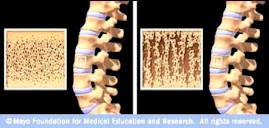
Osteoporotic Bone

Osteoporotic Bone
Source: www.mayoclinic.com

How Strontium Builds Bones

Strontium is a mineral that tends to accumulate in bone. Studies have shown that oral doses of strontium are a safe and effective way to prevent and reverse osteoporosis. Doses of 680 mg per day appear to be optimal. See my "For More Information About Strontium" links section.

Osteoporosis is caused by changes in bone production. In healthy young bones there is a constant cycle of new bone growth and bone removal. With age, more bone is removed and less new bone is produced. The bones become less dense and thus more fragile.

Scientists believe that strontium works in two ways. It may stimulate the replication of pre-osteoblasts, leading to an increase in osteoblasts (cells that build bone). Strontium also directly inhibits the activity of osteoclasts (cells that break down bone). The result is stronger bones.

When taking strontium, be sure to take 1200 mg calcium, 1000 IU vitamin D3, and 500 mg magnesium daily. It is best to take strontium late at night on an empty stomach. Calcium and strontium may compete with each other for absorption if taken together.