On December 09, 2009, Osteologix Inc. (OLGX.OB) announced that it should be prepared to file a marketing application in 2011 in the European Union for its proprietary strontium therapy, NB S101 (strontium malonate). If successful, this will be Osteologix' first marketing approval of NB S101 for the treatment of postmenopausal osteoporosis. Following the successful completion of the company's initial Phase 2 study comparing NB S101 (strontium malonate) to Protelos (strontium ranelate), which is marketed by Les Laboratoires Servier (Servier), Osteologix sought feedback on its development program from various regulatory authorities. Osteologix has determined that the company will be positioned to pursue a European Marketing Application for NB S101 as a treatment for post-menopausal osteoporosis. The company expects that it can complete the additional development work in 2010 and will be prepared to file a marketing application during the first half of 2011. This pathway is in keeping with the Company's overall strategy of developing its once-daily strontium tablet for the osteoporosis market. Osteologix has initiated discussion with potential regional and global partners and believes that the selected partner(s) will be able to begin marketing the product by 2012, providing them with at least 12 years of patent protection in the European Union.
This is an abbreviated version of a press release by Osteologix. See the original at www.osteologix.com.
Human Skeleton

Showing posts with label osteoporosis treatment. Show all posts
Showing posts with label osteoporosis treatment. Show all posts
Tuesday, December 29, 2009


Wednesday, September 23, 2009
Improvement Of Bone Microarchitecture By Strontium Ranelate
The analysis of transiliac bone biopsy samples from phase 2 and 3 clinical trials of strontium ranelate has provided further evidence of the good bone safety of strontium ranelate in the treatment of postmenopausal osteoporosis. Strontium ranelate improves both trabecular and cortical bone.
At the trabecular level, strontium ranelate significantly increases trabecular number by 14% and decreases trabecular separation by 16%, shifting trabeculae from rod-like structures to plate-like patterns. At the cortical level, strontium ranelate enlarges cortical bone dimensions by increasing cortical thickness by 18%.
Strontium ranelate is the first oral treatment to improve both trabecular and cortical bone in postmenopausal osteoporotic women. The change in 3D trabecular and cortical microarchitecture may improve bone biomechanical competence and explain the decreased fracture rate after strontium use.
http://www.servier.com/pro/osteoporosis/Osteoscoop/pdf/Osteoscoop_Issue61.pdf
Friday, February 27, 2009
Strontium and Osteoporosis
On July 7, 2008, Sara S. DeHart, MSN, Ph.D., Online Journal Contributing Writer, wrote Strontium and Osteoporosis: A Treatment Not Offered to American Women. "The purpose of this article is to provide a summary of current published research on the mineral strontium and its purported function in preventing osteoporotic fractures in postmenopausal women. This mineral is available through regular medical sources in Europe and is approved for use in 21 European countries." For comparative purposes of what happens to postmenopausal women in the United States, she included a case study of her own "journey through this morass of data and treatment options." Because Dr. DeHart's stated purpose in writing the article so closely correlates with my purpose in maintaining this blog, I have added a link to her article. http://onlinejournal.com/artman/publish/article_3458.shtml
Subscribe to:
Posts (Atom)
Wandering Skeleton

Artist: Joel Hoekstra
Osteoporotic Bone
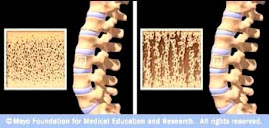
Source: www.mayoclinic.com