Human Skeleton

Human Skeleton

WELCOME TO STRONTIUM FOR BONES BLOG

Have you experienced negative, and even dangerous, side effects from Fosamax (alendronate), Boniva (ibandronate), Actonel (risedronate), Reclast (zoledronic acid), Prolia (denosumab), Forteo (teriparatide), Tymlos (abaloparatide), or other drugs prescribed for osteoporosis? If you have, then rest assured there is a safe, effective treatment for this condition. Strontium, primarily in the form of strontium citrate, is taken orally once a day.

Visitors to my blog can leave comments or ask questions and can remain anonymous, if they wish. Their comments are relayed to my g-mail inbox. Below each post, the number of comments for that post is cited and underlined because it is a link. By clicking on that link below any post, a window opens so that a visitor can leave a comment. Ideally, visitors leave comments on posts most relevant to their comments. All comments to my posts are moderated by me.

Browse the posts and visit the link library of references.


Blog Archive

Showing posts with label Fosamax. Show all posts

Wednesday, April 2, 2014

Sequential Therapy with Bisphosphonates and Strontium


Readers of my blog know that I took Fosamax 70 mg once weekly for six calendar months (28 weeks) before the side effects forced me to stop taking it. I waited one month and then began taking strontium citrate daily. I now believe my initial treatment with the bisphosphonate, although lasting only half a year, may have initially delayed and blunted my response to the strontium. My DXA scores after six months on Fosamax and 18 months on strontium were good but not stellar. Having now been on strontium for more than six years, I have overcome any initial blunting, as shown by my most recent DXA scores, which were terrific.

“A recent study provides evidence that prior bisphosphonate therapy results in blunting and delay of the BMD response to strontium ranelate. In a prospective study in postmenopausal women with osteoporosis, 56 bisphosphonate-naïve women and 52 women treated with an oral bisphosphonate for at least one year, who had stopped bisphosphonate therapy within the last month, were given strontium ranelate 2 g daily, together with calcium and vitamin D supplements. After one year of treatment, BMD in the lumbar spine had increased 5.6% in bisphophonate-naïve women and by 2.1% in women previously treated with bisphosphonates; at both six and 12 months the BMD increase in the former group was significantly less than in the latter. At the total hip there was no significant change in BMD at one year in the bisphosphonate-pretreated women compared to an increase of 3.4% in the treatment-naïve group. In an extension of this study, it was shown that BMD in the spine in pretreated women increased in parallel with treatment naïve women from six months onwards, whereas some blunting of the BMD response at the hip was still observed after two years of treatment. The most likely mechanism to explain these effects is that bisphosphonates inhibit the uptake of strontium into bone because of suppression of bone turnover and the consequent reduction in newly formed bone.”

“Osteoporosis: Diagnosis and Management,” Dale W. Stovall (ed.), Chapter 13, pages 202-203.

Tuesday, October 9, 2012

Case Study on Strontium Citrate for Osteoporosis with Fragility Fractures


Sara S. DeHart, MSN, Ph.D., is an 80-year-old woman who was diagnosed with osteopenia at age 63. She was treated initially with Fosamax 10 mg. daily and Estraderm patches twice weekly.  She discontinued the patches after about two years, and Fosamax after about three years. Following a fragility fracture of the sacrum, she was prescribed Actonel 5 mg five times a week. Her vitamin D blood level was found to be very low, although she had supplemented with 400 IU vitamin D3 throughout her adult life.
She followed “standards of care” medical recommendations until she developed a second fragility fracture at T9 while taking Actonel.  At that point, she stopped using Actonel and began taking strontium citrate. She increased her vitamin D3 supplementation. Today, she is 80 years old and her BMD is normal. More importantly, she has not fractured, even after a recent fall onto an asphalt driveway! Follow this link to read her amazing story:


Saturday, July 11, 2009

Improved T-Scores After Treatment

My first DEXA scan on 05/08/07 diagnosed me with osteoporosis. My second scan was done 07/06/09 after the following treatment: Fosamax 70 mg weekly from 06/18/07 to 12/24/07, two capsules Doctor's Best Strontium Bone Maker daily from 01/21/08 to 07/06/09. Here are my BMD results in g/cm2 and my T-scores for my second scan:


Spine (L1-L4): BMD 0.749, T-Score -2.7

Lt. Hip (neck): BMD 0.563, T-Score -2.6

Lt. Hip (total): BMD 0.739, T-Score -1.7

Despite my best efforts, my scores were not corrected for strontium intake by the radiologist. My first and second scans were not on the same DEXA machine, but they were both on DXA Hologic scanners. Even so, I am very happy with my results. My T-scores improved 10.0% at the spine, 7.1% at the left hip (neck), and 22.7% at the left hip (total). I plan to continue taking strontium citrate.

Monday, June 22, 2009

Study Shows Protelos Builds Better Bone Than Fosamax

A two-year double-blind study included 88 women over age 50 with postmenopausal osteoporosis who were treated with either Protelos (strontium ranelate) 2 g. daily or Fosamax (alendronate) 70 mg. weekly. The study, which used high-resolution computerized tomography, showed that Protelos increased cortical bone thickness, bone volume and trabecular bone density to a significantly greater extent than Fosamax over a one-year period.

The one-year interim results on bone microstucture, a determinant of bone strength, showed a +5.3% increase in cortical thickness and a +2.0% increase in bone volume in the Protelos-treated group. There was no change in the Fosamax-treated group.

For more information and references, see www.medicalnewstoday.com/printerfriendlynews.php?newsid=132149

Tuesday, April 7, 2009

FDA Bisphosphonate Alert

Information on Bisphosphonates (marketed as Actonel, Actonel+Ca, Aredia, Boniva, Didronel, Fosamax, Fosamax+D, Reclast, Skelid, and Zometa)

FDA ALERT [1/7/2008] - FDA is highlighting the possibility of severe and sometimes incapacitating bone, joint, and/or muscle (musculoskeletal) pain in patients taking bisphosphonates. Although severe musculoskeletal pain is included in the prescribing information for all bisphosphonates, the association between bisphosphonates and severe musculoskeletal pain may be overlooked by healthcare professionals, delaying diagnosis, prolonging pain and/or impairment, and necessitating the use of analgesics.

The severe musculoskeletal pain may occur within days, months, or years after starting a bisphosphonate. Some patients have reported complete relief of symptoms after discontinuing the bisphosphonate, whereas others have reported slow or incomplete resolution. The risk factors for and incidence of severe musculoskeletal pain associated with bisphosphonates are unknown.

This severe musculoskeletal pain is in contrast to the acute phase response characterized by fever, chills, bone pain, myalgias, and arthralgias that sometimes accompanies initial administration of intravenous bisphosphonates and may occur with initial exposure to once-weekly or once-monthly doses of oral bisphosphonates. The symptoms related to the acute phase response tend to resolve within several days with continued drug use.

Healthcare professionals should consider whether bisphosphonate use might be responsible for severe musculoskeletal pain in patients who present with these symptoms and consider temporary or permanent discontinuation of the drug.
This information reflects FDA's current analysis of data available to FDA concerning this drug. FDA intends to update this when additional information or analyses become available.

Tuesday, May 20, 2008

Alternative Medicine For Osteoporosis

Strontium citrate is an excellent alternative medicine for osteoporosis treatment. Instead of poisoning your body with drugs such as Fosamax, take strontium, a naturally occurring mineral present in water, food, and the human skeleton in trace amounts. Studies show that strontium promotes bone formation and decreases bone resorption (loss), leading to higher bone density.

Wandering Skeleton

Wandering Skeleton
Artist: Joel Hoekstra

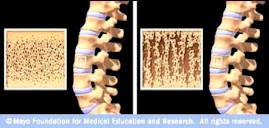
Osteoporotic Bone

Osteoporotic Bone
Source: www.mayoclinic.com

How Strontium Builds Bones

Strontium is a mineral that tends to accumulate in bone. Studies have shown that oral doses of strontium are a safe and effective way to prevent and reverse osteoporosis. Doses of 680 mg per day appear to be optimal. See my "For More Information About Strontium" links section.

Osteoporosis is caused by changes in bone production. In healthy young bones there is a constant cycle of new bone growth and bone removal. With age, more bone is removed and less new bone is produced. The bones become less dense and thus more fragile.

Scientists believe that strontium works in two ways. It may stimulate the replication of pre-osteoblasts, leading to an increase in osteoblasts (cells that build bone). Strontium also directly inhibits the activity of osteoclasts (cells that break down bone). The result is stronger bones.

When taking strontium, be sure to take 1200 mg calcium, 1000 IU vitamin D3, and 500 mg magnesium daily. It is best to take strontium late at night on an empty stomach. Calcium and strontium may compete with each other for absorption if taken together.