Human Skeleton

Human Skeleton

WELCOME TO STRONTIUM FOR BONES BLOG

Have you experienced negative, and even dangerous, side effects from Fosamax (alendronate), Boniva (ibandronate), Actonel (risedronate), Reclast (zoledronic acid), Prolia (denosumab), Forteo (teriparatide), Tymlos (abaloparatide), or other drugs prescribed for osteoporosis? If you have, then rest assured there is a safe, effective treatment for this condition. Strontium, primarily in the form of strontium citrate, is taken orally once a day.

Visitors to my blog can leave comments or ask questions and can remain anonymous, if they wish. Their comments are relayed to my g-mail inbox. Below each post, the number of comments for that post is cited and underlined because it is a link. By clicking on that link below any post, a window opens so that a visitor can leave a comment. Ideally, visitors leave comments on posts most relevant to their comments. All comments to my posts are moderated by me.

Browse the posts and visit the link library of references.


Blog Archive

Showing posts with label strontium ranelate. Show all posts

Monday, July 28, 2025

REMS Scans and Strontium

REMS, which is unaffected by strontium, will show increases in BMD for someone on strontium, but the increases will be real, and, therefore, more modest. I just read a post by a British woman who has been taking strontium citrate (not strontium ranelate, although available in the UK). She has been taking a half dose (340 mg strontium). She just had her third REMS scan, and her spine bone density and fragility scores both improved significantly. Her hip scores stayed the same as those from two years earlier but the hip fragility score was slightly worse. Had she been on the full dose of strontium, her hip scores would most likely have been better. She is a patient of Dr. Nick Birch, the founder of Osteoscan UK, He uses the Echolight REMS system to offer bone health assessments. 

https://healthunlocked.com/bonehealth/posts/149823299/rems-scan-and-strontium-citrate


Saturday, February 4, 2023

Strontium and Heart Health

I started taking strontium citrate on January 21, 2008. I had had a bad experience with Fosamax once weekly. When I say bad, I mean very bad. I was dizzy and had vertigo to the point I could barely walk a few steps to the bathroom and could not do floor exercises because the minute my head hit the floor, I felt I was falling off a cliff. I was worried about my osteoporosis diagnosis and was desperate to find something that would work for me without causing more harm than good. I began doing internet searches, but there was little information about strontium of any kind. After I had been on SC for a short time, I came across Sara DeHart's first case study, which had been posted on July 7, 2008. That study gave me much hope for SC. I decided to monitor my progress and post my results on my own blog. 


I also began following any news or articles I found about strontium, including strontium ranelate, because there were extensive clinical trials of SR. I posted articles about the SOTI and TROPOS clinical trials. 


It was not until 2013 that news about SR and increased risk of heart problems began appearing. In April 2013, the use of Protelos/Osseor (strontium ranelate) was restricted to those with severe osteoporosis at high risk of fracture. In 2014, the European Medicines Agency (EMA) recommended further restrictions. SR was to be prescribed only to patients with severe osteoporosis and unable to tolerate other medications. All patients were to be evaluated for heart risks before prescribing or continuing to prescribe SR. In 2017, Servier, the manufacturer of SR, pulled the product from the EU because it was not making enough money. 


I see myself as a reporter. I write about all the news--both good and bad. In 2013, I had already been on SC for five years. I felt great. I had had no side effects and no fractures. The only reports about SC were Sara DeHart's three case studies and the COMB study (2012)--all great news! So, for me, the information about SR and heart issues was interesting but only mildly disturbing. I may have inadvertently scared some people, who may have stopped taking SC solely on the basis of bad news about SR. 


On October 22, 2015, Health Canada published its "Summary Safety Review--Strontium--Risk of Heart and Circulatory Side Effects." Health Canada's review did not find information available on cardiovascular risk with the strontium ranelate form at doses less than 680 mg strontium per day, or with other non-ranelate forms of strontium at any dose. While uncertainties remain, Health Canada is taking a precautionary approach and recommending updates to the labels of products containing strontium, including informing consumers not to use these products if they have pre-existing heart or circulatory problems, such as heart attack, stroke or blood clot.


I have not had a heart attack, stroke, or blood clot, although I have close relatives who have had all three (not all three for the same person). I have mixed hyperlipidemia, for which I take a statin drug. I have occasional heart palpitations, but my recent EKG was normal, and I control the palpitations with CBD oil. I will continue to take SC and to report on my health and on any news about any form of strontium. 


Thursday, September 8, 2022

TBS, Strontium, and Prof. Didier Hans

Prof. Didier Hans, PhD, MBA co-founded Med-Imaps SA in 2006 and became CEO of Medimaps Group in 2012. He currently drives the company’s global strategy, orientation and business objectives, and oversees its Quality Management framework and policies.He holds a PhD in Medical Physics and an Executive MBA from HEC Geneva. https://www.medimapsgroup.com/team/didier-hans/

One of Medimaps Group's products, TBS iNsight™ (Osteo), is an advanced imaging software application for bone densitometers (DXA). It provides a way to better predict a patient’s risk for bone fracture, to fine-tune therapy decisions, and to improve patient management.

TBS iNsight™ is a Medical Device that is CE 2797 marked & has been cleared to be sold in the US.


https://www.medimapsgroup.com/tbs-osteo/


I recently had the opportunity to ask Prof. Hans a question by email. He graciously answered. 


My question:


Will a TBS score be affected by the bone strontium effect, as the BMD by DXA scan is?


His answer, paraphrased and confirmed: 


In our study of TBS and strontium ranelate, TBS was less affected by the larger atomic number of strontium than the BMD was affected. So, the study showed that strontium improved bone microarchitecture. 

Beneficial Effects of Strontium Ranelate vs. Alendronate on TBS and Bone Architecture

The following abstract was published on Osteoporosis International (2012) 23: (Supplement 2):S85S386. 

Abstract P471, Pages S266-S267

Didier Hans1, Marc-Antoine Krieg1, Olivier Lamy1, Dieter Felsenberg2
1
Lausanne University Hospital Center of Bone Diseases, Bone and Joints Department, Lausanne, Switzerland, 2Charité Campus Benjamin Franklin, Klinik und Poliklinik für Radiologue und Muklearmedizin, Berlin, Germany

Objective(s): Trabecular Bone Score (TBS, Med-Imaps, France) is an index of bone architecture independent of BMD calculated by quantifying local variations in grey level from anteroposterior spine DXA scan and reported to be associated with fracture in prior case-control and prospective studies1. We compared the effects of strontium ranelate (SrRan) and alendronate (ALN) on spine architecture patterns as assessed by TBS in women with postmenopausal osteoporosis.

Material & Methods: A post hoc analysis was performed on DXAs (Hologic and GE Lunar Devices) from 79 women out of 189 included in a double blind, double dummy study and randomized to SrRan 2 g/day or ALN 70 mg/week during 2 years2. Spine TBS parameters were assessed by TBS iNsight (v1.9) at the spine after 12 and 24 months of treatment. We applied ISCD rules for individual vertebrae exclusion independently for BMD and TBS, respectively. Since duplicate measurements were performed at baseline, precision were calculated as CV%.

Results: Baseline characteristics (mean ± SD) were similar between groups in term of age, 69.2 ± 4.4 years; BMI, 23.8±4.4 kg/m2; L1-L4 T-score, -2.9±0.9 and TBS 1.230 ± 0.09. As expected, the correlation between Spine BMD and TBS was very low with r= 0.12. Precision errors were 1.1% and 1.6% for spine BMD and TBS, respectively. Over 1 and 2 years, L1-L4 BMD increased significantly by 5.6% and 9% in SrRan group and by 5.2% and 7.6%, respectively in ALN group. Similarly, spine TBS increased by 2.3% (p < 0.001) and 3.1% (p < 0.001) in SrRan group and by 0.5% (ns) and 1.0% (ns) respectively in ALN group with a significant between-group difference in favor of SrRan (p = 0.04 and p = 0.03). There were no correlation between delta BMD and TBS at 1 year or at 2 years. The two treatments were well tolerated. 

Conclusion(s): SrRan has greater effects on bone architecture index at the spine compared to alendronate in women with postmenopausal osteoporosis after 2-year treatment. These results consolidate previous studies supporting a benefit of SrRan on bone architecture.

References: 1. Hans D. et al. J Bone Miner Res 2011;26:2762. 

2. Felsenberg D. et al. Osteoporos Int 2011;22(suppl. 1):S102.

https://sci-hub.se/https://doi.org/10.1007/s00198-012-1928-7

Tuesday, August 23, 2022

Trabecular Bone Score (TBS)

I will be asking that a Trabecular Bone Score (TBS) be included with my next DXA scan. The doctor who read my latest scan wrote, "Follow up with DEXA and TBS: As needed." 

I found a review of TBS. The review includes a section on "Changes in TBS with Treatment of Osteoporosis." Below is the paragraph comparing the effects of strontium ranelate and alendronate (Fosamax) on TBS. 

"The effects of strontium ranelate (SrRan) and alendronate on TBS were evaluated in a post hoc analysis performed in 79 women with postmenopausal osteoporosis of 189 included in a double‐blind, double‐dummy, randomized study. Women were randomized to either SrRan 2 g/day or alendronate 70 mg/week for 2 years. TBS and BMD parameters were assessed in the LS after 12 and 24 months of treatment. Over 1 and 2 years, LS BMD increased significantly by 5.6% and 9.0% in the SrRan group and by 5.2% and 7.6%, respectively, in the alendronate group. LS TBS increased by 2.3% (p < 0.001) and 3.1% (p < 0.001) in the SrRan group, but the change in the alendronate group was not significant (0.5% and 1.0%, respectively). There was a significant between‐group difference with SrRan showing larger TBS increases than alendronate."

Let me reiterate: Over one and two years, Lumbar Spine (LS) BMD increased in both the SrRan (5.6%, 9.0%) and alendronate groups (5.2%, 7.6%). You will note that the SrRan BMD numbers are higher, especially after the second year, than the alendronate numbers. The results are as expected because strontium results in an overestimation of BMD.  

HERE IS THE KICKER: LS TBS increased by 2.3% and 3.1% in the SrRan group, but the change in the alendronate group was not significant (0.5% and 1.0%, respectively). There was a significant between‐group difference with SrRan showing larger TBS increases than alendronate.

Keep in mind that TBS is related to bone microarchitecture and provides skeletal information that is not captured from the standard BMD measurement. TBS may be a better predictor of fracture risk than BMD alone. 
https://www.panoramaortho.com/wp-content/uploads/2019/03/TBS-Rev...


Wednesday, December 22, 2021

Summary Safety Review - Strontium - Risk of Heart and Circulatory Side Effects

Product

Oral natural health products containing strontium

Potential Safety Issue

Serious heart and circulatory side effects

Key Messages

·       Strontium is a naturally occurring mineral available as an ingredient in over-the-counter (OTC) natural health products. It is sold in various salt forms and can be used to help support bone health.

·       As a result of a European Medicines Agency's safety review (EMA) on the prescription dose of the ranelate form of strontium (strontium ranelate), Health Canada conducted a review of strontium. The EMA safety review found that the dose of 680 mg per day was beneficial for severe osteoporosis, but that it should not be used in patients who have pre-existing heart or circulatory problems.

·       Health Canada's review did not find information available on cardiovascular risk with the strontium ranelate form at doses less than 680 mg strontium per day, or with other non-ranelate forms of strontium at any dose. While uncertainties remain, Health Canada is taking a precautionary approach and recommending updates to the labels of products containing strontium, including informing consumers not to use these products if they have pre-existing heart or circulatory problems, such as heart attack, stroke or blood clot.

Overview

The European Medicines Agency completed a safety review of strontium ranelate, a drug available by prescription only in Europe at a dose of 680 mg per day and used to treat osteoporosis that is considered severe due to the high risk of fracture. Analysis demonstrated that the increased risk of heart and circulatory effects was only significant in patients with a current or past history of heart and circulatory problems. Health Canada started its safety review because the risk of heart and circulatory side effects is a serious health issue, and because strontium is found in licensed natural health products as strontium salts, including strontium citrate, strontium lactate, and strontium gluconate.

Use in Canada

·       In Canada, strontium is a mineral and classified as a natural health product ingredient. It is found in licensed natural health products in various salt forms, including strontium citrate, strontium lactate, and strontium gluconate.

·       At the time of the review, Health Canada had licensed 30 natural health products containing strontium (included in oral multi-ingredient products and in toothpastes). Of these, 16 provided daily doses of elemental strontium ranging from 4 mg up to 682 mg, in the forms of strontium citrate, strontium lactate, or strontium gluconate.

Safety Review Findings

·       There were no CanadianFootnote a or international reports of heart or circulatory side effects associated with the strontium salt forms licensed in Canada, including strontium citrate, strontium lactate, and strontium gluconate, at the time of the review.

·       Health Canada's review determined that strontium is the only component of strontium salt combinations that plays an active role in the body, while the salt parts like ranelate, lactate, citrate, and gluconate help with absorption of the strontium. There is not enough information available to compare how the different strontium salt combinations are absorbed in the body or the safety risk of heart or circulatory side effects with low dose strontium.

·       Health Canada's review did not find information available on cardiovascular risk with the strontium ranelate form at doses less than 680 mg/ day, or with other non-ranelate forms of strontium at any dose. While uncertainties remain, Health Canada is taking a precautionary approach and considers that strontium, regardless of the form it comes in, may have a potential risk of cardiovascular side effects in people who are already at risk.

Conclusions and Actions

·       Although available evidence for heart and circulatory side effects involved strontium ranelate taken at 680 mg per day only, a risk at lower doses of strontium ranelate and with other strontium salt combinations could not be ruled out.

·       While uncertainties remain, Health Canada is taking a precautionary approach and recommending that licence holders of those products providing adults with more than 4 mg of elemental strontium per day update the labelling to inform consumers not to use these products if they have, or are at high risk for heart disease, circulatory problems, or blood clots.

·       Health Canada has issued an Information Update to inform Canadians about the label revisions and potential risk of cardiovascular side effects.

·       Health Canada will continue to monitor safety information involving all salt forms of strontium, as it does for all health products on the Canadian market, and will take additional actions, if warranted.

Additional Information

The analysis that contributed to this safety review included scientific and medical literature, Canadian and international reports of side effects, and what is known about the use of this strontium both in Canada and internationally.

For additional information, contact the Marketed Health Products Directorate.

Footnote a

Canadian reports can be accessed through the Canada Vigilance Online Database.


https://www.canada.ca/en/health-canada/services/drugs-health-products/medeffect-canada/safety-reviews/summary-safety-review-strontium-risk-heart-circulatory.html


Saturday, December 22, 2018

Strontium Ranelate Returns to UK January 2019


The osteoporosis medication strontium ranelate (SR) will once again be available in the UK from January 2019.

The drug was previously available under the brand Protelos but was pulled from the UK market in August 2017.

Servier, the manufacturer of the drug at the time, decided to cease supplying it to the UK due to loss of sales. Use of the drug in the UK had been limited by the health authorities due to safety concerns about cardiovascular risks. A continuous decline in the number of people being treated with it led to the company's decision.

Pharmaceutical company Aristo has now taken on the manufacturing of strontium ranelate, which will be available for prescription beginning January 2019, for the treatment of severe osteoporosis in postmenopausal women and adult men who are at high risk of fracture.


This is good news for UK patients who wish to take SR. It is also good news for those of us in the USA and Canada, where SR is not available, but strontium citrate (SC) is. Some people taking SC got scared when SR was pulled from the UK and the EU. I have continuously taken SC for 11 years. Below is a link to the package information for Aristo.

Package leaflet: Information for the patient
Strontium ranelate Aristo 2 g
granules for oral suspension

Marketing Authorisation Holder
Aristo Pharma GmbH
Wallenroder Straße 8-10
13435 Berlin
Germany

Manufacturer
Lindopharm GmbH
Neustraße 82
40721 Hilden
Germany


Sunday, November 12, 2017

Strontium and Calcium and Vitamin D


Anyone concerned with bone health, whether taking strontium or not, should have an adequate daily intake of calcium from food or supplements or a combination of the two. In other words, if an individual can get all her calcium from food, she does not need to supplement. However, most people probably will need some calcium supplementation.

The risks of inadequate intake of calcium and vitamin D are reduced calcium absorption, increased serum parathyroid hormone (PTH) concentrations, and bone loss. Low bone mass is a strong predictor of fracture.

There is a rationale for supplementing the diets of elderly subjects with a combination of calcium and vitamin D. Absorption of calcium and possibly of vitamin D and production of vitamin D by the skin decline with aging. Diets deficient in calcium tend also to be deficient in vitamin D because a single food, milk, is the principal dietary source of both these nutrients.


There is no clinical study of strontium with inadequate calcium and vitamin D because such a study would violate the ethical medical standard of doing no harm to patients.

Before inclusion in the TROPOS study of strontium ranelate, patients were subjected to a run-in study to initiate normalization of their calcium and vitamin D status. The duration of this run-in study was 2 wk to 6 months, depending on the severity of calcium and 25-OH vitamin D (25-OH D) deficiency. All enrolled women received daily supplements of up to 1000 mg of elemental calcium adapted to their needs according to their dietary intake (0, 500, or 1000 mg to reach a total daily intake above 1000 mg), and vitamin D according to their serum 25-OH D levels (800 IU for patients having serum 25-OH D lower than 45 nmol/liter and 400 IU for all the others). For patients with severe vitamin D deficiency (25-OH D lower than 30 nmol/liter) the duration of the run-in period was at least 3 months.
 
https://academic.oup.com/jcem/article-lookup/doi/10.1210/jc.2004-1774

Wandering Skeleton

Wandering Skeleton
Artist: Joel Hoekstra

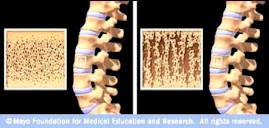
Osteoporotic Bone

Osteoporotic Bone
Source: www.mayoclinic.com

How Strontium Builds Bones

Strontium is a mineral that tends to accumulate in bone. Studies have shown that oral doses of strontium are a safe and effective way to prevent and reverse osteoporosis. Doses of 680 mg per day appear to be optimal. See my "For More Information About Strontium" links section.

Osteoporosis is caused by changes in bone production. In healthy young bones there is a constant cycle of new bone growth and bone removal. With age, more bone is removed and less new bone is produced. The bones become less dense and thus more fragile.

Scientists believe that strontium works in two ways. It may stimulate the replication of pre-osteoblasts, leading to an increase in osteoblasts (cells that build bone). Strontium also directly inhibits the activity of osteoclasts (cells that break down bone). The result is stronger bones.

When taking strontium, be sure to take 1200 mg calcium, 1000 IU vitamin D3, and 500 mg magnesium daily. It is best to take strontium late at night on an empty stomach. Calcium and strontium may compete with each other for absorption if taken together.