Human Skeleton

Human Skeleton

WELCOME TO STRONTIUM FOR BONES BLOG

Have you experienced negative, and even dangerous, side effects from Fosamax (alendronate), Boniva (ibandronate), Actonel (risedronate), Reclast (zoledronic acid), Prolia (denosumab), Forteo (teriparatide), Tymlos (abaloparatide), or other drugs prescribed for osteoporosis? If you have, then rest assured there is a safe, effective treatment for this condition. Strontium, primarily in the form of strontium citrate, is taken orally once a day.

Visitors to my blog can leave comments or ask questions and can remain anonymous, if they wish. Their comments are relayed to my g-mail inbox. Below each post, the number of comments for that post is cited and underlined because it is a link. By clicking on that link below any post, a window opens so that a visitor can leave a comment. Ideally, visitors leave comments on posts most relevant to their comments. All comments to my posts are moderated by me.

Browse the posts and visit the link library of references.


Blog Archive

Showing posts with label DXA scan. Show all posts

Saturday, April 4, 2026

My BMD Results from 2007 to 2024

2007 (my first DXA scan; osteoporosis diagnosis)

My T-score at the lumbar spine was -3.0 (-2.0 at L1, -2.7 at L2, -3.4 at L3 and -3.8 at L4).

My T-score at the left hip was -2.2 (-2.8 at neck, -2.0 at troch, -1.9 at inter).

My BMD results in g/cm2 were 0.712 at the spine (L1-L4), 0.53 at the left hip (neck), and 0.670 at the left hip (total).

2009 My second scan was done 07/06/09 after the following treatment: Fosamax 70 mg weekly from 06/18/07 to 12/24/07, two capsules Doctor's Best Strontium Bone Maker daily from 01/21/08 to 07/06/09.

Spine (L1-L4): BMD 0.749, T-Score -2.7

Lt. Hip (neck): BMD 0.563, T-Score -2.6

Lt. Hip (total): BMD 0.739, T-Score -1.7

2013 (4 years from previous scan; scores in osteopenia range)

0.871 g/cm2 at the spine from L1- L4 (T-score -1.6)

0.692 g/cm2 at the left femoral neck (-1.4 T-score),

0.775 g/cm2 at the left total hip (-1.4 T-score).

2016 (BMD scores improved but still in osteopenia range)

Spine: Total BMD of the spine (L1-4) is 0.897 g/cm2, with a T-score of -1.4.

Left Femoral Neck: BMD is 0.729 g/cm2, with a T-score of -1.1.

Left Total Hip: BMD is 0.812 g/cm2, with a T-score of -1.1.

Compared to the prior study (August 21, 2013), there was a 3% increase in BMD of the lumbar spine and a 5% increase in BMD of the left total hip.

January 2019 (Spine, left total hip, right total hip, right femoral neck show normal BMD; left femoral neck in osteopenia range)

Compared to the prior study, there has been 9% increase in spine density, 6% increase in left total hip density, but no change in left femoral neck density.

August 2022 (showed normal BMD at all sites)

November 2024. The 2024 scan included a TBS, which found normal bone microarchitecture! The only value that was slightly worse than my previous scan of 18 August 2022, was my left femoral neck BMD of 0.728 g/cm2 and a T-score of -1.1 (osteopenia) in 2024, compared to left femoral neck BMD of 0.741 g/cm2 and a T-score of -1.0 (normal density) in 2022.

For almost a year and a half (3/5/2023 through 8/17/2024), I reduced my daily dosage of strontium citrate from 682 mg of strontium per day to 341 mg 4X per week and 682 mg 3X per week. I resumed the full dosage on 8/18/2024.

Originally (2007), my worst BMD scores were for my spine. My most recalcitrant area now is my left femoral neck.

Tuesday, October 21, 2025

DXA vs. REMS Scans

A 75-year-old lady who had been taking strontium citrate (680 mg strontium) for three years, had both a DXA scan and a REMS Echolight scan of her bones. When strontium is incorporated into bone, DXA scan BMD results are falsely elevated because strontium has a higher atomic number than calcium and therefore greater X-ray attenuation. The degree to which the BMD results are falsely elevated depends on the dosage of strontium, the number of years taken, how well the strontium is absorbed and incorporated into bone, the individual bones scanned, and the model of DXA scanner used. REMS is unaffected by strontium in bone. These are her results. You can see that the bone strontium effect varies for each bone scanned. The higher numbers are the DXA scan BMD numbers in g/cm2 and the lower numbers are the REMS scan numbers in g/cm2. The percentages are the difference between DXA numbers and the REMS numbers.

L1-L4   0.775, 0.673, 13.16%

L1   0.698, 0.525, 24.79%

L2   0.763, 0.636, 16.64%

L3  0.805, 0.720, 10.56%

L4. 0.815, 0.773, 5.15% (minimum difference)

Femoral Neck Left  0.772, 0.462, 40.16% (greatest difference)

Hip Total Left  0.750, 0.611, 18.53%

Femoral Neck Right  0.736, 0.467, 36.55%

Hip Total Right. 0.828, 0.617, 25.48%

So, the differences between her DXA and REMS scans varied from a low of 5.15% for L4 to a high of 40.16% for the left femoral neck. 


Wednesday, March 26, 2025

Update on Strontium, Osteoarthritis, and Reduced Dose of Strontium Citrate

For almost a year and a half (3/5/2023 through 8/17/2024), I reduced my daily dosage of strontium citrate from 682 mg of strontium per day to 341 mg (half dose) 4X per week and 682 mg (full dose) 3X per week. That averages out to 487 mg/day, which is 37 mg more than the MOTS study dosage of 450 mg for osteopenia. 


Reducing my dosage was an experiment. I was not having any adverse events. On 8/18/2024, I resumed the full dose of strontium. During the year and a half at a reduced dose, I developed a myxoid cyst (digital mucous cyst) on my left thumb. Mucous cysts are frequently observed in individuals with osteoarthritis, especially in the distal interphalangeal (DIP) joint, which is the joint at the tip of the finger. Later, I developed a bump on the finger next to that thumb. It is likely a Bouchard's node. Bouchard's nodes are bony enlargements that develop on the middle joints (proximal interphalangeal joints) of the fingers. They are a common sign of osteoarthritis. 


So, my main reason for resuming my full dose was worsening osteoarthritis. I had never had bumps on my fingers before, and any other osteoarthritic signs, such as stiffness or joint pain, had always been, and still are, minimal. I want to keep it that way. 


I had a DXA scan with TBS on November 18, 2024. My left femoral neck BMD was slightly worse than my previous scan of 18 August 2022. It was 0.728 g/cm2 with T-score of -1.1 (osteopenia) in 2024, compared to 0.741 g/cm2 with T-score of -1.0 (normal density) in 2022. I had resumed my full dosage of strontium three months prior to the 2024 scan. My TBS showed normal bone microarchitecture! If I had not already resumed my full strontium dose, I probably would have done so after this scan due to the femoral neck results.


I caused my temporomendibular joint disorder (TMD) by clenching my jaws at night. I was unaware of doing that except that I would wake up with pain in my right jaw and right ear. Now, I wear Plackers Grind No More dental guards at night. They worked like a charm, and I have no more pain. Apparently, my TMD was not caused by osteoarthritis, which can affect the temporomendibular joint (TMJ), leading to TMJ disorder, also known as TMD. I had dental X-rays in January 2025, and my jaws and teeth looked fine. 

Monday, April 15, 2024

Sometimes Less Is More

I take several supplements. Recently, I have reduced the dosage or eliminated some of them.


AOR Strontium Support II, 341 mg strontium (from citrate)/capsule

Reduced from two capsules (682 mg Sr)/day to one capsule/day for four days/week and two capsules/day for three days/week

Reason: My DXA scan of August 18, 2022 showed "normal" bone density. Due to the bone strontium effect, my BMD is more likely at the osteopenia stage. Sure beats osteoporosis! 


Magnesium glycinate 

For about a year and a half, I took one capsule per day of Innate Vitality Magnesium Glycinate, 500 mg/capsule. The label does not give the amount of elemental magnesium, which would be 70.5 mg (14.1% of 500 mg magnesium glycinate). I think it is misleading to not provide the amount of Mg. I switched to Doctor's Best High Absorption Magnesium Glycinate Lysinate, which has 100 mg of Mg from 1000 mg magnesium lysinate glycinate chelate per tablet.  

Eliminated magnesium glycinate 

Reason: I was having multiple bowel movements with Doctor's Best, although not with Innate Vitality. There is Mg in my calcium supplement and my multivitamin. I also eat magnesium-rich foods. My husband is still taking Doctor's Best magnesium.


Horbaach Sublingual Methylcobalamin (Vitamin B-12), 5000 mcg/tablet

I was taking 5000 mcg/day, which is a huge amount. I knew it was a huge amount, but my husband needs that amount of B-12 to keep from getting canker sores. He got recurrent sores until he found out about B-12 for canker sores from a scientific article. More recently, I read that, in some people, B-12 can worsen acne because Propionibacterium acnes (P. acnes) need B-12. I have always had acne-prone skin. 

Reduced from one tablet/day to one tablet/week. My husband still takes it daily.

Reason: Worsening acne flareups, and recommended doses are much lower than I was taking


Probiotic, Various Brands

Eliminated probiotic. 

Reason: Not sure the ones I tried were helping my gas and bloating. For many years, I used Nature's Way Primadophilus Bifidus, which seemed to help my digestion. It had to be mailed overnight with a cold pack, but many vendors, such as Amazon, are not keeping it cold.  


Digestive Enzymes, Various Brands

Eliminated digestive enzymes

Reason: None of the various brands made a noticeable difference for my gas and bloating. I am not lactose intolerant. If I were, I would take Lactaid, or a generic lactase supplement, as my husband does. 


Friday, November 10, 2023

Echolight Scans Are Not Affected by Bone Strontium Content!

We strontium users know that BMD results by DXA scan will be artificially high, especially after years of using strontium salts. Here is good news! Echolight REMS technology is NOT AFFECTED by STRONTIUM. It uses ultrasound instead of ionizing radiation. Echolight is a modern ultrasound device capable of measuring bone at the hip and the spine using Radiofrequency Echographic Multi Spectrometry (REMS).


BMD measured by ultrasound is not affected by the strontium content of bone. An in vitro study concluded that aBMD measured by DXA was prone to overestimation in the presence of strontium, but acoustic parameters measured by quantitative ultrasound (QUS) are independent of strontium concentration.

https://pubmed.ncbi.nlm.nih.gov/29080282/


Another advantage of Echolight scans is that they assess the bone internal micro-architecture.  So, physicians obtain results of bone quantity and quality. 


Yet another advantage of REMS over DXA is that REMS appears to be able to overcome common artifacts such as structural alterations caused by OA (osteoarthritis) at the lumbar spine, which affect the BMD values obtained by DXA

https://www.ncbi.nlm.nih.gov/pmc/articles/PMC10217295/#:~:text=Radiofrequency%20Echographic%20Multi%20Spectrometry%20(REMS,technique%20present%20in%20the%20literaturePMC10217295


Echolight has received 510(k) clearance to sell its EchoS Systems in the USA! Companies must submit a Premarket Notification, also called a PMN or 510(k), to the FDA so that it can review the product and clear it. Once the FDA declares that a new medical device is substantially equivalent to a predicate, it is cleared and can be marketed and sold in the USA. 


Echolight has opened a headquarters in NYC. The scans are not available everywhere. You will have to shop around. One early adopter is Dr. Andrew Bush, M.D., an orthopedic surgeon with a practice that performs Echolight scans in Sanford, North Carolina.

https://www.centralcarolinaortho.com/Blog/374362/EXPLORING-ECHOLIGHT-A-NOVEL-WAY-TO-MONITOR-OSTEOPOROSIS


COPA Healthcare LLC, Dania, FL sells the EchoS/Echolight and Marodyne LiV. The website includes a video that shows the EchoS equipment and how the scan is done. The website makes it easy to leave a message in case you have questions.

https://copahealth.us/echolight/


Saturday, June 19, 2021

How to Lose Weight Without Losing Bone

A higher-protein diet that emphasizes lean meats and low-fat dairy foods as sources of protein and calcium can mean weight loss without bone loss. The evidence is in bone scans taken throughout a new University of Illinois study. 

This is an important finding because many people, especially women in mid-life, are concerned with both obesity and osteoporosis. However, treating obesity often increases risk for osteoporosis because many people lose bone mass when they lose weight.

The research compared the results of a high-protein, dairy-intensive diet with a conventional weight-loss diet based on the food-guide pyramid. 

Study co-author Donald Layman, a U of I professor of nutrition, has previously reported that protein-rich weight-loss diets preserve muscle mass, help lower blood sugar and lipids, and improve body composition by targeting weight carried in the abdomen.

In the recent study, Layman's diet prescribed approximately 30 percent of all calories from protein, with an emphasis on lean meats and low-fat dairy products.

The scientists recruited and randomized 130 middle-aged, overweight persons at two sites--the U of I and Pennsylvania State University. Participants then followed either the higher-protein weight-loss diet or a conventional higher-carbohydrate weight-loss diet based on the food-guide pyramid for four months of active weight loss followed by eight months of weight maintenance.

Essentially, lean meats and low-fat milk, cheese, yogurt, etc. were substituted for some of the high-carbohydrate foods in the food-pyramid diet. Participants also ate five servings of vegetables and two to three servings of fruit each day.

Bone mineral content and density were measured with DXA scans of the whole body, lumbar spine, and hip at the beginning of the study, at four months, at eight months, and at the end of the 12-month period.

In the higher-protein group, bone density remained fairly stable, but bone health declined over time in the group that followed the conventional higher-carbohydrate diet. A statistically significant treatment effect favored the higher-protein diet group.

The combination and/or interaction of dietary protein, calcium from dairy, and the additional vitamin D that fortifies dairy products appears to protect bone health during weight loss.

Because higher-protein diets have been associated with elevated urinary calcium levels, some scientists have feared that these diets cause bone demineralization.

The U of I team measured these levels at the beginning and eight months into the study. Although the researchers did note increased amounts of urinary calcium in the higher-protein group, they attributed the source of the increased calcium to improved intestinal absorption of calcium rather than bone loss.

Other recent studies using radio-labeled calcium have shown that the higher urinary calcium levels associated with higher-protein diets are not coming from bone as some researchers had believed.

https://www.sciencedaily.com/releases/2008/06/080605113006.htm


Wednesday, May 9, 2018

Quantitative Ultrasound as Alternative to DXA


Because BMD measured by DXA is prone to overestimation when one is taking strontium, I look at the CHANGE in my DXA score (at each site) from one scan to the next, not the absolute value. So far (10 years on strontium), each scan has been progressively better than the previous scan.

Another option for someone on strontium is to have a quantitative ultrasound (QUS) to assess bone health. QUS is not affected by strontium content in bone. Another positive is that the procedure uses ultrasound waves, not radiation.

https://www.ncbi.nlm.nih.gov/pubmed/29080282


Monday, February 15, 2016

My Progress with Strontium Citrate


I’ve been taking Doctor’s Best Strontium Bone Maker (680 mg strontium) once daily since January 2008. That’s eight years of taking strontium continuously. My back is stronger than it’s been in years. This morning I did yard work—pulling up oak seedlings and weeds and burying a cable that keeps being uncovered by the rain. I bent over numerous times with no pain. I should have taken a work bench and not bent over, but, sometimes I forget to avoid forward bending because I feel well. I’ve had no fractures, although I keep getting older. My BMD has continued to improve. I love strontium citrate!

My lumbar spine T-scores went from -3.0 (osteoporosis) in May 2007 to -2.7 (still osteoporosis but better) in July 2009 to -1.6 (osteopenia) in August 2013. I documented my scores on this blog:


I have orders for another DXA scan this year (2016). I haven’t made an appointment yet. I’m hoping for normal (-1.0 and above) T-scores this time. I’ll keep you posted.

Sunday, January 25, 2015

My DXA Scan Results Look Great After Strontium Citrate


My first DXA scan was in May, 2007 (diagnosed with osteoporosis):

Spine from L1-L4 T-score -3.0
Left hip (total) T-score -2.2
Left femoral neck T-score -2.8

My second DXA scan was in July, 2009 (After 6 months on Fosamax once weekly and 18 months on strontium citrate, 680 mg strontium daily, still at osteoporosis, but scores improved):

Spine (total) T-score -2.7
Left hip (total) T-score -1.7
Left hip (neck) T-score -2.6

My third DXA scan was in August, 2013 (After 5 ½ years on strontium citrate, scan results were at the osteopenia stage; I was probably at the osteopenia stage before this, but I did not have a DXA scan in 2011):

Spine from L1-L4 T-score -1.6
Left hip (total) T-score -1.4
Left hip (neck) T-score -1.4

Osteopenia is defined as T-scores < -1.0 and -2.5.

Friday, May 2, 2014

Should You Stop Taking Strontium and/or Calcium Before a Scan?


You should stop taking calcium and strontium supplements 24-48 hours prior to your bone density test. Calcium and strontium are very dense materials. If they do not dissolve, they could be seen in the intestines that cross over the area of the spine being measured and could affect the spine BMD results. Most calcium supplements (e.g. calcium citrate) will dissolve well, but others (e.g. calcium carbonate) may take longer to dissolve completely.

Here are two references that mention calcium and DXA scans. I don’t have a reference for strontium, but the same would hold true for it since it is even denser than calcium.

http://www.hopkinsmedicine.org/healthlibrary/test_procedures/orthopaedic/bo ne_densitometry_92,P07664/ See: “Before the procedure.” This article says, “…you may be advised to stop taking calcium supplements 24-48 hours prior to your bone density test.” Apparently, some testing centers provide this advice, but mine did not.  

Two days before my last DXA scan, I stopped taking my calcium/magnesium supplement, my strontium citrate, and my multivitamin. Don't forget that your multivitamin contains calcium, and it is usually calcium carbonate.

http://www.mmc.org/mmp_endodiabetes.cfm?id=5562 See: “Why can’t I take calcium before the test?” This article says, “These days most calcium supplements will dissolve well but you should notify the technologist if you took calcium so she can see whether it appears in the spine scan.” I say that it is better to avoid the problem altogether and not have to have a repeat DXA scan.


Wandering Skeleton

Wandering Skeleton
Artist: Joel Hoekstra

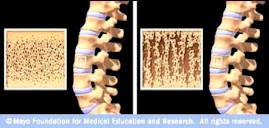
Osteoporotic Bone

Osteoporotic Bone
Source: www.mayoclinic.com

How Strontium Builds Bones

Strontium is a mineral that tends to accumulate in bone. Studies have shown that oral doses of strontium are a safe and effective way to prevent and reverse osteoporosis. Doses of 680 mg per day appear to be optimal. See my "For More Information About Strontium" links section.

Osteoporosis is caused by changes in bone production. In healthy young bones there is a constant cycle of new bone growth and bone removal. With age, more bone is removed and less new bone is produced. The bones become less dense and thus more fragile.

Scientists believe that strontium works in two ways. It may stimulate the replication of pre-osteoblasts, leading to an increase in osteoblasts (cells that build bone). Strontium also directly inhibits the activity of osteoclasts (cells that break down bone). The result is stronger bones.

When taking strontium, be sure to take 1200 mg calcium, 1000 IU vitamin D3, and 500 mg magnesium daily. It is best to take strontium late at night on an empty stomach. Calcium and strontium may compete with each other for absorption if taken together.