Human Skeleton

Human Skeleton

WELCOME TO STRONTIUM FOR BONES BLOG

Have you experienced negative, and even dangerous, side effects from Fosamax (alendronate), Boniva (ibandronate), Actonel (risedronate), Reclast (zoledronic acid), Prolia (denosumab), Forteo (teriparatide), Tymlos (abaloparatide), or other drugs prescribed for osteoporosis? If you have, then rest assured there is a safe, effective treatment for this condition. Strontium, primarily in the form of strontium citrate, is taken orally once a day.

Visitors to my blog can leave comments or ask questions and can remain anonymous, if they wish. Their comments are relayed to my g-mail inbox. Below each post, the number of comments for that post is cited and underlined because it is a link. By clicking on that link below any post, a window opens so that a visitor can leave a comment. Ideally, visitors leave comments on posts most relevant to their comments. All comments to my posts are moderated by me.

Browse the posts and visit the link library of references.


Blog Archive

Showing posts with label Echolight REMS scan. Show all posts

Tuesday, October 21, 2025

DXA vs. REMS Scans

A 75-year-old lady who had been taking strontium citrate (680 mg strontium) for three years, had both a DXA scan and a REMS Echolight scan of her bones. When strontium is incorporated into bone, DXA scan BMD results are falsely elevated because strontium has a higher atomic number than calcium and therefore greater X-ray attenuation. The degree to which the BMD results are falsely elevated depends on the dosage of strontium, the number of years taken, how well the strontium is absorbed and incorporated into bone, the individual bones scanned, and the model of DXA scanner used. REMS is unaffected by strontium in bone. These are her results. You can see that the bone strontium effect varies for each bone scanned. The higher numbers are the DXA scan BMD numbers in g/cm2 and the lower numbers are the REMS scan numbers in g/cm2. The percentages are the difference between DXA numbers and the REMS numbers.

L1-L4   0.775, 0.673, 13.16%

L1   0.698, 0.525, 24.79%

L2   0.763, 0.636, 16.64%

L3  0.805, 0.720, 10.56%

L4. 0.815, 0.773, 5.15% (minimum difference)

Femoral Neck Left  0.772, 0.462, 40.16% (greatest difference)

Hip Total Left  0.750, 0.611, 18.53%

Femoral Neck Right  0.736, 0.467, 36.55%

Hip Total Right. 0.828, 0.617, 25.48%

So, the differences between her DXA and REMS scans varied from a low of 5.15% for L4 to a high of 40.16% for the left femoral neck. 


Monday, July 28, 2025

REMS Scans and Strontium

REMS, which is unaffected by strontium, will show increases in BMD for someone on strontium, but the increases will be real, and, therefore, more modest. I just read a post by a British woman who has been taking strontium citrate (not strontium ranelate, although available in the UK). She has been taking a half dose (340 mg strontium). She just had her third REMS scan, and her spine bone density and fragility scores both improved significantly. Her hip scores stayed the same as those from two years earlier but the hip fragility score was slightly worse. Had she been on the full dose of strontium, her hip scores would most likely have been better. She is a patient of Dr. Nick Birch, the founder of Osteoscan UK, He uses the Echolight REMS system to offer bone health assessments. 

https://healthunlocked.com/bonehealth/posts/149823299/rems-scan-and-strontium-citrate


Sunday, November 24, 2024

Credentials of Technologists Performing REMS Echolight Scans

You should always ask about the education and training of the technician performing your REMS Echolight scan. I recently had an online chat with a bot at Precision Bone Imaging, which performs scans at OsteoStrong facilities and other locations in Arizona, California, and Colorado.

I asked: 

What are the credentials of techs performing REMS scans?

The bot answered: 

Our technicians who administer REMS scans at our locations are trained ultrasound technicians. They not only have a background in ultrasound technology but also receive specialized training specific to REMS scanning. This additional training ensures they can perform accurate scans and guide patients smoothly through the process. 


Precision Bone Imaging, 3301 E Indian School Rd, Suite 101, Phoenix, AZ 85018, 

phone (888) 415-7377


https://www.precisionboneimaging.com/


https://app.acuityscheduling.com/schedule.php?owner=32710610


To become an ultrasound technician, you'll need to:
Complete high school
  • You'll need a high school diploma or GED to enroll in a college or university program. 

    Earn an associate's or bachelor's degree
  • You can earn an associate's degree in Diagnostic Medical Sonography from an accredited college or university. You can also earn a bachelor's degree in sonography. 

    Complete a certificate program
  • You can complete a one-year certificate program in sonography at a college or hospital. 

    Complete clinical education
  • You'll need to complete clinical education, where you'll apply your formal education in a hands-on setting. 

    Pass licensing exams
  • You'll need to pass the proper licensing exams to become a licensed ultrasound technician.

    Become certified
  • You can become certified through the American Registry for Diagnostic Medical Sonographers (ARDMS) or the American Registry of Radiologic Technologists (ARRT).

    Some courses you might take in an ultrasound technician program include:
Anatomy and physiology, Medical terminology, Applied sciences, General physics, Pharmacology, and Echocardiography pathology.
Many employers also require candidates to complete basic life support training. 

Monday, August 19, 2024

How to Prepare for an Echolight REMS Scan

1. Wear loose fitting shorts. During cold weather, you can bring shorts with you.

2. Avoid eating a meal or drinking 2-3 hours before your scan.

3. Use the bathroom before the scan. 

Instructions courtesy of Ray Hinish, Pharm.D., Echolight Maryland at OsteoCoach


Wandering Skeleton

Wandering Skeleton
Artist: Joel Hoekstra

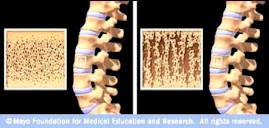
Osteoporotic Bone

Osteoporotic Bone
Source: www.mayoclinic.com

How Strontium Builds Bones

Strontium is a mineral that tends to accumulate in bone. Studies have shown that oral doses of strontium are a safe and effective way to prevent and reverse osteoporosis. Doses of 680 mg per day appear to be optimal. See my "For More Information About Strontium" links section.

Osteoporosis is caused by changes in bone production. In healthy young bones there is a constant cycle of new bone growth and bone removal. With age, more bone is removed and less new bone is produced. The bones become less dense and thus more fragile.

Scientists believe that strontium works in two ways. It may stimulate the replication of pre-osteoblasts, leading to an increase in osteoblasts (cells that build bone). Strontium also directly inhibits the activity of osteoclasts (cells that break down bone). The result is stronger bones.

When taking strontium, be sure to take 1200 mg calcium, 1000 IU vitamin D3, and 500 mg magnesium daily. It is best to take strontium late at night on an empty stomach. Calcium and strontium may compete with each other for absorption if taken together.