Human Skeleton

Human Skeleton

WELCOME TO STRONTIUM FOR BONES BLOG

Have you experienced negative, and even dangerous, side effects from Fosamax (alendronate), Boniva (ibandronate), Actonel (risedronate), Reclast (zoledronic acid), Prolia (denosumab), Forteo (teriparatide), Tymlos (abaloparatide), or other drugs prescribed for osteoporosis? If you have, then rest assured there is a safe, effective treatment for this condition. Strontium, primarily in the form of strontium citrate, is taken orally once a day.

Visitors to my blog can leave comments or ask questions and can remain anonymous, if they wish. Their comments are relayed to my g-mail inbox. Below each post, the number of comments for that post is cited and underlined because it is a link. By clicking on that link below any post, a window opens so that a visitor can leave a comment. Ideally, visitors leave comments on posts most relevant to their comments. All comments to my posts are moderated by me.

Browse the posts and visit the link library of references.


Blog Archive

Showing posts with label fractures. Show all posts

Monday, February 15, 2016

My Progress with Strontium Citrate


I’ve been taking Doctor’s Best Strontium Bone Maker (680 mg strontium) once daily since January 2008. That’s eight years of taking strontium continuously. My back is stronger than it’s been in years. This morning I did yard work—pulling up oak seedlings and weeds and burying a cable that keeps being uncovered by the rain. I bent over numerous times with no pain. I should have taken a work bench and not bent over, but, sometimes I forget to avoid forward bending because I feel well. I’ve had no fractures, although I keep getting older. My BMD has continued to improve. I love strontium citrate!

My lumbar spine T-scores went from -3.0 (osteoporosis) in May 2007 to -2.7 (still osteoporosis but better) in July 2009 to -1.6 (osteopenia) in August 2013. I documented my scores on this blog:


I have orders for another DXA scan this year (2016). I haven’t made an appointment yet. I’m hoping for normal (-1.0 and above) T-scores this time. I’ll keep you posted.

Thursday, November 19, 2015

IOF One-Minute Osteoporosis Risk Test


Are you among the one in three women, and the one in five men over the age of 50 who will be affected by osteoporosis in their lifetimes?

Osteoporosis weakens bones and leads to fractures. It causes severe disability. But osteoporosis can be detected early. It can be treated.

If you knew something that could harm you was coming, wouldn't you avoid it?
The test consists of 19 easy questions to help you understand the status of your bone health.

Monday, December 15, 2014

Modifiable Risk Factors for Osteoporosis and Fractures


Most modifiable risk factors, which arise primarily because of unhealthy diet or lifestyle choices, directly impact bone biology and result in a decrease in bone mineral density (BMD). Some modifiable risk factors also increase the risk of fracture independently of their effect on bone itself.

The good news is everyone can take steps to reduce these risk factors for osteoporosis and related fractures.
Modifiable risk factors include:
Alcohol
People with excessive alcohol consumption (>2 units daily) have a 40% increased risk of sustaining any osteoporotic fracture, compared to people with moderate or no alcohol intake. High intakes of alcohol cause secondary osteoporosis due to direct adverse effects on bone-forming cells, on the hormone that regulates calcium metabolism and poor nutritional status (calcium, protein and vitamin D deficiency)1.
Smoking
People with a past history of cigarette smoking and people who smoke are at increased risk of any fracture, compared to non-smokers2.
Low Body Mass Index
Leanness (body mass index (BMI) less than 20 kg/m2) regardless of age, sex and weight loss, is associated with greater bone loss and increased risk of fracture. People with a BMI of 20kg/m2 have a two-fold increased risk of fracture compared to people with a BMI of 25 kg/m2
Poor nutrition
When insufficient calcium is absorbed from dietary sources, the body produces more parathyroid hormone, which boosts bone remodeling, mobilizing osteoclasts in the bone to break down and sacrifice bone calcium to supply the nerves and muscles with the mineral they need. There are indications that protein is also important in that it may act synergistically with vitamin D and calcium.
Vitamin D deficiency
Vitamin D is also essential, since it helps calcium absorption from the intestines into the blood. Vitamin D is made in our skin with exposure to the sun’s ultraviolet rays. In most people casual exposure to the sun for as little as 10-to-15 minutes a day is usually sufficient. However in elderly people, people who do not go outdoors, and during the winter months in northern latitudes, food or supplemental sources of vitamin D is of importance. At least 800 international units of vitamin D and 1,000 to 1,200 mg of calcium daily can protect against osteoporosis3.
Eating disorders
Osteoporosis can also be compounded by eating disorders such as anorexia nervosa and bulimia.
Estrogen deficiency
Estrogen deficiency in women afflicted by these disorders speeds up bone loss in a similar way to that which occurs in post-menopausal women, but to make matters worse, these diseases reduce the robust build up of bone mineral density that usually occurs in adolescence and early adulthood. This may be related to both hormone imbalance and nutritional factors.
Insufficient exercise
People with a more sedentary lifestyle are more likely to have a hip fracture than those who are more active. For example, women who sit for more than nine hours a day are 50% more likely to have a hip fracture than those who sit for less than six hours a day. Read more about the role of exercise in bone health.
Frequent falls
Visual impairments, loss of balance, neuromuscular dysfunction, dementia, immobilization, and use of sleeping pills which are quite common conditions in elderly persons, significantly increase the risk of falling and accordingly increase the risk of fracture. Ninety percent of hip fractures result from falls4.

References
  1.  Kanis JA, Johnell O, Odén A, Johansson H, De Laet C, Eisman JA, Fujiwara S, Kroger H, McCloskey, Mellstrom D, Melton LJ III, Pols H, Reeve J, Silman A, Tenehouse A. Smoking and fracture risk: a meta-analysis. Osteoporosis Int. 2005;16:155-62
  2. Kanis JA. Johansso H, Johnell O, Odén A, De Laet C, Eisman J, Pols H, Tenenhouse A. Alcohol intake as a risk factor for fracture. Osteoporosis Int 2005;16:737-42
  3. Dawson-Hughes B, Heaney RP, Holick MF, et al. (2005) Estimates of optimal vitamin D status. Osteoporos Int 16:713-716
  4. Woolf AD, Akesson K. Preventing fractures in elderly people. BMJ 2003; 327:89-95

Wednesday, September 10, 2014

Vitamin D and Mortality Risk: Should Clinical Practice Change?


An Expert Interview With Cedric F. Garland, DrPH

Traditionally associated with skeletal disease, including osteoporosis and fractures, low levels of serum 25-hydroxyvitamin D (25[OH]D) more recently have been linked to a wide range of nonskeletal diseases, including some cancers and autoimmune, cardiometabolic, and neurologic diseases.

Medscape: Should everyone aim for a vitamin D level over 30 ng/mL?

Dr. Garland: Yes. No one should run a serum 25(OH)D less than 30 ng/mL. This means that two thirds of the US population needs supplementation. You may have noticed that President Obama was recently tested for his vitamin D, and it was 22.9 ng/mL. His physicians wisely decided to treat him, and he is now taking vitamin D. I salute the President's physicians for their clinical acumen in performing this good and noble deed to ensure the health of President Obama. It makes me burst with pride and admiration when physicians act in this way with their patients.

Medscape: Would you say that everyone should be tested like the President?

Dr. Garland: Yes, in my judgment. And without delay. We should introduce the population to a new Golden Era of Medicine, based on contemporary scientific discoveries of vitamin D's profound health benefits today rather than waiting for yet another minor increment of confirmation.

http://www.medscape.com/viewarticle/829677

Wandering Skeleton

Wandering Skeleton
Artist: Joel Hoekstra

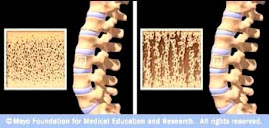
Osteoporotic Bone

Osteoporotic Bone
Source: www.mayoclinic.com

How Strontium Builds Bones

Strontium is a mineral that tends to accumulate in bone. Studies have shown that oral doses of strontium are a safe and effective way to prevent and reverse osteoporosis. Doses of 680 mg per day appear to be optimal. See my "For More Information About Strontium" links section.

Osteoporosis is caused by changes in bone production. In healthy young bones there is a constant cycle of new bone growth and bone removal. With age, more bone is removed and less new bone is produced. The bones become less dense and thus more fragile.

Scientists believe that strontium works in two ways. It may stimulate the replication of pre-osteoblasts, leading to an increase in osteoblasts (cells that build bone). Strontium also directly inhibits the activity of osteoclasts (cells that break down bone). The result is stronger bones.

When taking strontium, be sure to take 1200 mg calcium, 1000 IU vitamin D3, and 500 mg magnesium daily. It is best to take strontium late at night on an empty stomach. Calcium and strontium may compete with each other for absorption if taken together.