Human Skeleton

Human Skeleton

WELCOME TO STRONTIUM FOR BONES BLOG

Have you experienced negative, and even dangerous, side effects from Fosamax (alendronate), Boniva (ibandronate), Actonel (risedronate), Reclast (zoledronic acid), Prolia (denosumab), Forteo (teriparatide), Tymlos (abaloparatide), or other drugs prescribed for osteoporosis? If you have, then rest assured there is a safe, effective treatment for this condition. Strontium, primarily in the form of strontium citrate, is taken orally once a day.

Visitors to my blog can leave comments or ask questions and can remain anonymous, if they wish. Their comments are relayed to my g-mail inbox. Below each post, the number of comments for that post is cited and underlined because it is a link. By clicking on that link below any post, a window opens so that a visitor can leave a comment. Ideally, visitors leave comments on posts most relevant to their comments. All comments to my posts are moderated by me.

Browse the posts and visit the link library of references.


Blog Archive

Showing posts with label COMB study. Show all posts

Saturday, February 4, 2023

Strontium and Heart Health

I started taking strontium citrate on January 21, 2008. I had had a bad experience with Fosamax once weekly. When I say bad, I mean very bad. I was dizzy and had vertigo to the point I could barely walk a few steps to the bathroom and could not do floor exercises because the minute my head hit the floor, I felt I was falling off a cliff. I was worried about my osteoporosis diagnosis and was desperate to find something that would work for me without causing more harm than good. I began doing internet searches, but there was little information about strontium of any kind. After I had been on SC for a short time, I came across Sara DeHart's first case study, which had been posted on July 7, 2008. That study gave me much hope for SC. I decided to monitor my progress and post my results on my own blog. 


I also began following any news or articles I found about strontium, including strontium ranelate, because there were extensive clinical trials of SR. I posted articles about the SOTI and TROPOS clinical trials. 


It was not until 2013 that news about SR and increased risk of heart problems began appearing. In April 2013, the use of Protelos/Osseor (strontium ranelate) was restricted to those with severe osteoporosis at high risk of fracture. In 2014, the European Medicines Agency (EMA) recommended further restrictions. SR was to be prescribed only to patients with severe osteoporosis and unable to tolerate other medications. All patients were to be evaluated for heart risks before prescribing or continuing to prescribe SR. In 2017, Servier, the manufacturer of SR, pulled the product from the EU because it was not making enough money. 


I see myself as a reporter. I write about all the news--both good and bad. In 2013, I had already been on SC for five years. I felt great. I had had no side effects and no fractures. The only reports about SC were Sara DeHart's three case studies and the COMB study (2012)--all great news! So, for me, the information about SR and heart issues was interesting but only mildly disturbing. I may have inadvertently scared some people, who may have stopped taking SC solely on the basis of bad news about SR. 


On October 22, 2015, Health Canada published its "Summary Safety Review--Strontium--Risk of Heart and Circulatory Side Effects." Health Canada's review did not find information available on cardiovascular risk with the strontium ranelate form at doses less than 680 mg strontium per day, or with other non-ranelate forms of strontium at any dose. While uncertainties remain, Health Canada is taking a precautionary approach and recommending updates to the labels of products containing strontium, including informing consumers not to use these products if they have pre-existing heart or circulatory problems, such as heart attack, stroke or blood clot.


I have not had a heart attack, stroke, or blood clot, although I have close relatives who have had all three (not all three for the same person). I have mixed hyperlipidemia, for which I take a statin drug. I have occasional heart palpitations, but my recent EKG was normal, and I control the palpitations with CBD oil. I will continue to take SC and to report on my health and on any news about any form of strontium. 


Sunday, October 4, 2020

Supplements to Take Along with Strontium

Both the Combination of Micronutrients for Bone (COMB) study and Melatonin-Micronutrients Osteopenia Treatment Study (MOTS) investigated using strontium in conjunction with other supplements. You cannot take strontium without taking sufficient calcium (from food and/or supplements) and vitamin D. You also need magnesium, which was not included in the MOTS protocol, and was provided at a very low dosage in the COMB study. 


The COMB study for osteoporosis: 

strontium citrate (680 mg) 

D3 (2000 IU) 

dietary sources of calcium

magnesium (25 mg) 

K2 (MK7) (100 mcg) 

DHA (250 mg) 

daily impact exercises were encouraged. 


MOTS for osteopenia:

strontium citrate (450 mg)

D3 (2000 IU)

K2 (MK7) (60 mcg)

melatonin, 5 mg 

These ingredients were called MSDK for melatonin, strontium citrate, vitamins D3 and K2.

In addition to study medication, participants were allowed to take less than 1000 IU D3 and less than 1000 mg of calcium. Nearly 87% of the subjects in the MOTS study were taking either calcium/vitamin D3, multivitamins, and/or other dietary supplements.


The BoneLady uses her own protocol for osteoporosis: 

strontium citrate (682 mg),

D3 (1300 IU)

calcium (500 mg tablet, about 700 mg from dietary sources) 

magnesium (450 mg)

daily low-impact exercises  

I do not take DHA, K2, or melatonin. I do take several other supplements: https://strontiumforbones.blogspot.com/2020/07/my-current-supplements.html


Sunday, September 27, 2020

What Determines How Much Strontium Is in Your Bones?

It is generally said that, for every 1% of strontium incorporated into bone crystal, BMD is overestimated by 10%. However, we do not know how much strontium has been incorporated into each of your bones. 

The amount of strontium in your bones will depend on several factors: 

(1) the dosage (680 mg, as in the COMB study; 340 mg, which is a half dose; or 450 mg, the dosage used in the MOTS study; 

(2) the length of time you have been taking strontium (The COMB and MOTS studies lasted only one year. Therefore, the strontium effect on those DXA scans was less than had the subjects been studied for three years or longer. 

(3) how well you absorb the strontium (Absorption of strontium salts is about 25% for most people with normal absorption, but, as we age, our ability to absorb nutrients, supplements, and medications is often reduced.); 

(4) the individual bones (Some bones absorb strontium better than others.); 

(5) the DXA equipment used to measure BMD.


Wednesday, December 17, 2014

Strontium Citrate and Strontium Ranelate


Strontium ranelate is prescribed for postmenopausal osteoporosis in the United Kingdom, Australia, much of Europe and Asia, and Mexico. Due to an increased risk of thrombosis and cardiovascular events in patients with a history of cardiovascular problems, some doctors are discouraging their patients from taking strontium ranelate or refusing to prescribe it.

Strontium ranelate is not available in the United States or Canada. However, strontium citrate can be purchased as a supplement from health food stores and online distributors. Is strontium citrate safe and effective?

In 2012, Canadian researchers published the Combination of Micronutrients for Bone (COMB) Study. Here is the abstract:

“Along with other investigations, patients presenting to an environmental health clinic with various chronic conditions were assessed for bone health status. Individuals with compromised bone strength were educated about skeletal health issues and provided with therapeutic options for potential amelioration of their bone health. Patients who declined pharmacotherapy or who previously experienced failure of drug treatment were offered other options including supplemental micronutrients identified in the medical literature as sometimes having a positive impact on bone mineral density (BMD). After 12 months of consecutive supplemental micronutrient therapy with a combination that included vitamin D3, vitamin K2, strontium, magnesium and docosahexaenoic acid (DHA), repeat bone densitometry was performed. The results were analyzed in a group of compliant patients and demonstrate improved BMD in patients classified with normal, osteopenic and osteoporotic bone density. According to the results, this combined micronutrient supplementation regimen appears to be at least as effective as bisphosphonates or strontium ranelate in raising BMD levels in hip, spine, and femoral neck sites. No fractures occurred in the group taking the micronutrient protocol. This micronutrient regimen also appears to show efficacy in individuals where bisphosphonate therapy was previously unsuccessful in maintaining or raising BMD. Prospective clinical trials are required to confirm efficacy.”

Here is the COMB protocol for bone health:
(1) Docosahexaenoic acid or DHA (from Purified Fish Oil): 250mg/day          
(2) Vitamin D3: 2000IU/day         
(3) Vitamin K2 (non-synthetic MK7 form): 100ug/day        
(4) Strontium citrate: 680mg/day (strontium)       
(5) Elemental magnesium: 25mg/day      
(6) Dietary sources of calcium recommended        
(7) Daily impact exercising encouraged    

The following two paragraphs are quotes from the paper:
“Studies to date have predominantly focused on strontium ranelate rather than the readily available strontium citrate supplement as used in this study. The results of this study, however, demonstrate that the micronutrient combination including strontium citrate is at least as effective in BMD change as strontium ranelate with suggestion of preferred efficacy of the former therapy at improving femoral neck outcomes. Furthermore, the ranelic acid salt is a purely synthetic molecular compound, while citrate is naturally occurring. It appears to be the strontium portion of the molecules which exerts most or all of the positive effect on bone. When consuming the strontium ranelate, for example, the compound splits into two strontium ions and one molecule of ranelic acid, with each absorbed separately. There is little evidence that the ranelic acid portion of the strontium ranelate compound contributes to the effect of strontium on skeletal tissue, and of the small amount of ranelic acid that is absorbed into the body, almost all is excreted within a week without ever being metabolized. All forms of strontium have bioavailabilities in the 25–30% range, but gastric tolerance appears to be better with the ranelate and citrate forms.”

“With the mounting concern about the safety profile of some standard medical interventions for bone compromise, strontium is very well tolerated and has shown remarkably little in the way of side effects or long-term adverse sequelae. An increased risk of thrombosis has been noted with strontium ranelate, an effect not reported (to our knowledge) with strontium citrate [16].”

16. S. J. Genuis and G. K. Schwalfenberg, “Picking a bone with contemporary osteoporosis management: nutrient strategies to enhance skeletal integrity,” Clinical Nutrition, vol. 26, no. 2, pp. 193–207, 2007.
The abstract to reference 16:
 http://www.clinicalnutritionjournal.com/article/S0261-5614%2806%2900151-8/abstract
The entire article (reference 16) in PDF form:
 http://www.uio.no/studier/emner/medisin/nutri/ERN3120/v12/ERN3120-Unit3-Student/02%20Osteoporosis%20and%20Ostaomalacia/Osteoporose-ern%C3%A6ring-03.pdf

The entire COMB Study article can be read here:


Sunday, September 14, 2014

Strontium Offers Natural Osteoporosis Treatment Breakthrough


I like this article, but there is a statement that needs to be corrected.

The article states: “Although clinical studies on other salts of strontium besides ranelate have not yet been conducted….”

However, there have been small clinical studies of strontium ranelate, such as the COMB study. See
 
http://strontiumforbones.blogspot.com/2012/02/combination-of-micronutrients-for-bone.html

Wandering Skeleton

Wandering Skeleton
Artist: Joel Hoekstra

Osteoporotic Bone

Osteoporotic Bone
Source: www.mayoclinic.com

How Strontium Builds Bones

Strontium is a mineral that tends to accumulate in bone. Studies have shown that oral doses of strontium are a safe and effective way to prevent and reverse osteoporosis. Doses of 680 mg per day appear to be optimal. See my "For More Information About Strontium" links section.

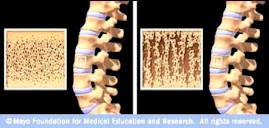
Osteoporosis is caused by changes in bone production. In healthy young bones there is a constant cycle of new bone growth and bone removal. With age, more bone is removed and less new bone is produced. The bones become less dense and thus more fragile.

Scientists believe that strontium works in two ways. It may stimulate the replication of pre-osteoblasts, leading to an increase in osteoblasts (cells that build bone). Strontium also directly inhibits the activity of osteoclasts (cells that break down bone). The result is stronger bones.

When taking strontium, be sure to take 1200 mg calcium, 1000 IU vitamin D3, and 500 mg magnesium daily. It is best to take strontium late at night on an empty stomach. Calcium and strontium may compete with each other for absorption if taken together.