Human Skeleton

Human Skeleton

WELCOME TO STRONTIUM FOR BONES BLOG

Have you experienced negative, and even dangerous, side effects from Fosamax (alendronate), Boniva (ibandronate), Actonel (risedronate), Reclast (zoledronic acid), Prolia (denosumab), Forteo (teriparatide), Tymlos (abaloparatide), or other drugs prescribed for osteoporosis? If you have, then rest assured there is a safe, effective treatment for this condition. Strontium, primarily in the form of strontium citrate, is taken orally once a day.

Visitors to my blog can leave comments or ask questions and can remain anonymous, if they wish. Their comments are relayed to my g-mail inbox. Below each post, the number of comments for that post is cited and underlined because it is a link. By clicking on that link below any post, a window opens so that a visitor can leave a comment. Ideally, visitors leave comments on posts most relevant to their comments. All comments to my posts are moderated by me.

Browse the posts and visit the link library of references.


Blog Archive

Wednesday, January 8, 2020

Why Do Hips Fracture?

"Normal healthy bones can be thought of as nature's scaffold poles. The tightly packed minerals that make up the cortical bone form a sheath around an inner core of spongy bone and provide the strength that supports our bodies. Throughout our lives, our skeletons are kept strong by the continuous creation of new, fresh bone and the destruction of old, worn out bone. Unfortunately, as we become older, destruction becomes faster than creation, and so the cortical layer thins, causing the bone to weaken and break more easily. In severe cases, this is known as osteoporosis. As a result, simple trips or falls that would only bruise a younger person can cause serious fractures in the elderly. However, half of the elderly patients admitted to hospital with a broken hip do not suffer from osteoporosis.

So why do those hips break? This is an important question because hip fractures are very debilitating. Repairing a fractured hip requires traumatic surgery that, even if successful, may not enable a patient to regain the full mobility they had beforehand. The National Osteoporosis Society estimates that 13,800 people in the UK die every year as a direct result of hip fractures. This is over 10% of patients injured (NHS Choices). Therefore, understanding how these fractures occur and acting to prevent them is vital for improving the quality and length of life of our aging population.

To better understand why hips fracture, researchers in Cambridge and Prague analysed CT scans performed on the opposite, unbroken hips of a group of elderly women admitted to Bulovka University Hospital in Prague with hip fractures (Poole et al., 2012). Previous studies have shown that these unbroken hips tend to be in a similar condition to the patient's other hip before it was fractured.

CT scanners are now standard pieces of equipment in most hospitals, and are used to examine organs and tissues inside the body. Essentially a rotating X-ray machine, a CT scanner takes many X-ray snapshots at different angles around a body part to produce a 3D image of its internal structure. X-rays are electromagnetic waves that are partially absorbed by the materials they pass through. The amount of absorption depends on the density of the structure encountered—denser structures, like bone, absorb more of the X-ray beam, leaving less to be measured by the detector on the other side. However, the resolution of the images collected by a standard hospital CT scanner is not sensitive enough to accurately determine the thickness of the cortical bone.

A new image processing technique has changed that. Using this technique, the researchers from Prague and Cambridge were able to extract information from clinical CT scans that was sensitive enough to produce false-coloured maps showing variations in the thickness of cortical bone in more detail than ever. Variations in thickness of only 30 microns—the size of a grain of dust—could be detected.

The results were striking. Not only did the women with fractured hips have generally thinner cortical bone than women in a control group, some of them also had local patches of even thinner bone. This was the case even in women who did not suffer from osteoporosis. Most importantly, the extra-thin regions were found on the femoral neck—the part of the hip bone where fractures most commonly occur. In some patients, these patches were 30% thinner than the surrounding bone, and as big as a thumbnail. These weaker points provide the ideal conditions for a crack to form and subsequently grow into a fracture. Further studies are needed to confirm whether these localised regions do act as the starting point for a fracture, but at the very least they affect the type, and hence severity, of fracture that occurs. These studies might also be able to explain why some hips fracture for no obvious reason. These spontaneous hip fractures account for 6% of all hip fractures, or 4000 broken hips every year in the UK..

The research team have named these local patches of thinner bone ‘focal osteoporosis’. However, despite the name, it is not yet known if these areas can be strengthened using standard osteoporosis drugs, which slow down the natural destruction of bone cells. An extensive clinical trial will be needed to investigate further, but if the focal patches do respond to treatment, it raises the tantalising possibility of a future where many fractures could be treated before they even form. The improvement this would have on our quality of life in old age would be invaluable."

https://elifesciences.org/articles/00646

Monday, December 30, 2019

Strontium Folate for Bone Regeneration

Bone fractures and skeletal defects are rising worldwide and require new developments in bone regeneration. Strontium (Sr) is an element that has been investigated for its role in bone remodeling and bone formation. This study is a review of strontium folate (SrFO), a recently developed, non-protein based, bone-promoting agent that is of interest in medical and pharmaceutical fields due to its improved features compared to current therapies for bone diseases.

An aging population has led to a steady increase in the number of musculoskeletal conditions and, in particular, of cartilage and bone surgical procedures. Therefore, the development of alternative materials and strategies in bone replacement therapies is of interest. Above a critical size, bone defects are not repaired by the self-healing system of the tissue. Thus, an osteoconductive and osteoinductive device (or scaffold) is usually required in order to regenerate the lost tissue. The scaffold must be composed of materials that stimulate and favor the formation of new bone tissue and must be structurally stable during the process of cell growth and expansion. In this regard, autografts are still considered the “gold standard.” However, they have many drawbacks, such as limited availability and morbidity of the donor site. Alternatively, a proper scaffold made of a given biomaterial would be desirable both to fill the defect and to act as a reservoir for growth factors and/or cells.

SrFO-based scaffolds increase bone regeneration in vivo. The Sr-based-systems seem to be a useful alternative for the regeneration of bone tissue in complicated defects. 

https://www.ncbi.nlm.nih.gov/pmc/articles/PMC6539601/


Thursday, October 17, 2019

Strontium Citrate Protocols

If you decide to take strontium citrate, you need to ensure you are also getting adequate calcium, magnesium, vitamin D, other vitamins and minerals, and protein. You can get these nutrients from a combination of diet and supplements. Choosing a supplement plan, or protocol, that is right for you can be as simple as choosing one of the three protocols described in this post or by modifying one of them with your own choice of supplements. 

Protocols for Osteoporosis:

 COMB                                                                                 BoneLady 
Strontium citrate                   680 mg                                                  680 mg
Vitamin K2 (MK7)               100 mcg                                                none
Vitamin D3                         2000 IU                                                 1000 IU
Docosahexanoic acid (DHA)250 mg                                                 none
Magnesium                             25 mg                                                  250 mg*
Calcium                       Dietary sources                                    500 mg*  

*BoneLady takes a supplement tablet that contains 250 mg Mg and 500 mg Ca. In addition, she gets about 700 mg Ca from food for a total of about 1200 mg Ca per day.  

Protocol for Osteopenia:

MOTS 
Strontium citrate     450 mg
Vitamin K2 (MK7)     60 mcg
Vitamin D3            2000 IU*
Melatonin                    5 mg
DHA                             none
Magnesium                  none    
Calcium                          * 

*In addition to study medication, participants in the MOTS study were allowed to take less than 1000 IU of vitamin D3 and less than 1000 mg of calcium daily. 


Friday, January 11, 2019

Axial DXA 8 January 2019

The report of my axial DXA scan taken on 8 January 2019 appears below. I have been on 2 grams strontium citrate/day for 11 years. I also take a calcium/magnesium tablet (500 mg Ca/250 mg Mg), a multivitamin with 1000 IU vitamin D3, and several other supplements. I get plenty of protein in my diet. I exercise daily.

As you can see, my DXA results were excellent, except for my left femoral neck, which showed no change from the previous scan.

I am happy with my results, although I know the comparison of this year's results to those of 2.5 years ago contains some built-in error because two different brands of DXA machines were used. My 2016 scan was on a Hologic and the 2019 scan was on a GE Lunar Prodigy.

Changing testing sites, and, therefore, machines, was not my choice. I had been getting my scans in the outpatient radiology department of a large hospital medical center, but the provider is now pushing patients into its freestanding imaging centers. I was told my insurance would not pay for a DXA unless it was done at a freestanding center, but my insurance denied that assertion.

The risk factor for secondary osteoporosis mentioned, but not specified, in the report is early menopause.

INDICATION: Postmenopausal. Follow-up of osteopenia on prior DXA.
Patient reports risk factors for secondary osteoporosis.

COMPARISON: 8/4/2016

FINDINGS:

Spine: Total BMD of the spine (L1-4) is 1.108 g/cm2, with a T-score of
-0.7 and a Z-score of 1.0.

Left Femoral Neck: BMD is 0.883 g/cm2, with a T-score of -1.1 and a
Z-score of 0.6.

Left Total Hip: BMD is 0.928 g/cm2, with a T-score of -0.6 and a Z-score
of 0.9.

Right Femoral Neck: BMD is 0.919 g/cm2, with a T-score of -0.9 and a
Z-score of 0.9.

Right Total Hip: BMD is 0.963 g/cm2, with a T-score of -0.4 and a Z-score
of 1.1.

Compared to the prior study, there has been 9% increase in spine density, 6% increase in left total hip density, but no change in left femoral neck density.

FRAX evaluation calculates 10-year probability of fracture:

Major Osteoporotic: 7.8%

Hip: 1.0%

IMPRESSION:

Based on BMD, diagnosis is consistent with osteopenia.

FOLLOWUP: In 2 years is recommended.


Saturday, December 22, 2018

Strontium Ranelate Returns to UK January 2019


The osteoporosis medication strontium ranelate (SR) will once again be available in the UK from January 2019.

The drug was previously available under the brand Protelos but was pulled from the UK market in August 2017.

Servier, the manufacturer of the drug at the time, decided to cease supplying it to the UK due to loss of sales. Use of the drug in the UK had been limited by the health authorities due to safety concerns about cardiovascular risks. A continuous decline in the number of people being treated with it led to the company's decision.

Pharmaceutical company Aristo has now taken on the manufacturing of strontium ranelate, which will be available for prescription beginning January 2019, for the treatment of severe osteoporosis in postmenopausal women and adult men who are at high risk of fracture.


This is good news for UK patients who wish to take SR. It is also good news for those of us in the USA and Canada, where SR is not available, but strontium citrate (SC) is. Some people taking SC got scared when SR was pulled from the UK and the EU. I have continuously taken SC for 11 years. Below is a link to the package information for Aristo.

Package leaflet: Information for the patient
Strontium ranelate Aristo 2 g
granules for oral suspension

Marketing Authorisation Holder
Aristo Pharma GmbH
Wallenroder Straße 8-10
13435 Berlin
Germany

Manufacturer
Lindopharm GmbH
Neustraße 82
40721 Hilden
Germany


Wednesday, September 26, 2018

Strontium Citrate Products


Although I have occasionally bought my strontium at www.amazon.com, I usually buy it at www.iherb.com, which ranks its brands by popularity within categories. For example, if you search “strontium,” the eight products listed below will appear. I buy one of the number-2-ranked products, AOR, Strontium Support II, 120 veggie-caps. Buying the larger bottle is cheaper than buying the number-5-ranked 60-capsule bottle of the same product. Buying two or more bottles gives you quantity discounts at iHerb.

If you buy AOR products directly from the manufacturer at www.aor.us, you can use the code, aor25off, for 25% off your entire order. This code will work until the end of 2018 and can be used multiple times.

Nature's Life and AOR claim to follow Good Manufacturing Practices (GMP). The GMP designation is very important in assuring quality. Check with each manufacturer’s website for full details.

Number 1 in Strontium
     Life Extension, Strontium Caps, Mineral for Bone Health, 750 mg, 90 vegetarian capsules

750 mg strontium in three capsules, other ingredients: microcrystalline cellulose, vegetable stearate, silica, vegetable cellulose capsule

Number 2 in Strontium (tied with Nature’s Life)
Advanced Orthomolecular Research AOR, Advanced Series, Strontium Support II, 120 veggie-caps

682 mg strontium in two capsules, other ingredients: sodium stearyl fumarate, hypromellose capsule, Good Manufacturing Practices (GMP) manufacturing, independent testing, quality assured

Number 2 in strontium (tied with AOR, Strontium Support II, 120 veggie-caps)
  Nature’s Life, Strontium, 680 mg, 60 tablets
680 mg strontium in two tablets, other ingredients: cellulose, silica, stearic acid, GMP manufacturing, quality assurance procedures

Number 4 in strontium
       Best Naturals, Strontium, 680 mg, 90 capsules
680 mg strontium in two capsules, other ingredients: gelatin (capsule), rice powder, vegetable magnesium stearate, meets GMP

Number 5 in strontium (tied with Nature’s Life, Strontium Plus D-3, 60 tablets)
     Advanced Orthomolecular Research AOR, Advanced Series, Strontium Support II, 60 veggie-caps
682 mg strontium in two capsules, other ingredients: sodium stearyl fumarate, hypromellose capsule, meets Good Manufacturing Practices (GMP) manufacturing, independent testing, quality assured

 Number 5 in strontium (tied with AOR Strontium Support II, 60 veggie-caps)
       Nature’s Life, Strontium Plus D-3, 60 tablets
680 mg strontium and 400 IU D3 in two tablets, other ingredients: cellulose, stearic acid, magnesium stearate and silica, meets Quality Assurance Procedures and Good Manufacturing Practices

Number 7 in strontium
        EuroPharma, Terry Naturally, Strontium, 60 capsules
680 mg strontium in two capsules, other ingredients: hydroxypropyl methylcellulose (vegetable cellulose capsules), cellulose powder, vegetable source magnesium stearate

Number 8 in strontium and number 62 in multimineral formulas
       Onnit, Stron Bone, 90 capsules
680 mg strontium, 100 IU Vitamin E, 90 mcg Vitamin K2 as Menatetrenone, 2 mg copper, 2 mg manganese, 80 mg potassium, 5 mg black pepper (fruit) extract (BioPerine), and 150 mcg boron in three capsules, other ingredients: vegetarian capsule (hydroxypropyl methylcellulose, water), nu-flow (rice concentrate), nu-mag (rice extract, rice hulls, gum arabic and sunflower oil)

Wandering Skeleton

Wandering Skeleton
Artist: Joel Hoekstra

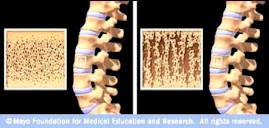
Osteoporotic Bone

Osteoporotic Bone
Source: www.mayoclinic.com

How Strontium Builds Bones

Strontium is a mineral that tends to accumulate in bone. Studies have shown that oral doses of strontium are a safe and effective way to prevent and reverse osteoporosis. Doses of 680 mg per day appear to be optimal. See my "For More Information About Strontium" links section.

Osteoporosis is caused by changes in bone production. In healthy young bones there is a constant cycle of new bone growth and bone removal. With age, more bone is removed and less new bone is produced. The bones become less dense and thus more fragile.

Scientists believe that strontium works in two ways. It may stimulate the replication of pre-osteoblasts, leading to an increase in osteoblasts (cells that build bone). Strontium also directly inhibits the activity of osteoclasts (cells that break down bone). The result is stronger bones.

When taking strontium, be sure to take 1200 mg calcium, 1000 IU vitamin D3, and 500 mg magnesium daily. It is best to take strontium late at night on an empty stomach. Calcium and strontium may compete with each other for absorption if taken together.