Human Skeleton

Human Skeleton

WELCOME TO STRONTIUM FOR BONES BLOG

Have you experienced negative, and even dangerous, side effects from Fosamax (alendronate), Boniva (ibandronate), Actonel (risedronate), Reclast (zoledronic acid), Prolia (denosumab), Forteo (teriparatide), Tymlos (abaloparatide), or other drugs prescribed for osteoporosis? If you have, then rest assured there is a safe, effective treatment for this condition. Strontium, primarily in the form of strontium citrate, is taken orally once a day.

Visitors to my blog can leave comments or ask questions and can remain anonymous, if they wish. Their comments are relayed to my g-mail inbox. Below each post, the number of comments for that post is cited and underlined because it is a link. By clicking on that link below any post, a window opens so that a visitor can leave a comment. Ideally, visitors leave comments on posts most relevant to their comments. All comments to my posts are moderated by me.

Browse the posts and visit the link library of references.


Blog Archive

Showing posts with label vitamin K2 MK-7. Show all posts

Sunday, October 4, 2020

Supplements to Take Along with Strontium

Both the Combination of Micronutrients for Bone (COMB) study and Melatonin-Micronutrients Osteopenia Treatment Study (MOTS) investigated using strontium in conjunction with other supplements. You cannot take strontium without taking sufficient calcium (from food and/or supplements) and vitamin D. You also need magnesium, which was not included in the MOTS protocol, and was provided at a very low dosage in the COMB study. 


The COMB study for osteoporosis: 

strontium citrate (680 mg) 

D3 (2000 IU) 

dietary sources of calcium

magnesium (25 mg) 

K2 (MK7) (100 mcg) 

DHA (250 mg) 

daily impact exercises were encouraged. 


MOTS for osteopenia:

strontium citrate (450 mg)

D3 (2000 IU)

K2 (MK7) (60 mcg)

melatonin, 5 mg 

These ingredients were called MSDK for melatonin, strontium citrate, vitamins D3 and K2.

In addition to study medication, participants were allowed to take less than 1000 IU D3 and less than 1000 mg of calcium. Nearly 87% of the subjects in the MOTS study were taking either calcium/vitamin D3, multivitamins, and/or other dietary supplements.


The BoneLady uses her own protocol for osteoporosis: 

strontium citrate (682 mg),

D3 (1300 IU)

calcium (500 mg tablet, about 700 mg from dietary sources) 

magnesium (450 mg)

daily low-impact exercises  

I do not take DHA, K2, or melatonin. I do take several other supplements: https://strontiumforbones.blogspot.com/2020/07/my-current-supplements.html


Thursday, October 17, 2019

Strontium Citrate Protocols

If you decide to take strontium citrate, you need to ensure you are also getting adequate calcium, magnesium, vitamin D, other vitamins and minerals, and protein. You can get these nutrients from a combination of diet and supplements. Choosing a supplement plan, or protocol, that is right for you can be as simple as choosing one of the three protocols described in this post or by modifying one of them with your own choice of supplements. 

Protocols for Osteoporosis:

 COMB                                                                                 BoneLady 
Strontium citrate                   680 mg                                                  680 mg
Vitamin K2 (MK7)               100 mcg                                                none
Vitamin D3                         2000 IU                                                 1000 IU
Docosahexanoic acid (DHA)250 mg                                                 none
Magnesium                             25 mg                                                  250 mg*
Calcium                       Dietary sources                                    500 mg*  

*BoneLady takes a supplement tablet that contains 250 mg Mg and 500 mg Ca. In addition, she gets about 700 mg Ca from food for a total of about 1200 mg Ca per day.  

Protocol for Osteopenia:

MOTS 
Strontium citrate     450 mg
Vitamin K2 (MK7)     60 mcg
Vitamin D3            2000 IU*
Melatonin                    5 mg
DHA                             none
Magnesium                  none    
Calcium                          * 

*In addition to study medication, participants in the MOTS study were allowed to take less than 1000 IU of vitamin D3 and less than 1000 mg of calcium daily. 


Tuesday, February 14, 2017

MOTS and COMB Study Comparison


A one-year study on strontium citrate combined with melatonin and other supplements and named the Melatonin-micronutrients Osteopenia Treatment Study (MOTS) was recently published (January 26, 2017). I’d like to compare it to the Combination of Micronutrients for Bone (COMB) Study published in 2012. See the following chart:
        
    COMB Study                                                               MOTS

Study size                        114                                                                                  20
Baseline BMD status      osteoporosis                                                                   osteopenia
Strontium (citrate)               680 mg                                                                          450 mg
Vitamin K2 (MK7)               100 mcg                                                                         60 mcg
Melatonin                              none                                                                                5 mg                        
Vitamin D3                         2000 IU                                                                          2000 IU
Docosahexanoic acid (DHA)   250 mg                                                                      none
Magnesium                             25 mg                                                                          none
Lumbar spine BMD             6% increase                                                             4.3% increase
Femoral neck BMD             4% increase                                                             2.2% increase
Total hip BMD               3% increase                                                             No sign. diff., pos. trend

I could have predicted the results on BMD. How? Well, it had previously been shown, from studies on strontium ranelate, that strontium increased BMD at all dosages studied, but the optimum increases were gained with 680 mg strontium. Also, melatonin has been used for years as a sleep aid, but there is little evidence for it as a bone supplement. The authors of MOTS named two studies on melatonin listed below.         

“Limitations to this study include low number of subjects, lack of a diverse cohort and lack of different micronutrient combinations on primary and secondary endpoints in MOTS clinical trial.”

Despite the limitations of MOTS, there is valuable information to be gained from it:

MOTS increased awareness of the importance of preventative care in patients with osteopenia. “Over half of all women in the U.S. above age 50 have osteopenia with a prevalence of approximately 3.4 times more than osteoporosis. Consequently, twice the number of fractures arises from women with osteopenia as they represent almost 50% of the total population at risk.”

“The 10-year vertebral fracture risk probability decreased by 6.48% in response to MSDK (melatonin, strontium, vitamins D and K) therapy compared to 10.8% increase in placebo.”

“MSDK reduced bone marker turnover primarily by increasing the bone formation marker P1NP and maintaining healthy bone turnover.”

“MSDK demonstrated positive effects on inflammatory status and improved quality of life especially related to sleep.”

MOTS confirmed that dosages lower than 680 mg strontium will increase BMD by lower percentages.


Kotlarczyk MP, Lassila HC, O’Neil CK, D’Amico F, Enderby LT, WittEnderby PA, Balk JL. Melatonin osteoporosis prevention study (MOPS): a randomized, doubleblind, placebocontrolled study examining the effects of melatonin on bone health and quality of life in perimenopausal women. J Pineal Res. 2012; 52:414–26. doi: 10.1111/j.1600079X.2011.00956.x

Amstrup AK, Sikjaer T, Heickendorff L, Mosekilde L, Rejnmark L. Melatonin improves bone mineral density at the femoral neck in postmenopausal women with osteopenia: a randomized controlled trial. J Pineal Res. 2015; 59:221–29. doi:10.1111/jpi.12252

Wednesday, November 26, 2014

Vitamin K2: The Missing Nutrient

"Chris Kresser, M.S., L.Ac is a globally recognized leader in the fields of ancestral health, Paleo nutrition, and functional and integrative medicine." The Paleo diet excludes dairy and grains. I eat both dairy and grains myself. I am not advocating the Paleo diet, but it may be beneficial for those with allergies or sensitivities to milk or grains or gluten intolerance.

In the following article, he discusses the benefits of vitamin K2. 


"A study recently published by the European Prospective Investigation into Cancer and Nutrition (EPIC) has revealed that increased intake of vitamin K2 may reduce the risk of prostate cancer by 35 percent. The authors point out that the benefits of K2 were most pronounced for advanced prostate cancer, and, importantly, that vitamin K1 did not offer any prostate benefits.

The findings were based on data from more than 11,000 men taking part in the EPIC Heidelberg cohort. It adds to a small but fast-growing body of science supporting the potential health benefits of vitamin K2 for bone, cardiovascular, skin, brain, and now prostate health.

Unfortunately, many people are not aware of the health benefits of vitamin K2. The K vitamins have been underrated and misunderstood up until very recently in both the scientific community and the general public.

It has been commonly believed that the benefits of vitamin K are limited to its role in blood clotting. Another popular misconception is that vitamins K1 and K2 are simply different forms of the same vitamin – with the same physiological functions.

New evidence, however, has confirmed that vitamin K2’s role in the body extends far beyond blood clotting to include protecting us from heart disease, ensuring healthy skin, forming strong bones, promoting brain function, supporting growth and development and helping to prevent cancer – to name a few. In fact, vitamin K2 has so many functions not associated with vitamin K1 that many researchers insist that K1 and K2 are best seen as two different vitamins entirely.

A large epidemiological study from the Netherlands illustrates this point well. The researchers collected data on the vitamin K intakes of the subjects between 1990 and 1993 and measured the extent of heart disease in each subject, who had died from it and how this related to vitamin K2 intake and arterial calcification. They found that calcification of the arteries was the best predictor of heart disease. Those in the highest third of vitamin K2 intakes were 52 percent less likely to develop severe calcification of the arteries, 41 percent less likely to develop heart disease, and 57 percent less likely to die from it. (Geleijnse et al., 2004, pp. 3100-3105) However, intake of vitamin K1 had no effect on cardiovascular disease outcomes.

While K1 is preferentially used by the liver to activate blood clotting proteins, K2 is preferentially used by other tissues to deposit calcium in appropriate locations, such as in the bones and teeth, and prevent it from depositing in locations where it does not belong, such as the soft tissues.(Spronk et al., 2003, pp. 531-537) In an acknowledgment of the different roles played by vitamins K1 and K2, the United States Department of Agriculture (USDA) finally determined the vitamin K2 contents of foods in the U.S. diet for the first time in 2006. (Elder, Haytowitz, Howe, Peterson, & Booth, 2006, pp. 436-467)

Another common misconception is that human beings do not need vitamin K2 in their diet, since they have the capacity to convert vitamin K1 to vitamin K2. The amount of vitamin K1 in typical diets is ten times greater than that of vitamin K2, and researchers and physicians have largely dismissed the contribution of K2 to nutritional status as insignificant.

However, although animals can convert vitamin K1 to vitamin K2, a significant amount of evidence suggests that humans require preformed K2 in the diet to obtain and maintain optimal health. The strongest indication that humans require preformed vitamin K2 in the diet is that epidemiological and intervention studies both show its superiority over K1. Intake of K2 is inversely associated with heart disease in humans while intake of K1 is not (Geleijnse et al., 2004, pp. 3100-3105), and vitamin K2 is at least three times more effective than vitamin K1 at activating proteins related to skeletal metabolism. (Schurgers et al., 2007) And remember that in the study on vitamin K2’s role in treating prostate cancer, which I mentioned at the beginning of this article, vitamin K1 had no effect.

All of this evidence points to the possibility that vitamin K2 may be an essential nutrient in the human diet. So where does one find vitamin K2 in foods? The following is a list of the foods highest in vitamin K2, as measured by the USDA:

Foods high in vitamin K2

  • Natto
  • Hard cheese
  • Soft cheese
  • Egg yolk
  • Butter
  • Chicken liver
  • Salami
  • Chicken breast
  • Ground beef
Unfortunately, precise values for some foods that are likely to be high in K2 (such as organ meats) are not available at this time. The pancreas and salivary glands would be richest; reproductive organs, brains, cartilage and possibly kidneys would also be very rich; finally, bone would be richer than muscle meat. Fish eggs are also likely to be rich in K2.

It was once erroneously believed that intestinal bacteria are a major contributor to vitamin K status. However, the majority of evidence contradicts this view. Most of the vitamin K2 produced in the intestine are embedded within bacterial membranes and not available for absorption. Thus, intestinal production of K2 likely makes only a small contribution to vitamin K status. (Unden & Bongaerts, 1997, pp. 217-234)

On the other hand, fermented foods, however, such as sauerkraut, cheese and natto (a soy dish popular in Japan), contain substantial amounts of vitamin K2. Natto contains the highest concentration of K2 of any food measured; nearly all of it is present as MK-7, which research has shown to be a highly effective form. A recent study demonstrated that MK-7 increased the percentage of osteocalcin in humans three times more powerfully than did vitamin K1. (Schurgers & Vermeer, 2000, pp. 298-307)

It is important to note that commercial butter is not a significantly high source of vitamin K2. Dr. Weston A. Price, who was the first to elucidate the role of vitamin K2 in human health (though he called it “Activator X” at the time) analyzed over 20,000 samples of butter sent to him from various parts of the world. As mentioned previously in this paper, he found that the Activator X concentration varied 50-fold. Animals grazing on vitamin K-rich cereal grasses, especially wheat grass, and alfalfa in a lush green state of growth produced fat with the highest amounts of Activator X, but the soil in which the pasture was grown also influenced the quality of the butter. It was only the vitamin-rich butter grown in three feet or more of healthy top soil that had such dramatic curing properties when combined with cod liver oil in Dr. Price’s experiments and clinical practice.

Therefore, vitamin K2 levels will not be high in butter from grain-fed cows raised in confinement feedlots. Since the overwhelming majority of butter sold in the U.S. comes from such feedlots, butter is not a significant source of K2 in the diet for most people. This is yet another argument for obtaining raw butter from cows raised on green pasture.

New research which expands our understanding of the many important roles of vitamin K2 is being published at a rapid pace. Yet it is already clear that vitamin K2 is an important nutrient for human health – and one of the most poorly understood by medical authorities and the general public."


http://chriskresser.com/vitamin-k2-the-missing-nutrient


358 comments

Saturday, August 16, 2014

Natto - Fermented Soy Beans

Natto contains 20 to 40mcg of K1, NO MK-4, and 900 to 1200mcg of MK-7,8,9. 

This video shows you what it looks like and how to eat it.

Wandering Skeleton

Wandering Skeleton
Artist: Joel Hoekstra

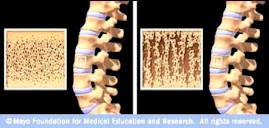
Osteoporotic Bone

Osteoporotic Bone
Source: www.mayoclinic.com

How Strontium Builds Bones

Strontium is a mineral that tends to accumulate in bone. Studies have shown that oral doses of strontium are a safe and effective way to prevent and reverse osteoporosis. Doses of 680 mg per day appear to be optimal. See my "For More Information About Strontium" links section.

Osteoporosis is caused by changes in bone production. In healthy young bones there is a constant cycle of new bone growth and bone removal. With age, more bone is removed and less new bone is produced. The bones become less dense and thus more fragile.

Scientists believe that strontium works in two ways. It may stimulate the replication of pre-osteoblasts, leading to an increase in osteoblasts (cells that build bone). Strontium also directly inhibits the activity of osteoclasts (cells that break down bone). The result is stronger bones.

When taking strontium, be sure to take 1200 mg calcium, 1000 IU vitamin D3, and 500 mg magnesium daily. It is best to take strontium late at night on an empty stomach. Calcium and strontium may compete with each other for absorption if taken together.