Study data showed a beneficial effect in preventing fractures, including in patients at high risk of fracture. Available data do not show evidence of an increased cardiovascular risk with Protelos/Osseor in patients who did not have a history of heart or circulatory problems.
Human Skeleton

Showing posts with label Osseor. Show all posts
Showing posts with label Osseor. Show all posts
Friday, February 21, 2014
Strontium Ranelate to Remain Available in EU
As of February 21, 2014, the European Medicines Agency
(EMA) has concluded its review of strontium ranelate (Protelos/Osseor). The EMA is
recommending the medication remain available in the European Union (EU) but further restricting its
use to patients who cannot be treated with other medicines approved for
osteoporosis due to contraindications or intolerance. These patients should continue
to be evaluated regularly by their doctor, and treatment should be stopped if
patients develop heart or circulatory problems. Patients with established,
current or past history of ischemic heart disease, peripheral arterial disease
and/or cerebrovascular disease, or those with uncontrolled hypertension should
not use the medicine.
Study data showed a beneficial effect in preventing fractures, including in patients at high risk of fracture. Available data do not show evidence of an increased cardiovascular risk with Protelos/Osseor in patients who did not have a history of heart or circulatory problems.
Study data showed a beneficial effect in preventing fractures, including in patients at high risk of fracture. Available data do not show evidence of an increased cardiovascular risk with Protelos/Osseor in patients who did not have a history of heart or circulatory problems.


Saturday, January 25, 2014
Final Opinion on Possible Suspension of Strontium Ranelate to Be Made in February
The recommendation of the European Medicine Agency's Pharmacovigilance Risk Assessment Committee that strontium ranelate (Protelos and Osseor) should no longer be used to treat osteoporosis is still under consideration by the Committee for Medicinal Products for Human Use (CHMP). At its January 2014 meeting the Committee requested additional information from the company to inform its scientific decision making. A final opinion will be made by the CHMP at its meeting in February 2014.
http://www.nos.org.uk/
Tuesday, January 14, 2014
What’s Behind the EMA’s Possible Suspension of Strontium Ranelate?
Here’s the official explanation:
"The EMA’s recommendations are based on an analysis of
pooled data from randomized studies in about 7,500 post-menopausal women with
osteoporosis. The results showed an increase in the risk of heart attack with
Protelos/Osseor as compared with placebo (1.7% versus 1.1 %), with a relative
risk of 1.6 (95% confidence interval, 1.07 to 2.38). There was also an
imbalance in the number of serious heart events seen with the medicine in two
other studies, one in men with osteoporosis and another in patients with osteoarthritis.
No increased risk in mortality was observed."
The increased risk of heart attacks did not show up in the
clinical trials of strontium ranelate, but it did show up in this analysis of
pooled dated from the trials. The results showed a relative risk of 1.6 for
heart attacks for the group on Protelos/Osseor compared to placebo. That result
means someone taking strontium ranelate has a 60 percent higher risk of heart
attacks than someone not taking the drug. That is quite significant.
Another reason the European Medicines Agency is considering
suspending strontium ranelate may be that the EMA is worried about the
possibility of experiencing with strontium ranelate what the French experienced
with Mediator, a drug manufactured by Servier, which also manufactures
strontium ranelate. The Mediator scandal became one of France’s biggest medical
scandals of recent years. French health experts now believe that Mediator, developed for
treating overweight diabetics, could have killed between 500 and 2,000 people between
1976 and November 2009, when it was finally banned for causing heart valve
problems and deaths. These numbers are disputed by Servier, which says there
are only three documented cases where death can be clearly attributed to
Mediator. In other cases, it says, aggravating factors were at work.
A final reason some believe is behind the EMA’s recommendations
and possible suspension is simply costs. Strontium ranelate is much more expensive
than alendronate (alendronic acid, generic Fosamax) for osteoporosis.
Monday, April 29, 2013
EMA Confirms Recommendations to Restrict Strontium Ranelate
The European Medicines Agency (EMA) has confirmed the recommendations to restrict the use of strontium ranelate (Protelos/Osseor, Servier) due to concerns about the risk of adverse
cardiac events. The EMA's Pharmacovigilance Risk Assessment
Committee (PRAC) recommended the restrictions earlier this month, and the
Committee for Medicinal Products for Human Use (CHMP) has now endorsed these following its meeting of April 22-25, 2013. The
CHMP opinion will be sent to the European Commission, the executive branch of
the European Union, which will issue a legally binding decision.
Subscribe to:
Posts (Atom)
Wandering Skeleton

Artist: Joel Hoekstra
Osteoporotic Bone
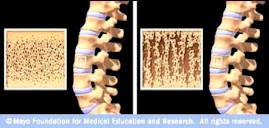
Source: www.mayoclinic.com