Have you seen the latest BONIVA ad? Apparently, the Food and Drug Administration (FDA) has forced Roche Therapeutics Inc. to recant a previous unsubstantiated claim about their product, which contains ibandronate sodium, a bisphosphonate. I saw this ad in the September 25, 2011, Parade magazine, which is included with my Sunday newspaper. The title and first two paragraphs of the advertisement concern the correction:
“An important correction from BONIVA for women with postmenopausal osteoporosis”
“You may have seen an ad about BONIVA for the treatment and prevention of postmenopausal osteoporosis that may have given you the wrong impression. Our ads stated that ‘After one year on BONIVA, 9 out of 10 women stopped and reversed their bone loss.’ The FDA has found that there is not enough evidence to support this statement and wants us to clear up any misunderstanding you may have had about these ads and make sure you have the correct information about BONIVA.”
“BONIVA has not been proven to stop and reverse bone loss in 9 out of 10 women and is not a cure for postmenopausal osteoporosis. BONIVA has been shown to help increase bone mass and help reduce the chance of having a spinal fracture (break). We encourage all patients to discuss their treatment with their healthcare provider. Only your doctor can determine if BONIVA is right for you.”
Human Skeleton

Showing posts with label Boniva. Show all posts
Showing posts with label Boniva. Show all posts
Tuesday, September 27, 2011


Friday, June 11, 2010
Preniva For Osteoporosis
Recently, Saturday Night Live (SNL) did a skit about Preniva, a drug women don't need for osteoporosis but are scared into taking for our weak bones. Many of you have seen the Sally Field commercials for Boniva and will recognize the pun. Health Freedom Alliance posted the video with an introduction by Drew Kaplan. The Alliance, SNL, and I want people to be wary of tactics used by the big pharmaceutical companies to scare us into taking their sometimes useless and dangerous drugs. They often use celebrities, who may or may not take the drugs themselves, to make us believe they take them and love them. They imply that not taking their drugs could have dire consequences for our health. Follow this link for a real treat:
http://healthfreedoms.org/2010/05/24/snl-gets-it-right/
http://healthfreedoms.org/2010/05/24/snl-gets-it-right/
Tuesday, April 7, 2009
FDA Bisphosphonate Alert
Information on Bisphosphonates (marketed as Actonel, Actonel+Ca, Aredia, Boniva, Didronel, Fosamax, Fosamax+D, Reclast, Skelid, and Zometa)
FDA ALERT [1/7/2008] - FDA is highlighting the possibility of severe and sometimes incapacitating bone, joint, and/or muscle (musculoskeletal) pain in patients taking bisphosphonates. Although severe musculoskeletal pain is included in the prescribing information for all bisphosphonates, the association between bisphosphonates and severe musculoskeletal pain may be overlooked by healthcare professionals, delaying diagnosis, prolonging pain and/or impairment, and necessitating the use of analgesics.
The severe musculoskeletal pain may occur within days, months, or years after starting a bisphosphonate. Some patients have reported complete relief of symptoms after discontinuing the bisphosphonate, whereas others have reported slow or incomplete resolution. The risk factors for and incidence of severe musculoskeletal pain associated with bisphosphonates are unknown.
This severe musculoskeletal pain is in contrast to the acute phase response characterized by fever, chills, bone pain, myalgias, and arthralgias that sometimes accompanies initial administration of intravenous bisphosphonates and may occur with initial exposure to once-weekly or once-monthly doses of oral bisphosphonates. The symptoms related to the acute phase response tend to resolve within several days with continued drug use.
Healthcare professionals should consider whether bisphosphonate use might be responsible for severe musculoskeletal pain in patients who present with these symptoms and consider temporary or permanent discontinuation of the drug.
This information reflects FDA's current analysis of data available to FDA concerning this drug. FDA intends to update this when additional information or analyses become available.
FDA ALERT [1/7/2008] - FDA is highlighting the possibility of severe and sometimes incapacitating bone, joint, and/or muscle (musculoskeletal) pain in patients taking bisphosphonates. Although severe musculoskeletal pain is included in the prescribing information for all bisphosphonates, the association between bisphosphonates and severe musculoskeletal pain may be overlooked by healthcare professionals, delaying diagnosis, prolonging pain and/or impairment, and necessitating the use of analgesics.
The severe musculoskeletal pain may occur within days, months, or years after starting a bisphosphonate. Some patients have reported complete relief of symptoms after discontinuing the bisphosphonate, whereas others have reported slow or incomplete resolution. The risk factors for and incidence of severe musculoskeletal pain associated with bisphosphonates are unknown.
This severe musculoskeletal pain is in contrast to the acute phase response characterized by fever, chills, bone pain, myalgias, and arthralgias that sometimes accompanies initial administration of intravenous bisphosphonates and may occur with initial exposure to once-weekly or once-monthly doses of oral bisphosphonates. The symptoms related to the acute phase response tend to resolve within several days with continued drug use.
Healthcare professionals should consider whether bisphosphonate use might be responsible for severe musculoskeletal pain in patients who present with these symptoms and consider temporary or permanent discontinuation of the drug.
This information reflects FDA's current analysis of data available to FDA concerning this drug. FDA intends to update this when additional information or analyses become available.
Subscribe to:
Posts (Atom)
Wandering Skeleton

Artist: Joel Hoekstra
Osteoporotic Bone
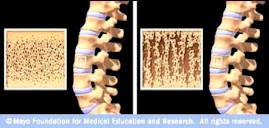
Source: www.mayoclinic.com