Human Skeleton

Human Skeleton

WELCOME TO STRONTIUM FOR BONES BLOG

Have you experienced negative, and even dangerous, side effects from Fosamax (alendronate), Boniva (ibandronate), Actonel (risedronate), Reclast (zoledronic acid), Prolia (denosumab), Forteo (teriparatide), Tymlos (abaloparatide), or other drugs prescribed for osteoporosis? If you have, then rest assured there is a safe, effective treatment for this condition. Strontium, primarily in the form of strontium citrate, is taken orally once a day.

Visitors to my blog can leave comments or ask questions and can remain anonymous, if they wish. Their comments are relayed to my g-mail inbox. Below each post, the number of comments for that post is cited and underlined because it is a link. By clicking on that link below any post, a window opens so that a visitor can leave a comment. Ideally, visitors leave comments on posts most relevant to their comments. All comments to my posts are moderated by me.

Browse the posts and visit the link library of references.


Blog Archive

Showing posts with label bisphosphonates. Show all posts

Tuesday, October 27, 2015

Impact of Treatments for Postmenopausal Osteoporosis on Bone Quality


I came across an excellent review on the impact of treatments for postmenopausal osteoporosis on bone quality. The review covers teriparatide (Forteo), bisphosphonates, strontium ranelate, and denosumab (Prolia). Since strontium is the active ingredient in strontium ranelate, I think it’s safe to assume the same positive changes in bone quality occur with strontium citrate.

“The objective of this systematic review was to examine the influence of treatments for postmenopausal osteoporosis (parathyroid hormone [PTH], bisphosphonates, strontium ranelate, and denosumab) on bone quality and discuss the clinical implications.”

“Most bone-quality data for PTH is from teriparatide. Teriparatide results in a rapid increase in bone-formation markers, followed by increases in bone-resorption markers, opening an “anabolic window,” a period of time when PTH is maximally anabolic. Teriparatide reverses the structural damage seen in osteoporosis and restores the structure of trabecular bone. It has a positive effect on cortical bone, and any early increases in cortical porosity appear to be offset by increases in cortical thickness and diameter.”

“Bisphosphonates are antiresorptive agents which reduce bone turnover, improve trabecular microarchitecture, and mineralization. Concerns have been raised that the prolonged antiresorptive action of bisphosphonates may lead to failure to repair microdamage, resulting in microcracks and atypical fragility.”

“Strontium ranelate is thought to have a mixed mode of action, increasing bone formation and decreasing bone resorption. Strontium ranelate improves cortical thickness, trabecular number, and connectivity, with no change in cortical porosity.”

“Denosumab exerts rapid, marked, and sustained effects on bone resorption, resulting in falls in the markers of bone turnover.”

“Evidence from bone-quality studies suggests that treatment-naive women, aged 60–65 years, with very low BMD T scores may benefit from PTH as primary therapy to improve bone substrate and build bone.”

“Post-PTH treatment with bisphosphonates will maintain improvements in bone quality and reduce the risk of fracture.”


Tuesday, August 11, 2015

Sequential Therapy with Bisphosphonates and Strontium Ranelate


"A recent study provides evidence that prior bisphosphonate therapy results in blunting and delay of the BMD response to strontium ranelate. In a prospective study in postmenopausal women with osteoporosis, 56 bisphosphonate-naïve women and 52 women treated with an oral bisphosphonate for at least one year, who had stopped bisphosphonate therapy within the last month, were given strontium ranelate 2 g daily, together with calcium and vitamin D supplements. After 1 year of treatment, BMD in the lumbar spine had increased 5.6% in bisphophonate-naïve women and by 2.1% in women previously treated with bisphosphonates; at both 6 and 12 months the BMD increase in the former group was significantly less than in the latter. At the total hip there was no significant change in BMD at one year in the bisphophonate pretreated women compared to an increase of 3.4% in the treatment naïve group. In an extension of this study, it was shown that BMD in the spine in pretreated women increased in parallel with treatment naïve women from 6 months onwards, whereas some blunting of the BMD response at the hip was still observed after 2 years of treatment. The most likely mechanism to explain these effects is that bisphosphonates inhibit the uptake of strontium into bone because of suppression of bone turnover and the consequent reduction in newly formed bone."


"Osteoporosis: Diagnosis and Management," Dale W. Stovall (ed.), Wiley (Jul 15, 2013), 288 pages, Chapter 13, pages 202-203.

Monday, May 12, 2014

Fracture Healing with Current and Emerging Osteoporosis Therapies


The failure rate for fracture fixation in patients with osteoporosis has been estimated to be 10–25%. An agent that improves bone repair, fracture healing, and fixation of surgical hardware would be beneficial in the management of fractures. A consensus statement released by the European Society for Clinical and Economic Aspects of Osteoporosis and Osteoarthritis (ESCEO) addressed fracture healing with current and emerging osteoporosis therapy.

The ESCEO concluded that bisphosphonates (Actonel, Actonel+Ca, Aredia, Boniva, Didronel, Fosamax, Fosamax+D, Reclast, Skelid, and Zometa) and raloxifene (Evista) did not impair fracture healing.

Preclinical studies and several case reports suggested that strontium ranelate might enhance fracture healing.

Studies with teriparatide (Forteo) had mixed results, but overall were consistent with a beneficial effect on fracture healing.

Clinical trials with denosumab (Prolia) have shown no adverse effects on fracture healing.

Sclerostin monoclonal antibody therapy has been shown to enhance fracture healing in rats and cynomolgus monkeys. Although several phase II studies to investigate the effects of romosozumab (an antisclerostin therapy) on fracture healing in humans have been conducted [ClinicalTrials.gov identifiers: NCT00907296, NCT01081678], there is currently no ongoing effort to pursue regulatory approval of this agent for acceleration of fracture healing.

You will note that, among the current therapies, only strontium ranelate, which is not available in the USA or Canada, and teriparatide may enhance fracture healing. I believe strontium citrate has the same beneficial effect on fracture healing because it is the strontium that increases bone mineral density and improves bone microarchitecture. 


Role of Sclerostin in Bone and Cartilage and Its Potential as a Therapeutic Target in Bone Diseases, E. Michael Lewiecki, MD, FACP, FACE, Ther Adv Musculoskel Dis. 2014;6(2):48-57.


Goldhahn, J., Feron, J., Kanis, J., Papapoulos, S., Reginster, J., Rizzoli, R. et al. (2012) Implications for fracture healing of current and new osteoporosis treatments: an ESCEO consensus paper. Calcif TissueInt 90: 343–353.

Wandering Skeleton

Wandering Skeleton
Artist: Joel Hoekstra

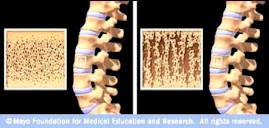
Osteoporotic Bone

Osteoporotic Bone
Source: www.mayoclinic.com

How Strontium Builds Bones

Strontium is a mineral that tends to accumulate in bone. Studies have shown that oral doses of strontium are a safe and effective way to prevent and reverse osteoporosis. Doses of 680 mg per day appear to be optimal. See my "For More Information About Strontium" links section.

Osteoporosis is caused by changes in bone production. In healthy young bones there is a constant cycle of new bone growth and bone removal. With age, more bone is removed and less new bone is produced. The bones become less dense and thus more fragile.

Scientists believe that strontium works in two ways. It may stimulate the replication of pre-osteoblasts, leading to an increase in osteoblasts (cells that build bone). Strontium also directly inhibits the activity of osteoclasts (cells that break down bone). The result is stronger bones.

When taking strontium, be sure to take 1200 mg calcium, 1000 IU vitamin D3, and 500 mg magnesium daily. It is best to take strontium late at night on an empty stomach. Calcium and strontium may compete with each other for absorption if taken together.