WELCOME TO STRONTIUM FOR BONES BLOG
Have you experienced negative, and even dangerous, side effects from Fosamax (alendronate), Boniva (ibandronate), Actonel (risedronate), Reclast (zoledronic acid), Prolia (denosumab), Forteo (teriparatide), Tymlos (abaloparatide), or other drugs prescribed for osteoporosis? If you have, then rest assured there is a safe, effective treatment for this condition. Strontium, primarily in the form of strontium citrate, is taken orally once a day.
Visitors to my blog can leave comments or ask questions and can remain anonymous, if they wish. Their comments are relayed to my g-mail inbox. Below each post, the number of comments for that post is cited and underlined because it is a link. By clicking on that link below any post, a window opens so that a visitor can leave a comment. Ideally, visitors leave comments on posts most relevant to their comments. All comments to my posts are moderated by me.
Browse the posts and visit the link library of references.
Sara M. Meeks is a physical
therapist who specializes in PT for osteoporosis patients. The Meeks Method is
a twelve-point approach designed to prevent, arrest and/or reverse the common
Patterns of Postural Change that occur as, but not necessarily because, people
age.
http://www.sarameekspt.com/meeks_method.asp

The recommended amount of elemental strontium for
osteoporosis is 680 mg daily. For osteopenia, 340 mg strontium may be adequate.
There is no adjustment for weight.
The recommended amount of calcium for women age 51 and older and for men age 71 and
older is 1200 mg daily; for women age 19-50 the amount is 1000 mg; and for men
age 19-70 the amount is 1000 mg. Check the chart in the link for those who are
pregnant or lactating or younger than 19. Figure out how much you are getting
from food, and then supplement the rest, but try to get most of it from food.
Try not to take more than about 500 mg calcium at a time because that is about
the most you can absorb.
http://www.nlm.nih.gov/medlineplus/magazine/issues/winter11/articles/winter11pg12.html
Separate your calcium and strontium by at least
three hours because calcium will reduce the absorption of strontium. The amount
of calcium to take does not vary with the amount of strontium you are taking,
just be sure to take both at separate times. The total amount of calcium needed
depends on your age, sex, and whether you are pregnant or lactating. There is
no adjustment for weight except what is already built into the calcium
recommendations, which are much lower for infants and very young children. The
amount of calcium to supplement depends on how much you are getting from your
diet.
http://www.ncbi.nlm.nih.gov/pubmed/24100401
Nat Rev Nephrol. 2013 Nov;9(11):681-92. doi: 10.1038/nrneph.2013.182. Epub 2013 Oct 8.
Patients with chronic kidney disease (CKD) have a high risk of bone
fracture owing to their low bone mineral density, which resembles that
of postmenopausal osteoporosis. However, the mineral and bone disorder
associated with CKD (CKD-MBD) is more complex than osteoporosis and the
same treatments might not be appropriate. In particular, vascular
calcifications are strongly associated with CKD-MBD, and must be taken
into consideration. Post hoc analyses of data from pivotal osteoporosis
studies suggest that in patients with mild stage 3 CKD and normal
parathyroid hormone (PTH), calcium and phosphate measurements,
conventional medications for osteoporosis (such as raloxifene,
bisphosphonates, teriparatide and denosumab) are effective at reducing
fracture rates. However, for patients with stage 4-5 CKD, or those with
abnormal PTH and mineral values, the available data are insufficient to
determine whether these commonly used medications are effective against
fractures. Moreover, all medications used to treat osteoporosis have
known or potential adverse effects in patients with CKD. Medicines that
increase bone formation by upregulating Wnt signalling have shown
promise in patients with osteoporosis and might be used to treat CKD-MBD
in the future, but off-target effects could limit their use in in this
setting.
http://www.ncbi.nlm.nih.gov/pubmed/24991405 Bonekey Rep. 2014 Jun 25;3:542. doi: 10.1038/bonekey.2014.37. eCollection 2014.
Fractures across the stages of chronic kidney disease (CKD) could be
due to osteoporosis, some form of renal osteodystrophy defined by
specific quantitative histomorphometry or chronic kidney disease-mineral
and bone disorder (CKD-MBD). CKD-MBD is a systemic disease that links
disorders of mineral and bone metabolism due to CKD to either one or all
of the following: abnormalities of calcium, phosphorus, parathyroid
hormone or vitamin D metabolism; abnormalities in bone turnover,
mineralization, volume, linear growth or strength; or vascular or other
soft-tissue calcification. Osteoporosis, as defined by The National
Institutes of Health, may coexist with renal osteodystrophy or CKD-MBD.
Differentiation among these disorders is required to manage correctly
the correct disorder to reduce the risk of fractures. While the World
Health Organization (WHO) BMD criteria for osteoporosis can be used in
patients with stages 1-3 CKD, the disorders of bone turnover become so
aberrant by stages 4 and 5 CKD that neither the WHO criteria nor the
occurrence of a fragility fracture can be used for the diagnosis of
osteoporosis. The diagnosis of osteoporosis in stages 4 and 5 CKD is one
of exclusion--excluding either renal osteodystrophy or CKD-MBD as
the cause of low BMD or fragility fractures. Differentiations among the
disorders of renal osteodystrophy, CKD-MBD or osteoporosis are dependent
on the measurement of specific biochemical markers, including serum
parathyroid hormone (PTH) and/or quantitative bone histomorphometry.
Management of fractures in stages 1-3 CKD does not differ in persons
with or without CKD with osteoporosis assuming there is no evidence for
CKD-MBD, clinically suspected by elevated PTH, hyperphosphatemia or
fibroblast growth factor 23 due to CKD. Treatment of fractures in
persons with osteoporosis and stages 4 and 5 CKD is not evidence based,
with the exception of post hoc analysis suggesting efficacy and safety
of specific osteoporosis therapies (alendronate, risedronate and
denosumab) in stage 4 CKD. This review also discusses how to diagnose
and manage fragility fractures across the five stages of CKD.
Is it
safe to take strontium for osteoporosis when a patient has reduced
kidney function? This question came up recently in a health forum. The
patient had been taking strontium citrate for four years, but recently,
her eGFR (estimated glomerular filtration rate) had decreased to 49
ml/min, which is considered a moderate decrease in GFR. She was
wondering if she could continue taking strontium citrate.
Unfortunately, there are no data relating directly to strontium citrate
and reduced kidney function. However, because strontium citrate and
strontium ranelate are strontium salts and share some characteristics,
we can look at the summary of product characteristics (SPC) for Protelos
(strontium ranelate) to arrive at a reasonable answer for strontium
citrate. That SPC states that strontium ranelate is not recommended for
patients with severe renal impairment (creatinine clearance below 30
ml/min). No dose adjustment is required in patients with
mild-to-moderate renal impairment (30-70 ml/min creatinine clearance).
http://www.servier.com/sites/default/files/ProtelosSPCApril2014.pdf
The National Kidney Foundation states normal values for eGFR are 90-120
ml/min. An eGFR below 60 ml/min suggests that some kidney damage has
occurred. For information on the eGFR, see:
http://labtestsonline.org/understanding/analytes/gfr/tab/test/
How Strontium Builds Bones
Strontium is a mineral that tends to accumulate in bone. Studies have shown that oral doses of strontium are a safe and effective way to prevent and reverse osteoporosis. Doses of 680 mg per day appear to be optimal. See my "For More Information About Strontium" links section.
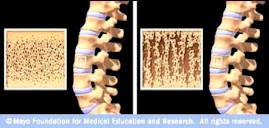
Osteoporosis is caused by changes in bone production. In healthy young bones there is a constant cycle of new bone growth and bone removal. With age, more bone is removed and less new bone is produced. The bones become less dense and thus more fragile.
Scientists believe that strontium works in two ways. It may stimulate the replication of pre-osteoblasts, leading to an increase in osteoblasts (cells that build bone). Strontium also directly inhibits the activity of osteoclasts (cells that break down bone). The result is stronger bones.
When taking strontium, be sure to take 1200 mg calcium, 1000 IU vitamin D3, and 500 mg magnesium daily. It is best to take strontium late at night on an empty stomach. Calcium and strontium may compete with each other for absorption if taken together.