Human Skeleton

Human Skeleton

WELCOME TO STRONTIUM FOR BONES BLOG

Have you experienced negative, and even dangerous, side effects from Fosamax (alendronate), Boniva (ibandronate), Actonel (risedronate), Reclast (zoledronic acid), Prolia (denosumab), Forteo (teriparatide), Tymlos (abaloparatide), or other drugs prescribed for osteoporosis? If you have, then rest assured there is a safe, effective treatment for this condition. Strontium, primarily in the form of strontium citrate, is taken orally once a day.

Visitors to my blog can leave comments or ask questions and can remain anonymous, if they wish. Their comments are relayed to my g-mail inbox. Below each post, the number of comments for that post is cited and underlined because it is a link. By clicking on that link below any post, a window opens so that a visitor can leave a comment. Ideally, visitors leave comments on posts most relevant to their comments. All comments to my posts are moderated by me.

Browse the posts and visit the link library of references.


Blog Archive

Showing posts with label vitamin K. Show all posts

Wednesday, November 26, 2014

Is Vitamin K2 the New Vitamin D?

This article is dated November 18, 2014, and appeared on Medscape. It is the opinion of one doctor, who admits from the start that he knows nothing about nutrition as it relates to chronic illness. As pointed out by one commenter, he goes on to prove his ignorance by stating that green, leafy vegetables are a good source of vitamin K2. Wrong! They are a good source of vitamin K1. Because the doctor's article is controversial, there are many comments revealing various viewpoints. Be sure to drag and drop the link below and read the comments. There is also a video of the doctor giving his talk.


"Hello and welcome. I am Dr George Lundberg, and this is At Large at Medscape.

I do not know anything about nutrition as it relates to chronic illness, including obesity. I used to think that was because, probably like you, I was taught so little about nutrition in medical school. I have spent a medical lifetime reading articles about nutrition, before and after publication. But I am still woefully ignorant of "nutritional truth."

Take vitamin D. The minimum daily requirement prevents rickets. But then, just a few years ago, it became popular to check vitamin D blood levels. And many people were found to have "low" vitamin D levels. Then many diseases were found to be associated with "vitamin D deficiency," except it turns out that many labs were not doing the tests in equivalent ways.

After a whole lot of fuss and study, the Agency for Healthcare Research and Quality (AHRQ) issued a report this year that finds no consistent correlation between vitamin D and health outcomes such as cardiovascular disease, all-cause mortality, several types of cancer, or bone health.[1] Amazing.

Which Brings Us to Vitamin K

What do you know about vitamin K? It has something to do with blood coagulation, right? Yes, but that is vitamin K1. I am asking about vitamin K2. I bet you have not thought much about that vitamin.
Here are nine things every physician should know about vitamin K2:
  1. It exists.
  2. It is essential for life and health.
  3. There is currently no reliable blood test to measure it.
  4. Your body makes a certain amount via menaquinone-4 (M-4) in your gut from vitamin K1.
  5. That may not be enough.
  6. Your body probably needs more vitamin K2 for disease prevention than it manufactures, so nutritional sources are important.
  7. Foods rich in vitamin K2 (often in the form of M-4 or M-7) include: natto (fermented soybeans); green, leafy vegetables; organ meats such as goose liver; grass-fed beef; dairy; eggs; and fish.
  8. Or you can take nutritional supplements to achieve healthy levels of vitamin K2.
  9. Deficiencies of vitamin K2 are now being reported in serious journals to be associated with—get this—all-cause mortality, cardiovascular disease, osteoporosis, diabetes, many forms of cancer, dementia, and chronic inflammation.
Sound familiar?
Is vitamin K2 the ubiquitous disease-associated vitamin D-like deficiency, sans blood testing, all over again? A fad disease about to pop up, flourish, and disappear? Or is this a real, late-to-the-table, fundamental new understanding of possible causes of many common diseases, disability, and death? And if vitamin K2 is taken correctly, will it result in prevention and treatment of same? Look it up; check it out.

I do not know how this is going to work out, but I have a hunch that vitamin K2 will turn out to be a really big deal rather than only "the new vitamin D," with much fuss and little substance.

Most of this research is being done in Japan and Europe, especially The Netherlands, well away from the US Department of Agriculture and lobbyists for the American food industry and its captured government and academic partners.

I owe my current interest in this topic to a product of the Internet as the world's greatest library—a well-educated, nonscientist who got really interested in this topic and will not let up. Thank you, Micki Jacobs of Cincinnati.

That's my opinion. I am Dr George Lundberg, at large at Medscape."

 http://www.medscape.com/viewarticle/834763?nlid=70845_1521&src=wnl_edit_medp_wir&uac=127701PY&spon=17



Wednesday, August 27, 2014

Vitamin K2 Controversy


Japanese researchers have published several articles on vitamin K2, such as the following one: “Vitamin K2 (Menatetrenone) Effectively Prevents Fractures and Sustains Lumbar Bone Mineral Density in Osteoporosis” American researchers have been unable to duplicate the results. One study found that “Vitamin K Treatment Reduces Undercarboxylated Osteocalcin but Does Not Alter Bone Turnover, Density, or Geometry in Healthy Postmenopausal North American Women.”

Each study has weaknesses. For example, the Japanese researchers did not use placebo capsules for vitamin K2 in the control group. Therefore, they cannot exclude the possibility that this may have differentially affected the behavior of study participants in the control and treatment groups, although they consider this possibility unlikely. Limitations of the study on North American women include the relatively short (1 yr) study duration and the inclusion of only healthy women. Thus, the exclusion of osteoporotic women and, importantly, the short duration of this study prohibited use of fracture reduction as a study endpoint.

Here are the two abstracts with links to the full articles:

Abstract to Asian Article:
We attempted to investigate whether vitamin K2 (menatetrenone) treatment effectively prevents the incidence of new fractures in osteoporosis. A total of 241 osteoporotic patients were enrolled in a 24-month randomized open label study. The control group (without treatment; n = 121) and the vitamin K2–treated group (n = 120), which received 45 mg/day orally vitamin K2, were followed for lumbar bone mineral density (LBMD; measured by dual-energy X-ray absorptiometry [DXA]) and occurrence of new clinical fractures. Serum level of Glu-osteocalcin (Glu-OC) and menaquinone-4 levels were measured at the end of the follow-up period. Serum level of OC and urinary excretion of deoxypyridinoline (DPD) were measured before and after the treatment. The background data of these two groups were identical. The incidence of clinical fractures during the 2 years of treatment in the control was higher than the vitamin K2–treated group (χ2 = 10.935; p = 0.0273). The percentages of change from the initial value of LBMD at 6, 12, and 24 months after the initiation of the study were −1.8 ± 0.6%, −2.4 ± 0.7%, and −3.3 ± 0.8% for the control group, and 1.4 ± 0.7%, −0.1 ± 0.6%, and −0.5 ± 1.0% for the vitamin K2–treated group, respectively. The changes in LBMD at each time point were significantly different between the control and the treated group (p = 0.0010 for 6 months, p = 0.0153 for 12 months, and p = 0.0339 for 24 months). The serum levels of Glu-OC at the end of the observation period in the control and the treated group were 3.0 ± 0.3 ng/ml and 1.6 ± 0.1 ng/ml, respectively (p < 0.0001), while the serum level of OC measured by the conventional radioimmunoassay (RIA) showed a significant rise (42.4 ± 6.9% from the basal value) in the treated group at 24 months (18.2 ± 6.1% for the controls; p = 0.0081). There was no significant change in urinary DPD excretion in the treated group. These findings suggest that vitamin K2 treatment effectively prevents the occurrence of new fractures, although the vitamin K2–treated group failed to increase in LBMD. Furthermore, vitamin K2 treatment enhances γ-carboxylation of the OC molecule. http://onlinelibrary.wiley.com/doi/10.1359/jbmr.2000.15.3.515/full

Abstract to North American Article
Low vitamin K status is associated with low BMD and increased fracture risk. Additionally, a specific menaquinone, menatetrenone (MK4), may reduce fracture risk. However, whether vitamin K plays a role in the skeletal health of North American women remains unclear. Moreover, various K vitamers (e.g., phylloquinone and MK4) may have differing skeletal effects. The objective of this study was to evaluate the impact of phylloquinone or MK4 treatment on markers of skeletal turnover and BMD in nonosteoporotic, postmenopausal, North American women. In this double-blind, placebo-controlled study, 381 postmenopausal women received phylloquinone (1 mg daily), MK4 (45 mg daily), or placebo for 12 mo. All participants received daily calcium and vitamin D3 supplementation. Serum bone-specific alkaline phosphatase (BSALP) and n-telopeptide of type 1 collagen (NTX) were measured at baseline and 1, 3, 6, and 12 mo. Lumbar spine and proximal femur BMD and proximal femur geometry were measured by DXA at baseline and 6 and 12 mo. At baseline, the three treatment groups did not differ in demographics or study endpoints. Compliance with calcium, phylloquinone, and MK4 treatment was 93%, 93%, and 87%, respectively. Phylloquinone and MK4 treatment reduced serum undercarboxylated osteocalcin but did not alter BSALP or NTX. No effect of phylloquinone or MK4 on lumbar spine or proximal femur BMD or proximal femur geometric parameters was observed. This study does not support a role for vitamin K supplementation in osteoporosis prevention among healthy, postmenopausal, North American women receiving calcium and vitamin D supplementation. http://onlinelibrary.wiley.com/doi/10.1359/jbmr.081254/full


Friday, March 2, 2012

Update On My Calcium And Magnesium Intake

For many years, I have been taking one tablet per day of KAL Calcium Magnesium Extra Strength, which contains 500 mg calcium (as calcium carbonate and calcium amino acid chelate), 250 mg magnesium (as magnesium oxide and magnesium amino acid chelate), 15 mg sodium, and 50 mg betaine HCl.  I was buying it at my local health food store, but I found a replacement that I think is even better and will be ordering it soon from www.iherb.com, an online distributor I've been getting my strontium and a couple of other supplements from.

The new product is Country Life, Gluten Free, Calcium Magnesium Complex 1000 mg/500 mg in two tablets, 360 tablets, $20.23. The calcium is in the form of calcium hydroxyapatite, citrate, aspartate, alpha-ketoglutarate, and lysinate. The magnesium is in the form of magnesium oxide, citrate, taurinate, alpha-ketoglutarate, and aspartate. Each tablet contains 500 mg calcium, 250 mg magnesium, and 250 mg phosphorus (as calcium hydroxyapatite).

In addition to a calcium/magnesium supplement, I take a multivitamin, Nature Made Multi For Her 50+, which I buy online at www.walgreen.com when the company has one of their frequent “buy one, get one free” offers. This multivitamin contains 200 mg calcium, 100 mg magnesium, 1000 IU vitamin D3, 80 mcg vitamin K, and many other key nutrients.

For breakfast, I have 12 oz fat-free milk, which gives me 450 mg calcium. At lunch, I take the 500 mg calcium/250 mg magnesium supplement. With supper, I take my multivitamin for 200 mg calcium and 100 mg magnesium. That comes to 1150 mg calcium, without counting other food sources. The RDA for women 50+ is 1200 mg calcium per day. I may cut back to 8 oz milk (300 mg calcium) on days when I know I’ll be having something calcium rich for supper.  

Thursday, February 9, 2012

Combination of Micronutrients for Bone (COMB) Study

After 12 months of consecutive supplemental micronutrient therapy,repeat bone densitometry was performed. The results were analyzed in a group of compliant patients and demonstrate improved BMD in patients classified with normal, osteopenic and osteoporotic bone density.

Combination of Micronutrients (COMB) Protocol for Bone Health

1. Docosahexanoic acid or DHA (from Purified Fish Oil): 250 mg/day
2. Vitamin D3: 2000 IU/day
3. Vitamin K2 (non-synthetic MK7 form): 100 ug/day
4. Strontium citrate: 680 mg/day
5. Elemental magnesium: 25 mg/day
6. Dietary sources of calcium recommended
7. Daily impact exercising encouraged

After one year of therapy with the COMB protocol compared to published results for strontium ranelate and bisphosphonate medications, the percent changes in bone mineral density (z values) were as follows:

Femoral neck: 4% increase for the group on the COMB protocol vs. 2% for strontium ranelate, alendronate, and risedronate

Total hip: 3% increase for the COMB protocol vs. 3-4% for strontium ranelate, 2% for alendronate, and not calculated for risedronate

Total spine: 6% increase for COMB protocol vs. 5-6% for strontium ranelate, 4% for both alendronate and risedronate

This combined micronutrient supplementation regimen appears to be at least as effective as bisphosphonates or strontium ranelate in raising BMD levels in hip, spine, and femoral neck sites. No fractures occurred in the group taking the micronutrient protocol. This micronutrient regimen also appears to show efficacy in individuals for whom bisphosphonate therapy was previously unsuccessful in maintaining or raising BMD. Prospective clinical trials are required to confirm efficacy.

This study by Stephen J. Genuis and Thomas P. Bouchard was published in the Journal of Environmental and Public Health, Volume 2012 (2012), Article ID 354151,doi:10.1155/2012/354151 COMB Protocol

Saturday, August 21, 2010

Picking a Bone With Contemporary Osteoporosis Management

I recently came across an abstract of a research article critical of contemporary osteoporosis management and recommending strontium, calcium, vitamins D and K, and essential fatty acids. The article was published in Clin Nutr. Apr. 2007;26(2):193-207 and Epub. Oct. 13, 2006, by S.J. Genuis and G.K. Schwalfenberg of the University of Alberta, Alberta, Canada. Here is the abstract of the paper entitled, "Picking a Bone with Contemporary Osteoporosis Management: Nutrient Strategies to Enhance Skeletal Integrity."

"Epidemic rates of osteoporosis in the western world have yielded intense efforts to develop management approaches to combat this potentially devastating disorder; recent research has unveiled innovative strategies which hold considerable promise for prevention of skeletal compromise and amelioration of suboptimal bone health. According to many algorithms and practice directives, the contemporary assessment and management of osteoporosis focuses heavily on determination of fracture risk and pharmaceutical intervention for those patients deemed to be at high risk. While routine recommendations for calcium and vitamin D have been incorporated into most regimens, disproportionately little attention has been given to recent research elucidating improved bone health and diminution in fracture rates experienced by patients receiving specific nutrients. In mainstream medical practice, clinical analysis and management of nutritional or dietary issues is sometimes perceived as unconventional, primitive or unsophisticated health care. Recent evidence-based research, however, supports intervention with adequate amounts of specific nutrients, including vitamin D, strontium, vitamin K, and essential fatty acids, in the prevention and primary management of osteoporosis."

http://www.ncbi.nlm.nih.gov/pubmed/17046114

Thursday, August 5, 2010

My Daily Supplements

One of my readers asked me to add more information about supplements. I’ve decided to list all the ones I currently take. This list may provide a start for your own research. Each person’s needs will vary depending on age, sex, diet, and health.

Doctor’s Best Strontium Bone Maker, 2194 mg strontium citrate, 680 mg elemental strontium in two capsules
Nature Made Multi For Her 50+ (contains 22 key nutrients, including 1000 IU vitamin D3, 200 mg calcium, 100 mg magnesium, 80 mcg vitamin K, 2500 IU vitamin A with 60% as beta carotene, 25 mcg vitamin B12, 180 mg vitamin C, 60 IU vitamin E, 15 mg zinc, 70 mcg selenium)
Nature Made Vitamin C, 500 mg
Nature Made Vitamin E, 100 % Natural, 400 IU
Kal Extra-Strength Calcium Magnesium (I take one tablet, which contains 500 mg calcium and 250 mg magnesium.)
Kal Bioflavonoids 1000
Finest Natural Zinc, 50 mg
Finest Natural Selenium, 200 mcg
Nature’s Bounty Lutein, 20 mg
Nature’s Bounty Sublingual Vitamin B12, 2500 mcg (I take one tablet Monday, Wednesday, and Friday.)
Bluebonnet Lecithin, 1365 mg (I take three capsules daily.)
Nature’s Way Primadophilus bifidus

Also look up my previous posts:
03/30/2010 “How Much Calcium Are You Getting?” (Includes IOF’s Calcium Calculator)
03/29/2010 “Strontium With Insufficient Calcium and Magnesium, A Case Study”
03/22/2010 “Strontium And Calcium”

Wandering Skeleton

Wandering Skeleton
Artist: Joel Hoekstra

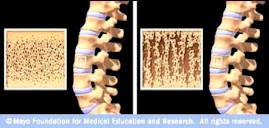
Osteoporotic Bone

Osteoporotic Bone
Source: www.mayoclinic.com

How Strontium Builds Bones

Strontium is a mineral that tends to accumulate in bone. Studies have shown that oral doses of strontium are a safe and effective way to prevent and reverse osteoporosis. Doses of 680 mg per day appear to be optimal. See my "For More Information About Strontium" links section.

Osteoporosis is caused by changes in bone production. In healthy young bones there is a constant cycle of new bone growth and bone removal. With age, more bone is removed and less new bone is produced. The bones become less dense and thus more fragile.

Scientists believe that strontium works in two ways. It may stimulate the replication of pre-osteoblasts, leading to an increase in osteoblasts (cells that build bone). Strontium also directly inhibits the activity of osteoclasts (cells that break down bone). The result is stronger bones.

When taking strontium, be sure to take 1200 mg calcium, 1000 IU vitamin D3, and 500 mg magnesium daily. It is best to take strontium late at night on an empty stomach. Calcium and strontium may compete with each other for absorption if taken together.