Data were obtained from the SOTI (Spinal Osteoporosis Therapeutic Intervention) and TROPOS (Treatment Of Peripheral Osteoporosis) studies which randomized participants to receive either strontium ranelate or placebo over three years. The study identified 2346 robust, 2472 intermediate and 264 frail women. At three years, the risk for vertebral fractures was reduced by 30% in the robust, by 45% in the intermediate, and by 58% in the frail patients compared to those assigned to placebo. Risk of vertebral fracture was reduced within one year in all three groups.
This study was published by Rolland Y, Van Kan GA, Gillette-Guyonnet S, Roux C, Boonen S, and Vellas B in Bone 2011;48:332-8.
Human Skeleton

Friday, July 22, 2011


Tuesday, July 19, 2011
The Effect Of Bone Strontium On BMD Differs For Different DXA Equipment
Osteoporotic patients treated with strontium ranelate show relatively large increases in bone mineral density (BMD) measured by dual-energy X-ray absorptiometry (DXA) due to the replacement of some of the calcium atoms in bone by strontium. A study by Pors Nielsen and colleagues reported that replacement of 1% of calcium atoms by strontium causes a 10% increase in BMD. The ratio of the percentage increase in BMD to the molar percentage of strontium in bone is referred to as the strontium ratio. Theoretically it is expected that the strontium ratio should vary between different manufacturers' DXA equipment depending on the effective photon energy of the device.
In this study the researchers reported theoretical estimates of the strontium ratio for two axial DXA systems and two peripheral DXA devices based on their broad spectrum X-ray emission. The theoretical figures were verified in an experimental study in which the strontium ratio for each device was measured using phantoms containing mixtures of hydroxyapatite and strontium hydrogen-phosphate. The theoretical values of the strontium ratio were 11.0 for the Hologic Discovery, 9.9 for the GE-Lunar Prodigy, 9.1 for the Demetech Calscan, and 8.5 for the Osteometer Dexacare G4. Experimental results were 11.2 for the Discovery, 9.9 for the Prodigy, 8.6 for the Calscan and 6.3 for the Dexacare G4. The results confirm that the effect of bone strontium on BMD measurements is different for different DXA systems. In the future it might be possible to exploit this effect to make a non-invasive estimate of average bone strontium content in groups of patients receiving strontium medication for osteoporosis.
Liao J, Blake GM, McGregor AH, Patel R. Bone. 2010 Nov; 47(5):882-7. Epub 2010 Aug 10
http://www.ncbi.nlm.nih.gov/pubmed/20699129
In this study the researchers reported theoretical estimates of the strontium ratio for two axial DXA systems and two peripheral DXA devices based on their broad spectrum X-ray emission. The theoretical figures were verified in an experimental study in which the strontium ratio for each device was measured using phantoms containing mixtures of hydroxyapatite and strontium hydrogen-phosphate. The theoretical values of the strontium ratio were 11.0 for the Hologic Discovery, 9.9 for the GE-Lunar Prodigy, 9.1 for the Demetech Calscan, and 8.5 for the Osteometer Dexacare G4. Experimental results were 11.2 for the Discovery, 9.9 for the Prodigy, 8.6 for the Calscan and 6.3 for the Dexacare G4. The results confirm that the effect of bone strontium on BMD measurements is different for different DXA systems. In the future it might be possible to exploit this effect to make a non-invasive estimate of average bone strontium content in groups of patients receiving strontium medication for osteoporosis.
Liao J, Blake GM, McGregor AH, Patel R. Bone. 2010 Nov; 47(5):882-7. Epub 2010 Aug 10
http://www.ncbi.nlm.nih.gov/pubmed/20699129
Thursday, June 23, 2011
Dietary Calcium Intake And Risk Of Fracture And Osteoporosis
The optimal level of calcium intake to compensate for skeletal calcium losses and to prevent osteoporosis and fractures remains unclear. This is reflected by the wide range of daily calcium recommendations for individuals older than 50 years: at present 700 mg in the UK, 800 mg in Scandinavia, 1200 mg in the United States, and 1300 mg in Australia and New Zealand.
The findings of a large Swedish study recently published in the British Medical Journal show an association between a low habitual dietary calcium intake (below 751 mg per day for women) and an increased risk of fractures and of osteoporosis. Above this base level, only minor differences in risk were observed. The highest reported calcium intake (>1137 mg) did not further reduce the risk of fractures of any type, or of osteoporosis, but was associated with a higher rate of hip fracture.
Eva Warensjö, et al. BMJ. 2011; 342: d1473.
Published online 2011 May 24. doi: 10.1136/bmj.d1473.
http://www.ncbi.nlm.nih.gov/pmc/articles/PMC3101331/
The findings of a large Swedish study recently published in the British Medical Journal show an association between a low habitual dietary calcium intake (below 751 mg per day for women) and an increased risk of fractures and of osteoporosis. Above this base level, only minor differences in risk were observed. The highest reported calcium intake (>1137 mg) did not further reduce the risk of fractures of any type, or of osteoporosis, but was associated with a higher rate of hip fracture.
Eva Warensjö, et al. BMJ. 2011; 342: d1473.
Published online 2011 May 24. doi: 10.1136/bmj.d1473.
http://www.ncbi.nlm.nih.gov/pmc/articles/PMC3101331/
Thursday, April 21, 2011
Drugs Associated With Increased Bone Loss And Fracture Risk
"Certain drugs (e.g., glucocorticoids, carbamazepine, phenytoin, valproic acid, lithium, depot medroxyprogesterone, chemotherapeutic agents, and long-term heparin therapy) are known to be associated with increases in bone loss or fracture rate. Thiazolidinediones are the newest addition to this list, as recent clinical trials have reported increased fracture rates in patients receiving these drugs for the treatment of type 2 diabetes mellitus."
"Pioglitazone and rosiglitazone, the two currently available thiazolidinediones, accounted for nearly one quarter of the antidiabetic drugs prescribed in the United States in 2004 and 2005. In 2008, both pioglitazone (8th) and rosiglitazone (98th) ranked within the top 100 prescription drug sales in the United States. This widespread use has exposed many postapproval adverse effects, including bone changes and fractures."
The entire article can be read at:
http://www.medscape.com/viewarticle/725156
Bone Loss and Fracture Risk Associated with Thiazolidinedione Therapy
Daniel M. Riche, Pharm.D.; S. Travis King, Pharm.D.
Posted: 10/05/2010; Pharmacotherapy
"Pioglitazone and rosiglitazone, the two currently available thiazolidinediones, accounted for nearly one quarter of the antidiabetic drugs prescribed in the United States in 2004 and 2005. In 2008, both pioglitazone (8th) and rosiglitazone (98th) ranked within the top 100 prescription drug sales in the United States. This widespread use has exposed many postapproval adverse effects, including bone changes and fractures."
The entire article can be read at:
http://www.medscape.com/viewarticle/725156
Bone Loss and Fracture Risk Associated with Thiazolidinedione Therapy
Daniel M. Riche, Pharm.D.; S. Travis King, Pharm.D.
Posted: 10/05/2010; Pharmacotherapy
Monday, February 28, 2011
Systematic Treatment After Successful Surgical Treatment for Primary Hyperparathyroidism With Strontium Ranelate
Patients with primary hyperparathyroidism (pHPT) with osteopenia or osteoporosis are treated with strontium ranelate/Ca+Vitamin-D or placebo/Ca+Vitamin D after successful surgical treatment of pHPT. This clinical trial is currently recruiting participants. ClinicalTrials.gov processed this record on February 27, 2011.
The chronic excessive hypersecretion of parathyroid hormone (PTH) has significant impact on bone remodeling. In primary hyperparathyroidism (pHPT) bone turnover is increased, resulting in a higher resorption of bone and thus loss of bone density.
After successful surgical treatment of pHPT, bone metabolism switches from catabolic state to anabolic state again. However, studies show that postmenopausal women in particular regain significantly less BMD and often suffer from osteopenia or osteoporosis. The hypothesis is that strontium ranelate/Ca + Vitamin-D helps to regain bone mass in patients with osteopenia or osteoporosis after successful parathyroidectomy for pHPT and results in higher gain of BMD than placebo-treated patients.
Eligibility Requirements: 18 Years and older, either gender, biochemically proven pHPT and PTX planned, osteopenia (t-score < -1 and > -2.5) or osteoporosis (t-score ≤ -2.5) according to WHO Criteria
Medical University Vienna, General Hospital Vienna, Vienna, Austria, 1090
Contact: Bruno Niederle, Prof., MD. at chir-endokrin@meduniwien.ac.at
Contact: Christian Scheuba, Prof., MD at christian.scheuba@meduniwien.ac.at
There is a long list of exclusion criteria and more information at:
http://www.clinicaltrials.gov/ct2/show/NCT01222026?term=strontium+AND+osteoporosis&rank=1
The chronic excessive hypersecretion of parathyroid hormone (PTH) has significant impact on bone remodeling. In primary hyperparathyroidism (pHPT) bone turnover is increased, resulting in a higher resorption of bone and thus loss of bone density.
After successful surgical treatment of pHPT, bone metabolism switches from catabolic state to anabolic state again. However, studies show that postmenopausal women in particular regain significantly less BMD and often suffer from osteopenia or osteoporosis. The hypothesis is that strontium ranelate/Ca + Vitamin-D helps to regain bone mass in patients with osteopenia or osteoporosis after successful parathyroidectomy for pHPT and results in higher gain of BMD than placebo-treated patients.
Eligibility Requirements: 18 Years and older, either gender, biochemically proven pHPT and PTX planned, osteopenia (t-score < -1 and > -2.5) or osteoporosis (t-score ≤ -2.5) according to WHO Criteria
Medical University Vienna, General Hospital Vienna, Vienna, Austria, 1090
Contact: Bruno Niederle, Prof., MD. at chir-endokrin@meduniwien.ac.at
Contact: Christian Scheuba, Prof., MD at christian.scheuba@meduniwien.ac.at
There is a long list of exclusion criteria and more information at:
http://www.clinicaltrials.gov/ct2/show/NCT01222026?term=strontium+AND+osteoporosis&rank=1
Friday, November 5, 2010
Strontium Citrate Clinical Trial Results By Year End
Data from the three-month strontium citrate clinical trial known as the Scope Study are currently (as of November 4, 2010) being evaluated at the UC Davis Medical Center. Some results should be available by the end of the year. Stay tuned for the latest word from the Scope Team.
Subscribe to:
Posts (Atom)
Wandering Skeleton

Artist: Joel Hoekstra
Osteoporotic Bone
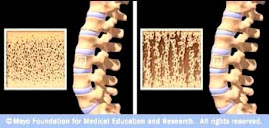
Source: www.mayoclinic.com