Human Skeleton

Human Skeleton

WELCOME TO STRONTIUM FOR BONES BLOG

Have you experienced negative, and even dangerous, side effects from Fosamax (alendronate), Boniva (ibandronate), Actonel (risedronate), Reclast (zoledronic acid), Prolia (denosumab), Forteo (teriparatide), Tymlos (abaloparatide), or other drugs prescribed for osteoporosis? If you have, then rest assured there is a safe, effective treatment for this condition. Strontium, primarily in the form of strontium citrate, is taken orally once a day.

Visitors to my blog can leave comments or ask questions and can remain anonymous, if they wish. Their comments are relayed to my g-mail inbox. Below each post, the number of comments for that post is cited and underlined because it is a link. By clicking on that link below any post, a window opens so that a visitor can leave a comment. Ideally, visitors leave comments on posts most relevant to their comments. All comments to my posts are moderated by me.

Browse the posts and visit the link library of references.


Blog Archive

Sunday, August 14, 2022

Calcium Intake and BMD

The following report is a systematic review and meta-analysis (the highest level of scientific proof) on calcium intake and bone mineral density. 

Abstract

Objective To determine whether increasing calcium intake from dietary sources affects bone mineral density (BMD) and, if so, whether the effects are similar to those of calcium supplements.

Design Random effects meta-analysis of randomised controlled trials.

Data sources Ovid Medline, Embase, Pubmed, and references from relevant systematic reviews. Initial searches were undertaken in July 2013 and updated in September 2014.

Eligibility criteria for selecting studies Randomised controlled trials of dietary sources of calcium or calcium supplements (with or without vitamin D) in participants aged over 50 with BMD at the lumbar spine, total hip, femoral neck, total body, or forearm as an outcome.

Results We identified 59 eligible randomised controlled trials: 15 studied dietary sources of calcium (n=1533) and 51 studied calcium supplements (n=12 257). Increasing calcium intake from dietary sources increased BMD by 0.6-1.0% at the total hip and total body at one year and by 0.7-1.8% at these sites and the lumbar spine and femoral neck at two years. There was no effect on BMD in the forearm. Calcium supplements increased BMD by 0.7-1.8% at all five skeletal sites at one, two, and over two and a half years, but the size of the increase in BMD at later time points was similar to the increase at one year. Increases in BMD were similar in trials of dietary sources of calcium and calcium supplements (except at the forearm), in trials of calcium monotherapy versus co-administered calcium and vitamin D, in trials with calcium doses of ≥1000 versus <1000 mg/day and ≤500 versus >500 mg/day, and in trials where the baseline dietary calcium intake was <800 versus ≥800 mg/day.

Conclusions Increasing calcium intake from dietary sources or by taking calcium supplements produces small non-progressive increases in BMD, which are unlikely to lead to a clinically significant reduction in risk of fracture.

Conclusions

In summary, increasing calcium intake from dietary sources increases BMD by a similar amount to increases in BMD from calcium supplements. In each case, the increases are small (1-2%) and non-progressive, with little further effect on BMD after a year. Subgroup analyses do not suggest greater benefits of increasing calcium intake on BMD in any subpopulation based on clinically relevant baseline characteristics. The small effects on BMD are unlikely to translate into clinically meaningful reductions in fractures. Therefore, for most individuals concerned about their bone density, increasing calcium intake is unlikely to be beneficial.

https://www.ncbi.nlm.nih.gov/pmc/articles/PMC4784773/


Friday, August 5, 2022

My Current Supplements

My bone protocol consists of the following supplements. The dosage for each is  one capsule or tablet per day unless otherwise stated. 

AOR Strontium Support II, 341 mg strontium (from citrate) per capsule (two capsules daily)

Country Life, Gluten Free, Calcium Magnesium with Vitamin D Complex (250 mg Ca, 125 mg Mg, 100 I.U. Vitamin D per capsule) (two capsules daily)

Innate Vitality Magnesium Glycinate, 500 mg/capsule 

Nature Made Multi Men's 50+, No Iron (OK for men and women; contains 1000 IU vitamin D3 and 21 other nutrients) 

Nature Made D3, 1000 IU (one capsule three times/week)

I also take the following supplements for general health. The dosage for each is one capsule or tablet per day unless otherwise stated.

Solgar Citrus Bioflavonoid Complex, 1000 mg per tablet (Bioflavonoids are antioxidants.)

Solary Selenium, 100 mcg

Vitacost Chelated Zinc (zinc glycinate chelate), 30 mg

Doctor’s Best Lutein with Optilut (20 mg lutein, 4 mg zeaxanthin in two capsules)(2 capsules/day)

Nature Made Vitamin C, 500 mg

Solgar Natural Vitamin E (as d-Alpha Tocopherol plus d-Beta, d-Delta and d-Gamma Tocopherols), 400 IU

Horbaach Sublingual Methylcobalamin (Vitamin B12), 5000 mcg

I also take a couple of digestive aids: 

A probiotic (I am trying different brands.)

A multi-enzyme digestive (I am trying different brands.) 

Tuesday, April 26, 2022

Theories on How Strontium Prevents Fractures

Physiochemical Mechanisms/Sacrificial Bonds 
Physiochemical mechanisms describe "how Sr (strontium) is able to affect the intrinsic tissue quality of bone by directly incorporating into bone at multiple levels, including the organic matrix and the hydrated layer surrounding hydroxyapatite (HA) crystals, forming sacrificial bonds and stabilizing hydration shells." 

Cellular Mechanisms/Ca-sensing Receptor (CaSR) 
"The cellular mechanisms are centered mainly around the Ca-sensing receptor (CaSR) and its ability to mediate bone cell function and respond to Sr, providing evidence for the dual-acting mechanism."

"Osteoclast precursors and mature osteoclasts express the CaSR on their cell membrane..."

Enhanced Bone Microarchitecture 
"Microarchitecture is an important aspect of bone strength and increased fracture risk in patients with osteoporosis is associated with trabecular thinning and increased cortical porosity."

"Clinical studies have shown SR treatment increased cortical thickness and trabecular number and decreased trabecular spacing from baseline, determined using high-resolution peripheral quantitative computed tomography (HR-pQCT)." 

https://www.sciencedirect.com/science/article/pii/S2352187220300334


    Wednesday, April 13, 2022

    Vegetable Magnesium Stearate in Strontium Citrate Products

    Magnesium stearate, also known as vegetable stearate, is used as a "flow agent" in supplement tablets and capsules to prevent different supplement ingredients from sticking to each other and to the blending and punching equipment. The flow agent ensures a homogenous blend of ingredients and a consistent dosage in each and every capsule or tablet. It is a common ingredient in many supplements, including strontium citrate products. I have never had a problem with it, but some people might have. 

    "Magnesium stearate is generally safe to consume, but too much of it can have a laxative effect. In large amounts, it can irritate the mucus lining of the bowels. This may trigger a bowel movement or diarrhea."

    "Allergic reactions to magnesium stearate are rare, but you should avoid it and talk to your doctor if it affects you."

    https://www.webmd.com/vitamins-and-supplements/what-is-magnesium-stearate

    Below is a list of strontium citrate products with and without magnesium stearate. It is not an exhaustive list. If your product is not listed here, check the label. 

    Strontium Citrate Products with Magnesium Stearate

    Life Extension Strontium has microcrystalline cellulose, vegetable cellulose (capsule), vegetable stearate, and silica, in addition to strontium citrate. 

    Nova Nutritions Strontium Citrate has a gelatin capsule, rice powder, and vegetable magnesium stearate.

    Vitacost Strontium has hydroxypropyl methylcellulose, microcrystalline cellulose, vegetable stearic acid and vegetable magnesium stearate in addition to strontium citrate. 

    Strontium Citrate Products without Magnesium Stearate but with Other Additives

    Swanson Strontium Citrate has gelatin, rice flower, calcium laurate, and silica.

    Pure Encapsulations Strontium (Citrate) has a vegetarian capsule (cellulose, water) and contains hypoallergenic plant fiber (cellulose) and ascorbyl palmitate. 

    Strontium Citrate Products with No Additives

    AOR Strontium Support II, which I take, is in a capsule composed of hypromellose and purified water and contains no additives.

    AlgaeCal Strontium Boost is in a vegetable cellulose (vegetarian capsule) and contains no additives.


    Strontium Chloride

    I just became aware of a strontium chloride product for bone health,
    Eniva Strontium Mineral Liquid Concentrate. One fluid ounce (30 mL) contains 250 mg strontium. The ingredients are purified water, strontium (from strontium chloride), natural flavors, citric acid, sorbic and/or benzoic acid(s) [protects freshness], stevia leaf extract. A liquid may offer quicker absorption than tablets or capsules that must first dissolve in the digestive tract before being absorbed. 

    https://eniva.com/strontium-mineral-liquid-concentrate-32-oz/?sk...


      Wednesday, December 22, 2021

      Summary Safety Review - Strontium - Risk of Heart and Circulatory Side Effects

      Product

      Oral natural health products containing strontium

      Potential Safety Issue

      Serious heart and circulatory side effects

      Key Messages

      ·       Strontium is a naturally occurring mineral available as an ingredient in over-the-counter (OTC) natural health products. It is sold in various salt forms and can be used to help support bone health.

      ·       As a result of a European Medicines Agency's safety review (EMA) on the prescription dose of the ranelate form of strontium (strontium ranelate), Health Canada conducted a review of strontium. The EMA safety review found that the dose of 680 mg per day was beneficial for severe osteoporosis, but that it should not be used in patients who have pre-existing heart or circulatory problems.

      ·       Health Canada's review did not find information available on cardiovascular risk with the strontium ranelate form at doses less than 680 mg strontium per day, or with other non-ranelate forms of strontium at any dose. While uncertainties remain, Health Canada is taking a precautionary approach and recommending updates to the labels of products containing strontium, including informing consumers not to use these products if they have pre-existing heart or circulatory problems, such as heart attack, stroke or blood clot.

      Overview

      The European Medicines Agency completed a safety review of strontium ranelate, a drug available by prescription only in Europe at a dose of 680 mg per day and used to treat osteoporosis that is considered severe due to the high risk of fracture. Analysis demonstrated that the increased risk of heart and circulatory effects was only significant in patients with a current or past history of heart and circulatory problems. Health Canada started its safety review because the risk of heart and circulatory side effects is a serious health issue, and because strontium is found in licensed natural health products as strontium salts, including strontium citrate, strontium lactate, and strontium gluconate.

      Use in Canada

      ·       In Canada, strontium is a mineral and classified as a natural health product ingredient. It is found in licensed natural health products in various salt forms, including strontium citrate, strontium lactate, and strontium gluconate.

      ·       At the time of the review, Health Canada had licensed 30 natural health products containing strontium (included in oral multi-ingredient products and in toothpastes). Of these, 16 provided daily doses of elemental strontium ranging from 4 mg up to 682 mg, in the forms of strontium citrate, strontium lactate, or strontium gluconate.

      Safety Review Findings

      ·       There were no CanadianFootnote a or international reports of heart or circulatory side effects associated with the strontium salt forms licensed in Canada, including strontium citrate, strontium lactate, and strontium gluconate, at the time of the review.

      ·       Health Canada's review determined that strontium is the only component of strontium salt combinations that plays an active role in the body, while the salt parts like ranelate, lactate, citrate, and gluconate help with absorption of the strontium. There is not enough information available to compare how the different strontium salt combinations are absorbed in the body or the safety risk of heart or circulatory side effects with low dose strontium.

      ·       Health Canada's review did not find information available on cardiovascular risk with the strontium ranelate form at doses less than 680 mg/ day, or with other non-ranelate forms of strontium at any dose. While uncertainties remain, Health Canada is taking a precautionary approach and considers that strontium, regardless of the form it comes in, may have a potential risk of cardiovascular side effects in people who are already at risk.

      Conclusions and Actions

      ·       Although available evidence for heart and circulatory side effects involved strontium ranelate taken at 680 mg per day only, a risk at lower doses of strontium ranelate and with other strontium salt combinations could not be ruled out.

      ·       While uncertainties remain, Health Canada is taking a precautionary approach and recommending that licence holders of those products providing adults with more than 4 mg of elemental strontium per day update the labelling to inform consumers not to use these products if they have, or are at high risk for heart disease, circulatory problems, or blood clots.

      ·       Health Canada has issued an Information Update to inform Canadians about the label revisions and potential risk of cardiovascular side effects.

      ·       Health Canada will continue to monitor safety information involving all salt forms of strontium, as it does for all health products on the Canadian market, and will take additional actions, if warranted.

      Additional Information

      The analysis that contributed to this safety review included scientific and medical literature, Canadian and international reports of side effects, and what is known about the use of this strontium both in Canada and internationally.

      For additional information, contact the Marketed Health Products Directorate.

      Footnote a

      Canadian reports can be accessed through the Canada Vigilance Online Database.


      https://www.canada.ca/en/health-canada/services/drugs-health-products/medeffect-canada/safety-reviews/summary-safety-review-strontium-risk-heart-circulatory.html


      Wandering Skeleton

      Wandering Skeleton
      Artist: Joel Hoekstra

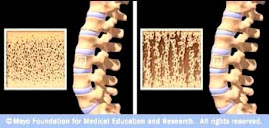
      Osteoporotic Bone

      Osteoporotic Bone
      Source: www.mayoclinic.com

      How Strontium Builds Bones

      Strontium is a mineral that tends to accumulate in bone. Studies have shown that oral doses of strontium are a safe and effective way to prevent and reverse osteoporosis. Doses of 680 mg per day appear to be optimal. See my "For More Information About Strontium" links section.

      Osteoporosis is caused by changes in bone production. In healthy young bones there is a constant cycle of new bone growth and bone removal. With age, more bone is removed and less new bone is produced. The bones become less dense and thus more fragile.

      Scientists believe that strontium works in two ways. It may stimulate the replication of pre-osteoblasts, leading to an increase in osteoblasts (cells that build bone). Strontium also directly inhibits the activity of osteoclasts (cells that break down bone). The result is stronger bones.

      When taking strontium, be sure to take 1200 mg calcium, 1000 IU vitamin D3, and 500 mg magnesium daily. It is best to take strontium late at night on an empty stomach. Calcium and strontium may compete with each other for absorption if taken together.