Bone 2014
Moise H, Chettle DR, Pejović-Milić A
Ten female volunteers were recruited as part
of the Ryerson and McMaster University Strontium (Sr) in Bone Research
Study to have their bone Sr levels measured as they self-supplemented
with Sr supplements of their choice. Of the ten volunteers, nine were
suffering from osteopenia and/or osteoporosis. Non-invasive bone Sr
measurements were performed using an in vivo x-ray fluorescence (IVXRF)
I-125 based system. Thirty minute measurements were taken at the finger
and ankle, representing primarily cortical and trabecular bone,
respectively. For analysis, the 14.2keV Sr K-alpha peak normalized to
the Coherent peak at 35.5keV was used.
Baseline readings,
representing natural bone Sr levels were acquired since all volunteers
had no previous intake of Sr based supplements or medications. Once Sr
supplements were started, a 24h reading was taken, followed by frequent
measurements ranging from weekly, biweekly to monthly. The longest
volunteer participation was 1535days. The mean baseline Sr signal
observed for the group was 0.42±0.13 and 0.39±0.07 for the finger and
ankle, respectively. After 24h, the mean Sr signal rose to 1.43±1.12 and
1.17±0.51, for the finger and ankle, respectively, representing a
statistically significant increase (p=0.0043 & p=0.000613).
Bone Sr levels continued to increase throughout the length of the
study. However the Sr signal varied widely between the individuals such
that after three years, the highest Sr signal observed was 28.15±0.86
for the finger and 26.47±1.22 for the ankle in one volunteer compared to
3.15±0.15 and 4.46±0.36, for the finger and ankle, respectively in
another. Furthermore, while it was previously reported by our group,
that finger bone Sr levels may plateau within two years, these results
suggest otherwise, indicating that bone Sr levels will continue to rise
at both bone sites even after 4years of Sr intake.
http://www.ncbi.nlm.nih.gov/pubmed/24434614
Human Skeleton

Monday, October 20, 2014


Monitoring bone strontium levels of an osteoporotic subject due to self-administration of strontium citrate with a novel diagnostic tool, in vivo XRF: a case study
Bone 2012
Moise H, Adachi JD, Chettle DR, Pejović-Milić A
A previously developed in vivo X-ray fluorescence (IVXRF) I-125 based system was used to measure bone strontium levels non-invasively in an osteoporotic female volunteer. The volunteer was recruited in December 2008, as part of the Ryerson and McMaster University Strontium in Bone Research Study and measured at twice weekly, weekly and monthly intervals. Thirty minute measurements were taken at the finger and ankle bone sites, representing primarily cortical and trabecular bone, respectively and the strontium K-alpha X-ray peak at 14.16 keV was used in the analysis.
Since the volunteer had no prior history of strontium based medications or supplementation, baseline natural strontium levels were obtained followed by a 24h measurement of first intake of strontium citrate supplements (680 mg Sr/day). While the baseline levels of 0.38 ± 0.05 and 0.39 ± 0.10 for the finger and ankle, respectively, were on par with those previously reported in Caucasians among twenty-two healthy non-supplementing strontium individuals by our group, an increase began to be seen after 24 hrs of 0.62 ± 0.14 and 0.45 ± 0.12 for the finger and ankle, respectively. By 120 h, the increase was statistically significant at 0.68 ± 0.07 and 0.93 ± 0.05, respectively. Further increases occurred within an interval of 90-180 days, with the most recent, after 800 days, at the finger and ankle being 7 and 15 times higher than the initial baseline reading.
The intriguing results show bone strontium incorporation and retention follow a pattern, suggesting strontium levels, at least in the ankle, do not plateau within two to three years and will continue to increase over time, as an individual takes strontium supplements. The ability of this IVXRF system to monitor and measure bone strontium levels over time provides a useful diagnostic tool to help gain insight into strontium bone kinetics.
http://www.ncbi.nlm.nih.gov/pubmed/22549020
Moise H, Adachi JD, Chettle DR, Pejović-Milić A
A previously developed in vivo X-ray fluorescence (IVXRF) I-125 based system was used to measure bone strontium levels non-invasively in an osteoporotic female volunteer. The volunteer was recruited in December 2008, as part of the Ryerson and McMaster University Strontium in Bone Research Study and measured at twice weekly, weekly and monthly intervals. Thirty minute measurements were taken at the finger and ankle bone sites, representing primarily cortical and trabecular bone, respectively and the strontium K-alpha X-ray peak at 14.16 keV was used in the analysis.
Since the volunteer had no prior history of strontium based medications or supplementation, baseline natural strontium levels were obtained followed by a 24h measurement of first intake of strontium citrate supplements (680 mg Sr/day). While the baseline levels of 0.38 ± 0.05 and 0.39 ± 0.10 for the finger and ankle, respectively, were on par with those previously reported in Caucasians among twenty-two healthy non-supplementing strontium individuals by our group, an increase began to be seen after 24 hrs of 0.62 ± 0.14 and 0.45 ± 0.12 for the finger and ankle, respectively. By 120 h, the increase was statistically significant at 0.68 ± 0.07 and 0.93 ± 0.05, respectively. Further increases occurred within an interval of 90-180 days, with the most recent, after 800 days, at the finger and ankle being 7 and 15 times higher than the initial baseline reading.
The intriguing results show bone strontium incorporation and retention follow a pattern, suggesting strontium levels, at least in the ankle, do not plateau within two to three years and will continue to increase over time, as an individual takes strontium supplements. The ability of this IVXRF system to monitor and measure bone strontium levels over time provides a useful diagnostic tool to help gain insight into strontium bone kinetics.
http://www.ncbi.nlm.nih.gov/pubmed/22549020
Saturday, October 18, 2014
VITAMIN B12
http://www.webmd.com/vitamins-supplements/ingredientmono-926-vitamin%20b12.aspx?activeingredientid=926&activeingredientname=vitamin+b12
WebMD rates vitamin B12 as likely effective for high level of homocysteine in the blood (Hyperhomocysteinemia). “Taking vitamin B12 by mouth, along with folic acid and sometimes pyridoxine (vitamin B6), can lower blood levels of homocysteine.”
High levels of homocysteine in the blood are associated with increased risk of fractures, cardiovascular disease and dementia.
WebMD writes that there is insufficient evidence for using vitamin B12 for canker sores. Here is a quote: “Early research shows that taking vitamin B12 1000 mcg under the tongue (sublingually) might help reduce the number of canker sore outbreaks, the duration of outbreaks, and pain caused by the canker sores.”
Aphthous stomatitis, or recurrent aphthous ulcers (RAUs) or canker sores, are among the most common oral mucosal lesions physicians and dentists observe. See “Vitamin B12 for the treatment of recurrent aphthous stomatitis.” This study had success with sublingual vitamin B12 tablets at a dose of 1000 mcg.
http://www.ncbi.nlm.nih.gov/pubmed/20023621
I can tell you that vitamin B12 does work for canker sores and will not just reduce the number and duration of outbreaks, but stop the outbreaks altogether IF you take a sufficient amount of the right supplement. I recommend Solgar sublingual methylcobalamin (vitamin B12), 5000 mcg daily. Methylcobalamin is the active coenzyme form of B12. My husband used to be plagued with canker sores but hasn’t gotten them since using this product. When he used 5000 mcg vitamin B12, but not the methylcobalamin form, he still got an occasional sore.
WebMD rates vitamin B12 as likely effective for high level of homocysteine in the blood (Hyperhomocysteinemia). “Taking vitamin B12 by mouth, along with folic acid and sometimes pyridoxine (vitamin B6), can lower blood levels of homocysteine.”
High levels of homocysteine in the blood are associated with increased risk of fractures, cardiovascular disease and dementia.
WebMD writes that there is insufficient evidence for using vitamin B12 for canker sores. Here is a quote: “Early research shows that taking vitamin B12 1000 mcg under the tongue (sublingually) might help reduce the number of canker sore outbreaks, the duration of outbreaks, and pain caused by the canker sores.”
Aphthous stomatitis, or recurrent aphthous ulcers (RAUs) or canker sores, are among the most common oral mucosal lesions physicians and dentists observe. See “Vitamin B12 for the treatment of recurrent aphthous stomatitis.” This study had success with sublingual vitamin B12 tablets at a dose of 1000 mcg.
http://www.ncbi.nlm.nih.gov/pubmed/20023621
I can tell you that vitamin B12 does work for canker sores and will not just reduce the number and duration of outbreaks, but stop the outbreaks altogether IF you take a sufficient amount of the right supplement. I recommend Solgar sublingual methylcobalamin (vitamin B12), 5000 mcg daily. Methylcobalamin is the active coenzyme form of B12. My husband used to be plagued with canker sores but hasn’t gotten them since using this product. When he used 5000 mcg vitamin B12, but not the methylcobalamin form, he still got an occasional sore.

Wednesday, September 24, 2014
Strontium Products, Inert Ingredients, and Dosages
I
have used Doctor's Best Strontium Bone Maker successfully for six and a
half years. For people who cannot tolerate magnesium stearate, which is
in Doctor's Best and most vitamins and supplements, I recommend AOR
Strontium Support II or Pure Encapsulations Strontium Citrate because
they contain no fillers. These three brands are reputable. There
are other reputable brands. These are three I know of. Do not purchase
supplements solely on the basis of cost. Some brands of strontium
citrate may not even contain the amount of strontium stated on the
label.
When you read that 2 grams of strontium ranelate were
used, that means 2 grams (2000 mg) of the strontium salt. Strontium is
the bone-active component and makes up 34% by weight of the whole
molecule; so, each 2-g dose of strontium ranelate delivers 680 mg of
elemental strontium.
I mention sr. ranelate because many
people have read the clinical trials on this prescription drug, which is
unavailable in the USA and Canada. The following is information on
three brands of strontium citrate:
One serving (2 capsules) of Doctor’s Best Strontium Bone Maker contains 680 mg
elemental strontium from 1,944 mg (a little less than 2 grams) strontium
citrate.
Each capsule of Pure Encapsulations Strontium Citrate contains 227 mg elemental
strontium. The serving size is 1-3 capsules per day for 227, 454, or 681 mg
strontium per day.
For Advanced Orthomolecular Research AOR, Advanced Series, Strontium Support
II, the serving size is one to two capsules, with each capsule containing 341
mg elemental strontium from strontium citrate. Two capsules contain 682 mg
strontium.
These are the serving sizes given by the manufacturers. Most research suggests
680 mg is the optimal amount of strontium to treat osteoporosis; 340 mg is
probably sufficient for osteopenia.
Doctor’s Best Strontium Bone Maker
Inert Ingredients
Modified cellulose (vegetarian capsule), cellulose, magnesium stearate (vegetable source).Contains nothing other than listed ingredients
AOR
Inert Ingredients
None. Capsule: hypromellose, water.
AOR guarantees that no ingredients not listed on the label
have been added to the product. Contains no wheat, gluten, corn, nuts, dairy,
soy, eggs, fish, shellfish or any animal byproduct.
Pure Encapsulations
Other Active
Ingredients
Ascorbyl palmitate (fat-soluble
vitamin C)
|
20 mg/capsule
|
Inert Ingredients
Hypo-allergenic plant fiber (cellulose), vegetarian capsule (cellulose, water)This encapsulated product contains no hidden coatings, excipients, binders, fillers, shellacs, artificial colors or fragrance. Contains no dairy, wheat, yeast, gluten, corn, sugar, starch, soy, preservatives or hydrogenated oils.
Sunday, September 21, 2014
Long-Term Effect of Strontium Ranelate Treatment on BMD
http://onlinelibrary.wiley.com/doi/10.1359/JBMR.050810/full
In the SOTI trial, there were impressive BMD increases in the spine (12.7%) and total hip (8.6%). However, some caution is necessary in interpreting these results because much of this effect is caused by the higher atomic number of strontium (Z = 38) compared with calcium (Z = 20). When BMD is measured by DXA, strontium atoms in bone attenuate X-rays more strongly than calcium atoms. However, when the DXA scanner software calculates BMD from the measured X-ray transmission factors, the increased attenuation caused by bone strontium content (BSC) is interpreted as increased calcium content and will cause an artifactual increase in BMD. After the adjustment for BSC using Eq. 1, the measured BMD increase in the spine at 3 years of 12.7% was corrected to 6.8%.
The correction of the bone mineral content (BMD) changes found in the strontium ranelate trials for bone strontium content (BSC) was based on the following equation:
Adjusted BMD = Measured lumbar spine BMD /1+ 0.061 x BSC iliac crest % Eq. 1
“Although a commendable effort was made in the SOTI trial to correct the BMD data for the atomic number effect of strontium, there is clearly considerable uncertainty about the accuracy of the corrections made. This arises from the small number of subjects in whom iliac crest bone biopsy was performed and the reliance on animal data for the correction factor for inferring BSC in the spine.”
No human studies with strontium ranelate have yet reported how quickly bone strontium is washed out once treatment is stopped. However, on the basis of the ICRP strontium model, we can estimate the likely long-term retention. Figure 2 shows the results of calculations using the ICRP model to predict the long-term changes in BMD after 3 months, 1 year, and 3 years of treatment with strontium ranelate. The calculations make the following assumptions: (1) equal daily intake of strontium during the treatment period; (2) strontium intake ceases at the end of treatment; and (3) no true loss of bone is occurring. On the basis of the ICRP model, much of the strontium present in bone at the end of treatment is likely to still be there a decade later. If strontium ranelate treatment is given for >1 year, this long-term retention in bone is likely to have a significant effect on the interpretation of future BMD measurements.

Strontium Succinate
Dublin, 3 March 2014
http://www.osteologix.com/wb0005.php?oid=0
Les Laboratoires Servier has terminated its licensing agreement with Osteologix for developing and commercializing NB S101 (strontium malonate) to treat post-menopausal osteoporosis, other bone and joint disorders and dental indications. As a result, Osteologix regains all rights to continue the development and commercialization of its improved formulation once day tablet of Strontium Succinate either independently or in collaboration with third parties. The company is currently assessing the most favorable way to move forward and will evaluate all options.
http://www.osteologix.com/wb0005.php?oid=0
Les Laboratoires Servier has terminated its licensing agreement with Osteologix for developing and commercializing NB S101 (strontium malonate) to treat post-menopausal osteoporosis, other bone and joint disorders and dental indications. As a result, Osteologix regains all rights to continue the development and commercialization of its improved formulation once day tablet of Strontium Succinate either independently or in collaboration with third parties. The company is currently assessing the most favorable way to move forward and will evaluate all options.
Subscribe to:
Posts (Atom)
Wandering Skeleton

Artist: Joel Hoekstra
Osteoporotic Bone
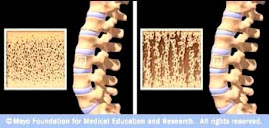
Source: www.mayoclinic.com