Human Skeleton

Human Skeleton

WELCOME TO STRONTIUM FOR BONES BLOG

Have you experienced negative, and even dangerous, side effects from Fosamax (alendronate), Boniva (ibandronate), Actonel (risedronate), Reclast (zoledronic acid), Prolia (denosumab), Forteo (teriparatide), Tymlos (abaloparatide), or other drugs prescribed for osteoporosis? If you have, then rest assured there is a safe, effective treatment for this condition. Strontium, primarily in the form of strontium citrate, is taken orally once a day.

Visitors to my blog can leave comments or ask questions and can remain anonymous, if they wish. Their comments are relayed to my g-mail inbox. Below each post, the number of comments for that post is cited and underlined because it is a link. By clicking on that link below any post, a window opens so that a visitor can leave a comment. Ideally, visitors leave comments on posts most relevant to their comments. All comments to my posts are moderated by me.

Browse the posts and visit the link library of references.


Blog Archive

Tuesday, May 20, 2014

Non-modifiable Risk Factors for Osteoporosis


What you cannot change!
These are risk factors that one is born with or cannot alter. (Question 7
could arguably be placed under lifestyle risk factors that can be changed.)
Nevertheless, it is important to be aware of risk factors you cannot
change so that steps can be taken to reduce loss of bone mineral.


1. Have either of your parents been diagnosed with
osteoporosis or broken a bone after a minor fall (a fall
from standing height or less)?

2.Did either of your parents have a stooped back
(dowager’s hump)?

3.Are you 40 years old or older?

4.Have you ever broken a bone after a minor fall, as an
adult?

5.Do you fall frequently (more than once in the last year)
or do you have a fear of falling because you are frail?

6.After the age of 40, have you lost more than 3 cm in
height (just over 1 inch)?

7.Are you underweight (is your Body Mass Index less than
19 kg/m2)?

Body mass index (BMI) is a measure based on height and
weight that applies to both adult men and women.
BMI Categories:
Underweight = below 18.5
Normal weight = 18.5 – 24.9
Overweight = 25 – 29.9
Obesity = 30 or greater
Imperial BMI Formula
Metric BMI Formula

BMI = weight in pounds X 703/height in inches2

BMI = weight in kilograms/height in meters2


8.Have you ever taken corticosteroid tablets (cortisone,
prednisone, etc.) for more than 3 consecutive months
(corticosteroids are often prescribed for conditions like
asthma, rheumatoid arthritis, and some inflammatory
diseases)?

9.Have you ever been diagnosed with rheumatoid arthritis?

10.Have you been diagnosed with an over-active thyroid, over-
active parathyroid glands, type 1 diabetes or a nutritional/
gastrointestinal disorder such as Crohn’s or celiac disease?

For Women:

11.For women over 45: Did your menopause occur before
the age of 45?

12.Have your periods ever stopped for 12 consecutive
months or more (other than because of pregnancy,
menopause or hysterectomy)?

13.Were your ovaries removed before age 50, without you
taking Hormone Replacement Therapy?

For Men:

14.Have you ever suffered from impotence, lack of libido or
other symptoms related to low testosterone levels?


 Note: See next blog post: Lifestyle Risk Factors. 


Monday, May 12, 2014

Fracture Healing with Current and Emerging Osteoporosis Therapies


The failure rate for fracture fixation in patients with osteoporosis has been estimated to be 10–25%. An agent that improves bone repair, fracture healing, and fixation of surgical hardware would be beneficial in the management of fractures. A consensus statement released by the European Society for Clinical and Economic Aspects of Osteoporosis and Osteoarthritis (ESCEO) addressed fracture healing with current and emerging osteoporosis therapy.

The ESCEO concluded that bisphosphonates (Actonel, Actonel+Ca, Aredia, Boniva, Didronel, Fosamax, Fosamax+D, Reclast, Skelid, and Zometa) and raloxifene (Evista) did not impair fracture healing.

Preclinical studies and several case reports suggested that strontium ranelate might enhance fracture healing.

Studies with teriparatide (Forteo) had mixed results, but overall were consistent with a beneficial effect on fracture healing.

Clinical trials with denosumab (Prolia) have shown no adverse effects on fracture healing.

Sclerostin monoclonal antibody therapy has been shown to enhance fracture healing in rats and cynomolgus monkeys. Although several phase II studies to investigate the effects of romosozumab (an antisclerostin therapy) on fracture healing in humans have been conducted [ClinicalTrials.gov identifiers: NCT00907296, NCT01081678], there is currently no ongoing effort to pursue regulatory approval of this agent for acceleration of fracture healing.

You will note that, among the current therapies, only strontium ranelate, which is not available in the USA or Canada, and teriparatide may enhance fracture healing. I believe strontium citrate has the same beneficial effect on fracture healing because it is the strontium that increases bone mineral density and improves bone microarchitecture. 


Role of Sclerostin in Bone and Cartilage and Its Potential as a Therapeutic Target in Bone Diseases, E. Michael Lewiecki, MD, FACP, FACE, Ther Adv Musculoskel Dis. 2014;6(2):48-57.


Goldhahn, J., Feron, J., Kanis, J., Papapoulos, S., Reginster, J., Rizzoli, R. et al. (2012) Implications for fracture healing of current and new osteoporosis treatments: an ESCEO consensus paper. Calcif TissueInt 90: 343–353.

Wandering Skeleton

Wandering Skeleton
Artist: Joel Hoekstra

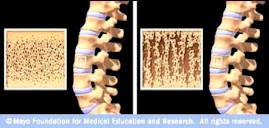
Osteoporotic Bone

Osteoporotic Bone
Source: www.mayoclinic.com

How Strontium Builds Bones

Strontium is a mineral that tends to accumulate in bone. Studies have shown that oral doses of strontium are a safe and effective way to prevent and reverse osteoporosis. Doses of 680 mg per day appear to be optimal. See my "For More Information About Strontium" links section.

Osteoporosis is caused by changes in bone production. In healthy young bones there is a constant cycle of new bone growth and bone removal. With age, more bone is removed and less new bone is produced. The bones become less dense and thus more fragile.

Scientists believe that strontium works in two ways. It may stimulate the replication of pre-osteoblasts, leading to an increase in osteoblasts (cells that build bone). Strontium also directly inhibits the activity of osteoclasts (cells that break down bone). The result is stronger bones.

When taking strontium, be sure to take 1200 mg calcium, 1000 IU vitamin D3, and 500 mg magnesium daily. It is best to take strontium late at night on an empty stomach. Calcium and strontium may compete with each other for absorption if taken together.