Human Skeleton

Wednesday, April 8, 2009
A Dose-Response Study With Strontium Malonate
Osteologix, Inc. is conducting a Phase II clinical trial with strontium malonate in postmenopausal women. The study's primary objective is to compare dose-response effect of three levels of strontium malonate to placebo on bone resorption quantified by S-CTX-1 following 12 weeks of treatment. The four parallel groups in this trial will take 750 mg strontium malonate, 1000 mg strontium malonate, 2000 mg strontium malonate, 2 grams Protelos (strontium ranelate), and placebo. For more details, visit http://clinicaltrials.gov/ct2/show/NCT00409032


Tuesday, April 7, 2009
FDA Bisphosphonate Alert
Information on Bisphosphonates (marketed as Actonel, Actonel+Ca, Aredia, Boniva, Didronel, Fosamax, Fosamax+D, Reclast, Skelid, and Zometa)
FDA ALERT [1/7/2008] - FDA is highlighting the possibility of severe and sometimes incapacitating bone, joint, and/or muscle (musculoskeletal) pain in patients taking bisphosphonates. Although severe musculoskeletal pain is included in the prescribing information for all bisphosphonates, the association between bisphosphonates and severe musculoskeletal pain may be overlooked by healthcare professionals, delaying diagnosis, prolonging pain and/or impairment, and necessitating the use of analgesics.
The severe musculoskeletal pain may occur within days, months, or years after starting a bisphosphonate. Some patients have reported complete relief of symptoms after discontinuing the bisphosphonate, whereas others have reported slow or incomplete resolution. The risk factors for and incidence of severe musculoskeletal pain associated with bisphosphonates are unknown.
This severe musculoskeletal pain is in contrast to the acute phase response characterized by fever, chills, bone pain, myalgias, and arthralgias that sometimes accompanies initial administration of intravenous bisphosphonates and may occur with initial exposure to once-weekly or once-monthly doses of oral bisphosphonates. The symptoms related to the acute phase response tend to resolve within several days with continued drug use.
Healthcare professionals should consider whether bisphosphonate use might be responsible for severe musculoskeletal pain in patients who present with these symptoms and consider temporary or permanent discontinuation of the drug.
This information reflects FDA's current analysis of data available to FDA concerning this drug. FDA intends to update this when additional information or analyses become available.
FDA ALERT [1/7/2008] - FDA is highlighting the possibility of severe and sometimes incapacitating bone, joint, and/or muscle (musculoskeletal) pain in patients taking bisphosphonates. Although severe musculoskeletal pain is included in the prescribing information for all bisphosphonates, the association between bisphosphonates and severe musculoskeletal pain may be overlooked by healthcare professionals, delaying diagnosis, prolonging pain and/or impairment, and necessitating the use of analgesics.
The severe musculoskeletal pain may occur within days, months, or years after starting a bisphosphonate. Some patients have reported complete relief of symptoms after discontinuing the bisphosphonate, whereas others have reported slow or incomplete resolution. The risk factors for and incidence of severe musculoskeletal pain associated with bisphosphonates are unknown.
This severe musculoskeletal pain is in contrast to the acute phase response characterized by fever, chills, bone pain, myalgias, and arthralgias that sometimes accompanies initial administration of intravenous bisphosphonates and may occur with initial exposure to once-weekly or once-monthly doses of oral bisphosphonates. The symptoms related to the acute phase response tend to resolve within several days with continued drug use.
Healthcare professionals should consider whether bisphosphonate use might be responsible for severe musculoskeletal pain in patients who present with these symptoms and consider temporary or permanent discontinuation of the drug.
This information reflects FDA's current analysis of data available to FDA concerning this drug. FDA intends to update this when additional information or analyses become available.
Tuesday, March 31, 2009
Dieters Risk Bone Loss
"What happens to bones during weight loss?" " It depends on how you lose the weight. A study conducted at the Washington University School of Medicine in St. Louis monitored two groups of people who lost a little more than one pound per month for a year. Half of them lost the weight by eating fewer calories, and the other half lost by increasing their physical activity. Despite the gradual rate of weight loss, the dieters lost bone mineral density from their spines and hips. The exercisers lost weight but not bone mass." For more on this subject, see http://archives.starbulletin.com/2008/03/08/features/health.html.
Not All Strontium Supplements Are The Same
Be careful about the strontium supplement you choose. They are not all the same. The optimum dose is 680 mg elemental strontium daily. One study found that three out of five products tested contained significantly less strontium than their labels indicated. The two properly labeled products were AOR Strontium Support and Strontium Bone Maker. The information from the study came from
http://www.starbulletin.com/specialprojects/09/yah/20090326_supplement_helps_bones_grow_stronger.html
http://www.starbulletin.com/specialprojects/09/yah/20090326_supplement_helps_bones_grow_stronger.html
Friday, March 6, 2009
Blood and Urine Calcium
Strontium interferes with colorimetric methods for the determination of blood and urinary calcium concentrations. Therefore, in medical practice, inductively coupled plasma atomic emission spectrometry or atomic absorption spectrometry methods should be used to ensure an accurate assessment of blood and urinary calcium concentrations. These guidelines are included in the electronic Medicines Compendium (eMC), which contains information about UK licensed medicines:
http://emc.medicines.org.uk/document.aspx?documentID=15410
http://emc.medicines.org.uk/document.aspx?documentID=15410
Adjustments To BMD Unnecessary With Strontium Therapy
Per Servier, the manufacturer of Protelos (strontium ranelate), their product increases BMD and decreases the risk of vertebral fracture. They also state on their website at www.servier.com, that doctors do not need to adjust BMD measurements in individual patients:
How much does Protelos increase BMD?
"The increase in BMD with Protelos is superior to that of other treatments. It is proven that Protelos is effective against vertebral and hip fractures, and a correlation up to 74% has been established between the increase in BMD with Protelos and vertebral fracture risk reduction, therefore it is not necessary to adjust BMD for each patient. This serves as a tool to measure compliance (allowing you to confirm that your patient is taking treatment) and a marker of clinical efficacy (for motivating them to continue taking treatment)."
In practice do I have to adjust BMD measurements in individual patients?
"No, it is not necessary to adjust BMD for each patient because each increase in BMD is highly correlated (up to 74%) with the decrease in the risk of sustaining a vertebral fracture. In other words with Protelos, the more the increase of BMD in your patient, the more your patient is protected from fracture. Moreover, BMD is a useful monitoring tool to confirm the compliance of your patient."
How much does Protelos increase BMD?
"The increase in BMD with Protelos is superior to that of other treatments. It is proven that Protelos is effective against vertebral and hip fractures, and a correlation up to 74% has been established between the increase in BMD with Protelos and vertebral fracture risk reduction, therefore it is not necessary to adjust BMD for each patient. This serves as a tool to measure compliance (allowing you to confirm that your patient is taking treatment) and a marker of clinical efficacy (for motivating them to continue taking treatment)."
In practice do I have to adjust BMD measurements in individual patients?
"No, it is not necessary to adjust BMD for each patient because each increase in BMD is highly correlated (up to 74%) with the decrease in the risk of sustaining a vertebral fracture. In other words with Protelos, the more the increase of BMD in your patient, the more your patient is protected from fracture. Moreover, BMD is a useful monitoring tool to confirm the compliance of your patient."
Subscribe to:
Posts (Atom)
Wandering Skeleton

Artist: Joel Hoekstra
Osteoporotic Bone
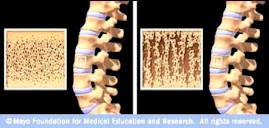
Source: www.mayoclinic.com