Human Skeleton

Human Skeleton

WELCOME TO STRONTIUM FOR BONES BLOG

Have you experienced negative, and even dangerous, side effects from Fosamax (alendronate), Boniva (ibandronate), Actonel (risedronate), Reclast (zoledronic acid), Prolia (denosumab), Forteo (teriparatide), Tymlos (abaloparatide), or other drugs prescribed for osteoporosis? If you have, then rest assured there is a safe, effective treatment for this condition. Strontium, primarily in the form of strontium citrate, is taken orally once a day.

Visitors to my blog can leave comments or ask questions and can remain anonymous, if they wish. Their comments are relayed to my g-mail inbox. Below each post, the number of comments for that post is cited and underlined because it is a link. By clicking on that link below any post, a window opens so that a visitor can leave a comment. Ideally, visitors leave comments on posts most relevant to their comments. All comments to my posts are moderated by me.

Browse the posts and visit the link library of references.


Blog Archive

Showing posts with label hypertension. Show all posts

Sunday, August 10, 2014

The D-Lightful Vitamin D for Good Health


Adequate vitamin D nutrition has been known to prevent rickets in children, but, until fairly recently, little thought has been given to the consequences of vitamin D deficiency in adults. It is now becoming clear that vitamin D plays an important role in maintaining bone health from birth until death. Of equal importance is that vitamin D has a multitude of other biologic functions in the body that may be important for the prevention of common cancers, hypertension, type-1 diabetes, as well as a host of other common maladies that afflict elders.

Dr. Holick has established global recommendations advising sunlight exposure as an integral source of vitamin D. He has helped increase awareness in the pediatric and medical communities regarding the vitamin D deficiency pandemic, and its role in causing not only metabolic bone disease, and osteoporosis in adults, but increasing risk of children and adults developing pre-eclampsia, common deadly cancers, schizophrenia, infectious diseases including TB and influenza, autoimmune diseases including type 1 diabetes and multiple sclerosis, type 2 diabetes, stroke and heart disease.

Michael F. Holick, Ph.D., M.D. is a Professor of Medicine, Physiology and Biophysics; Director of the General Clinical Research Unit; Director of the Bone Health Care Clinic and the Director of the Vitamin D, Skin and Bone Research Laboratory at Boston University Medical Center. Dr. Holick has made numerous contributions to the field of the biochemistry, physiology, metabolism, and photobiology of vitamin D for human nutrition. He has acted as editor and/or co-editor on 10 books, and has written The UV Advantage, and The Vitamin D Solution.

This video is entertaining and informative.

Friday, July 18, 2014

Magnesium


Almost half (48%) of the US population consumed less than the required amount of magnesium from food in 2005–2006. Surveys conducted over 30 years indicate rising calcium-to-magnesium food-intake ratios among adults and the elderly in the United States, excluding intake from supplements, which favor calcium over magnesium. Low magnesium intakes and blood levels have been associated with type 2 diabetes, metabolic syndrome, elevated C-reactive protein, hypertension, atherosclerotic vascular disease, sudden cardiac death, osteoporosis, migraine headache, asthma, and colon cancer.
http://magnesiumeducation.com/files/pdfs/non_printable_suboptimal_magnesium.pdf

Tuesday, April 23, 2013

Strontium and Your Heart


A committee of the European Medicines Agency (EMA) has recommended the following restrictions in the use of strontium ranelate (sold in the European Union under the brand names Protelos and Osseor) to reduce the risk of adverse cardiac events:

1a. Strontium ranelate should only be used for the treatment of severe osteoporosis in postmenopausal women at high risk for fracture and severe osteoporosis in men at increased risk for fracture.

2a.Strontium ranelate should not be used in patients with current or past history of ischemic heart disease (such as angina or MI), peripheral arterial disease (PAD), or cerebrovascular disease.

3a.Strontium ranelate should not be used in patients with hypertension that is not controlled by treatment.


What, if anything, should those of us taking strontium citrate do?

Here is what I think.

1b. Strontium citrate can be used as a supplement by men and women with osteopenia or osteoporosis. (I believe the first restriction on strontium ranelate is mostly for cost containment because bisphosphonates, especially the generic equivalents, are much cheaper than strontium ranelate.) 

2b. Strontium citrate can be used UNDER MEDICAL SUPERVISION in patients with current or past history of ischemic heart disease, PAD, or cerebrovascular disease.

    3b. Strontium citrate should not be used in patients with uncontrolled hypertension. Patients must get their hypertension under control by medication. Strontium citrate can be used UNDER MEDICAL SUPERVISION in patients with hypertension that is controlled by treatment.

Wandering Skeleton

Wandering Skeleton
Artist: Joel Hoekstra

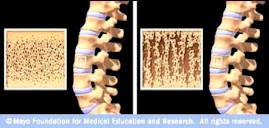
Osteoporotic Bone

Osteoporotic Bone
Source: www.mayoclinic.com

How Strontium Builds Bones

Strontium is a mineral that tends to accumulate in bone. Studies have shown that oral doses of strontium are a safe and effective way to prevent and reverse osteoporosis. Doses of 680 mg per day appear to be optimal. See my "For More Information About Strontium" links section.

Osteoporosis is caused by changes in bone production. In healthy young bones there is a constant cycle of new bone growth and bone removal. With age, more bone is removed and less new bone is produced. The bones become less dense and thus more fragile.

Scientists believe that strontium works in two ways. It may stimulate the replication of pre-osteoblasts, leading to an increase in osteoblasts (cells that build bone). Strontium also directly inhibits the activity of osteoclasts (cells that break down bone). The result is stronger bones.

When taking strontium, be sure to take 1200 mg calcium, 1000 IU vitamin D3, and 500 mg magnesium daily. It is best to take strontium late at night on an empty stomach. Calcium and strontium may compete with each other for absorption if taken together.