Human Skeleton

Human Skeleton

WELCOME TO STRONTIUM FOR BONES BLOG

Have you experienced negative, and even dangerous, side effects from Fosamax (alendronate), Boniva (ibandronate), Actonel (risedronate), Reclast (zoledronic acid), Prolia (denosumab), Forteo (teriparatide), Tymlos (abaloparatide), or other drugs prescribed for osteoporosis? If you have, then rest assured there is a safe, effective treatment for this condition. Strontium, primarily in the form of strontium citrate, is taken orally once a day.

Visitors to my blog can leave comments or ask questions and can remain anonymous, if they wish. Their comments are relayed to my g-mail inbox. Below each post, the number of comments for that post is cited and underlined because it is a link. By clicking on that link below any post, a window opens so that a visitor can leave a comment. Ideally, visitors leave comments on posts most relevant to their comments. All comments to my posts are moderated by me.

Browse the posts and visit the link library of references.


Blog Archive

Showing posts with label FRAX. Show all posts

Tuesday, January 27, 2015

Fracture Risk


“Osteoporosis and resultant fractures of the spine, hip and other sites are important public health problems with significant individual and societal costs. The risk for osteoporotic fracture is based upon low bone density and the presence of one or more clinical risk factors (see Table 1). A history of fracture during adulthood or falls are important clinical factors in determining the risk of future fracture; however, age is the most influential risk factor, such that middle-aged adults with other risk factors are likely to be at low absolute fracture risk in the medium term. Using these clinical risk factors and BMD when available, fracture risk assessment tools (based upon data collected from large prospective observational studies) have been developed to estimate the 5–10 year probability of hip fracture and other fractures in untreated patients. Clinicians should be aware that fracture risk can also be estimated using the FRAX or Garvan tools without BMD data. Chronic glucocorticoid use is an established risk factor for osteoporosis, with studies showing that use of glucocorticoids leads to accelerated bone loss and an increased risk of fracture. Other drugs are increasingly recognized as potential causes of bone loss and fracture, particularly amongst predisposed individuals….”

See the following link for more on other drugs that can cause bone loss and fractures:

Table 1.  Clinical risk factors for fracture
Advancing age
Previous fracture during adulthood
History of a fall or falls in the past 12 months
Glucocorticoid therapy
Parental history of hip fracture
Low body weight
Current cigarette smoking
Excessive alcohol consumption
Medical diseases (e.g. rheumatoid arthritis, hyperparathyroidism, coeliac disease, hypogonadism)

This introduction and table appeared in “Adverse Skeletal Effects of Drugs – Beyond Glucocorticoids,” Susannah O'Sullivan, Andrew Grey, Clin Endocrinol. 2015; 82(1):12-22. 
http://www.medscape.com/viewarticle/837369?src=wnl_edit_tpal&uac=127701PY

Thursday, December 11, 2014

FRAX Identifies Women with Prevalent Asymptomatic Vertebral Fractures


Abstract

Background
A Moroccan model for the FRAX tool to determine the absolute risk of osteoporotic fracture at 10 years has been established recently. The study aimed to assess the discriminative capacity of FRAX in identifying women with prevalent asymptomatic vertebral fractures (VFs).

Methods
We enrolled in this cross-sectional study 908 post-menopausal women with a mean age of 60.9 years ±7.7 (50 to 91) with no prior known diagnosis of osteoporosis. Subjects were recruited from asymptomatic women selected from the general population. Lateral VFA (vertebral fracture assessment) images and scans of the lumbar spine and proximal femur were obtained using a GE Healthcare Lunar Prodigy densitometer. VFs were defined using a combination of Genantsemiquantitative (SQ) approach and morphometry. We calculated the absolute risk of major fracture and hip fracture with and without bone mineral density (BMD)using the FRAX website.The overall discriminative value of the different risk scores was assessed by calculating the areas under the ROC curve (AUC).

Results
VFA images showed that 179 of the participants (19.7%) had at least one grade 2/3 VF. The group of women with VFs had a statistically significant higher FRAX scores for major and hip fractures with and without BMD, and lower weight, height, and lumbar spine and hip BMD and T-scores than those without a VFA-identified VF. The AUC ROC of FRAX for major fracture without BMD was 0.757 (CI 95%; 0.718-0.797) and 0.736 (CI 95%; 0.695-0.777) with BMD, being 0.756 (CI 95%; 0.716-0.796) and 0.747 (CI 95%; 0.709-0.785), respectively for FRAX hip fracture without and with BMD. The AUC ROC of lumbar spine T-score and femoral neck T-score were 0.660 (CI 95%; 0.611-0.708) and 0.707 (CI 95%; 0.664-0.751) respectively.

Conclusion
In asymptomatic post-menopausal women, the FRAX risk for major fracture without BMD had a better discriminative capacity in identifying the women with prevalent VFs than lumbar spine and femoral neck T-scores suggesting its usefulness in identifying women in whom VFA could be indicated. 

To read the full research article by Abdellah El Maghraoui, Siham Sadni, Nabil Jbili, Asmaa Rezqi, Aziza Mounach and Imad Ghozlani click on this link:

 http://www.biomedcentral.com/1471-2474/15/365


Thursday, August 7, 2014

Effect of Strontium Ranelate on the Risk of Osteoporotic Fractures


Summary
The aim of the present study was to determine the efficacy of strontium ranelate as a function of baseline fracture risk. Treatment with strontium ranelate was associated with a significant 31% decrease in all clinical osteoporotic fractures (vertebral fractures included). Hazard ratios for the effect of strontium ranelate on the fracture outcome did not change significantly with increasing fracture probability.

Introduction
 Two previous studies have suggested that the efficacy of intervention may be greater in the segment of the population at highest fracture risk as assessed by the FRAX® algorithms. The aim of the present study was to determine whether the anti-fracture efficacy of strontium ranelate was dependent of the level of fracture risk.

Methods
The primary data of the two phase III studies (SOTI and TROPOS) of the effects of strontium ranelate in postmenopausal osteoporosis were combined. Country-specific probabilities were computed using the FRAX® tool (version 2.0). The primary outcome variable comprised all clinical osteoporotic fractures (including clinical vertebral fractures). Interactions between fracture probability and efficacy were explored by Poisson regression.

Results
The 10-year probability of major osteoporotic fractures (with BMD) ranged from 2.5% to 90.8%. FRAX®-based hip fracture probabilities ranged from 0.1% to 90.3%. The incidence of clinical osteoporotic fractures (vertebral fractures excluded) and morphometric vertebral fractures increased with increasing baseline fracture probabilities. Treatment with strontium ranelate was associated with a 31% (95% CI=20–39%) decrease in osteoporotic clinical fractures and a 40% decrease in vertebral fractures assessed by semiquantitative morphometry (95% CI=31–48%) Hazard ratios for the effect of strontium ranelate on the fracture outcomes did not change significantly with increasing fracture probability.

Conclusion
Strontium ranelate significantly decreased the risk of osteoporotic clinical fractures, non vertebral fractures and morphometric vertebral fractures in women. Overall, the efficacy of strontium ranelate was not dependent of the level of fracture risk assessed by FRAX.

 
http://link.springer.com/article/10.1007/s00198-010-1474-0#page-1

Monday, September 14, 2009

Measuring Risk Of Fracture

An individual's risk of fracture over a given period of years can be predicted using one of two models. Both are simple to use by individuals with no medical training. A patient simply answers a few questions.

The FRAX tool was developed by the World Health Organization (WHO) and gives the 10-year probability of hip fracture and the 10-year probability of a major osteoporotic fracture (spine, forearm, hip or shoulder fracture). It includes height, weight, personal history of fracture, family history of fracture, smoking, alcohol consumption, use of corticosteroids, rheumatoid arthritis and secondary osteoporosis. This model ignores falls. It is the most commonly used fracture-risk algorithm worldwide. To access it, follow this link, click on "Calculation Tool," and select your location and race/ethnicity:

http://www.shef.ac.uk/FRAX/

A second model is used in Australia to determine whether Pharmaceutical Benefits Scheme reimbursements for osteoporosis therapy apply. It was developed by the Garvan Institute of Medical Research in Sydney. The Garvan fracture risk calculator is based on gender, bone mineral density, age, history of personal fracture, and history of falls over the last 12 months. It is incredibly simple but is believed to incorporate the most critical risk factors. It provides five and 10 year risk assessments for hip fracture and for any osteoporosis/fragility fracture. The T-score and BMD in g/cm2 used in this tool refer to the values at the femoral neck, which will read Hip (neck) on most DXA scan reports. To access this calculator:

http://www.garvan.org.au/promotions/bone-fracture-risk/

Wandering Skeleton

Wandering Skeleton
Artist: Joel Hoekstra

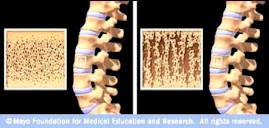
Osteoporotic Bone

Osteoporotic Bone
Source: www.mayoclinic.com

How Strontium Builds Bones

Strontium is a mineral that tends to accumulate in bone. Studies have shown that oral doses of strontium are a safe and effective way to prevent and reverse osteoporosis. Doses of 680 mg per day appear to be optimal. See my "For More Information About Strontium" links section.

Osteoporosis is caused by changes in bone production. In healthy young bones there is a constant cycle of new bone growth and bone removal. With age, more bone is removed and less new bone is produced. The bones become less dense and thus more fragile.

Scientists believe that strontium works in two ways. It may stimulate the replication of pre-osteoblasts, leading to an increase in osteoblasts (cells that build bone). Strontium also directly inhibits the activity of osteoclasts (cells that break down bone). The result is stronger bones.

When taking strontium, be sure to take 1200 mg calcium, 1000 IU vitamin D3, and 500 mg magnesium daily. It is best to take strontium late at night on an empty stomach. Calcium and strontium may compete with each other for absorption if taken together.