Human Skeleton

Human Skeleton

WELCOME TO STRONTIUM FOR BONES BLOG

Have you experienced negative, and even dangerous, side effects from Fosamax (alendronate), Boniva (ibandronate), Actonel (risedronate), Reclast (zoledronic acid), Prolia (denosumab), Forteo (teriparatide), Tymlos (abaloparatide), or other drugs prescribed for osteoporosis? If you have, then rest assured there is a safe, effective treatment for this condition. Strontium, primarily in the form of strontium citrate, is taken orally once a day.

Visitors to my blog can leave comments or ask questions and can remain anonymous, if they wish. Their comments are relayed to my g-mail inbox. Below each post, the number of comments for that post is cited and underlined because it is a link. By clicking on that link below any post, a window opens so that a visitor can leave a comment. Ideally, visitors leave comments on posts most relevant to their comments. All comments to my posts are moderated by me.

Browse the posts and visit the link library of references.


Blog Archive

Sunday, August 10, 2014

The D-Lightful Vitamin D for Good Health


Adequate vitamin D nutrition has been known to prevent rickets in children, but, until fairly recently, little thought has been given to the consequences of vitamin D deficiency in adults. It is now becoming clear that vitamin D plays an important role in maintaining bone health from birth until death. Of equal importance is that vitamin D has a multitude of other biologic functions in the body that may be important for the prevention of common cancers, hypertension, type-1 diabetes, as well as a host of other common maladies that afflict elders.

Dr. Holick has established global recommendations advising sunlight exposure as an integral source of vitamin D. He has helped increase awareness in the pediatric and medical communities regarding the vitamin D deficiency pandemic, and its role in causing not only metabolic bone disease, and osteoporosis in adults, but increasing risk of children and adults developing pre-eclampsia, common deadly cancers, schizophrenia, infectious diseases including TB and influenza, autoimmune diseases including type 1 diabetes and multiple sclerosis, type 2 diabetes, stroke and heart disease.

Michael F. Holick, Ph.D., M.D. is a Professor of Medicine, Physiology and Biophysics; Director of the General Clinical Research Unit; Director of the Bone Health Care Clinic and the Director of the Vitamin D, Skin and Bone Research Laboratory at Boston University Medical Center. Dr. Holick has made numerous contributions to the field of the biochemistry, physiology, metabolism, and photobiology of vitamin D for human nutrition. He has acted as editor and/or co-editor on 10 books, and has written The UV Advantage, and The Vitamin D Solution.

This video is entertaining and informative.

Thursday, August 7, 2014

The Creative Destruction of Medicine by Dr. Eric Topal


The revolution Dr. Eric Topal describes, and which is the grand theme of this book, is the inevitable move from population-based medicine to that of the science and health of the individual. Doctors, and the medical education system that produces them, are out of touch, conservative and slow to change. Today’s evidence-based medicine tends to be based on studies of populations rather than on individuals. A population-based study of a drug which claims to reduce the risk of myocardial infarction (MI) by 36%, for example, sounds much less impressive to a patient when he realizes that 100 individuals will need to take the drug in order to prevent one MI. He also criticizes the use of surrogate end points in studies (e.g., cholesterol/LDL) and the development of expert-based guidelines around these and puts mass population screening tests like PSA under the microscope. He introduces the idea that it is now possible, using pharmacogenomic studies, to perform real evidence-based studies based on individuals rather than populations. He predicts that because many of the changes he describes will be resisted by doctors and others within the health sciences, that patients/consumers are likely to lead this revolution.

Effect of Strontium Ranelate on the Risk of Osteoporotic Fractures


Summary
The aim of the present study was to determine the efficacy of strontium ranelate as a function of baseline fracture risk. Treatment with strontium ranelate was associated with a significant 31% decrease in all clinical osteoporotic fractures (vertebral fractures included). Hazard ratios for the effect of strontium ranelate on the fracture outcome did not change significantly with increasing fracture probability.

Introduction
 Two previous studies have suggested that the efficacy of intervention may be greater in the segment of the population at highest fracture risk as assessed by the FRAX® algorithms. The aim of the present study was to determine whether the anti-fracture efficacy of strontium ranelate was dependent of the level of fracture risk.

Methods
The primary data of the two phase III studies (SOTI and TROPOS) of the effects of strontium ranelate in postmenopausal osteoporosis were combined. Country-specific probabilities were computed using the FRAX® tool (version 2.0). The primary outcome variable comprised all clinical osteoporotic fractures (including clinical vertebral fractures). Interactions between fracture probability and efficacy were explored by Poisson regression.

Results
The 10-year probability of major osteoporotic fractures (with BMD) ranged from 2.5% to 90.8%. FRAX®-based hip fracture probabilities ranged from 0.1% to 90.3%. The incidence of clinical osteoporotic fractures (vertebral fractures excluded) and morphometric vertebral fractures increased with increasing baseline fracture probabilities. Treatment with strontium ranelate was associated with a 31% (95% CI=20–39%) decrease in osteoporotic clinical fractures and a 40% decrease in vertebral fractures assessed by semiquantitative morphometry (95% CI=31–48%) Hazard ratios for the effect of strontium ranelate on the fracture outcomes did not change significantly with increasing fracture probability.

Conclusion
Strontium ranelate significantly decreased the risk of osteoporotic clinical fractures, non vertebral fractures and morphometric vertebral fractures in women. Overall, the efficacy of strontium ranelate was not dependent of the level of fracture risk assessed by FRAX.

 
http://link.springer.com/article/10.1007/s00198-010-1474-0#page-1

Tuesday, July 29, 2014

Vitamin D Status in Non-supplemented Postmenopausal Taiwanese Women with Osteoporosis and Fragility Fractures


Vitamin D is essential for calcium metabolism. Vitamin D deficiency can precipitate osteoporosis, cause muscle weakness and increase the risk of fracture. The aim of this study was to assess the prevalence of vitamin D inadequacy among non-supplemented postmenopausal women with osteoporosis and fragility fractures of the hip or vertebrae in Taiwan.

This multi-center, cross-sectional, observational study analyzed the vitamin D inadequacy [defined as 25(OH) D level less than 30 ng/mL] in Taiwanese postmenopausal osteoporotic patients who suffered from a low trauma, non-pathological fragility hip or vertebral fracture that received post-fracture medical care when admitted to hospital or at an outpatient clinic. A total of 199 patients were enrolled at eight medical centers in Taiwan; 194 patients met the study criteria with 113 (58.2%) and 81 (41.8%) patients diagnosed with hip and vertebral fracture, respectively.

The mean serum 25(OH) D level was 21.1 +/-9.3 ng/mL, and 86.6% of the patients were found to be vitamin D inadequate. This study found a high prevalence of vitamin D inadequacy across all age groups among non-supplemented women with osteoporosis and fragility hip or vertebral fracture in Taiwan.
http://www.biomedcentral.com/1471-2474/15/257/abstract

Wandering Skeleton

Wandering Skeleton
Artist: Joel Hoekstra

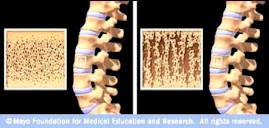
Osteoporotic Bone

Osteoporotic Bone
Source: www.mayoclinic.com

How Strontium Builds Bones

Strontium is a mineral that tends to accumulate in bone. Studies have shown that oral doses of strontium are a safe and effective way to prevent and reverse osteoporosis. Doses of 680 mg per day appear to be optimal. See my "For More Information About Strontium" links section.

Osteoporosis is caused by changes in bone production. In healthy young bones there is a constant cycle of new bone growth and bone removal. With age, more bone is removed and less new bone is produced. The bones become less dense and thus more fragile.

Scientists believe that strontium works in two ways. It may stimulate the replication of pre-osteoblasts, leading to an increase in osteoblasts (cells that build bone). Strontium also directly inhibits the activity of osteoclasts (cells that break down bone). The result is stronger bones.

When taking strontium, be sure to take 1200 mg calcium, 1000 IU vitamin D3, and 500 mg magnesium daily. It is best to take strontium late at night on an empty stomach. Calcium and strontium may compete with each other for absorption if taken together.