Study data showed a beneficial effect in preventing fractures, including in patients at high risk of fracture. Available data do not show evidence of an increased cardiovascular risk with Protelos/Osseor in patients who did not have a history of heart or circulatory problems.
Human Skeleton

Friday, February 21, 2014
Strontium Ranelate to Remain Available in EU
As of February 21, 2014, the European Medicines Agency
(EMA) has concluded its review of strontium ranelate (Protelos/Osseor). The EMA is
recommending the medication remain available in the European Union (EU) but further restricting its
use to patients who cannot be treated with other medicines approved for
osteoporosis due to contraindications or intolerance. These patients should continue
to be evaluated regularly by their doctor, and treatment should be stopped if
patients develop heart or circulatory problems. Patients with established,
current or past history of ischemic heart disease, peripheral arterial disease
and/or cerebrovascular disease, or those with uncontrolled hypertension should
not use the medicine.
Study data showed a beneficial effect in preventing fractures, including in patients at high risk of fracture. Available data do not show evidence of an increased cardiovascular risk with Protelos/Osseor in patients who did not have a history of heart or circulatory problems.
Study data showed a beneficial effect in preventing fractures, including in patients at high risk of fracture. Available data do not show evidence of an increased cardiovascular risk with Protelos/Osseor in patients who did not have a history of heart or circulatory problems.


Monday, February 10, 2014
Two New Studies Show Strontium Ranelate Not Associated with Increased Risk of MI
The safety of all centrally registered drugs is closely monitored by the European Medicines Agency (EMA) through a new committee, the Pharmacovigilance Risk Assessment Committee (PRAC), which was launched in October 2012. The procedures include regular submission of periodic safety update reports (PSURs).
In November 2012, the PSUR for strontium ranelate, which encompassed a number of new randomized clinical trials, included an updated assessment of the overall safety of the treatment and was submitted to the PRAC. The overall safety analyses showed an increased cardiovascular risk in patients treated with strontium ranelate. This ongoing process has led to a label change, and, in order to mitigate the cardiovascular risk, strontium ranelate is now contraindicated in patients with a history of cardiovascular disease, i.e. in patients with a history of ischemic heart disease, peripheral artery disease, and/or cerebrovascular disease and in those with uncontrolled hypertension.
In the light of these procedures, the results of two new studies were published together online on December 10, 2013, in Osteoporosis International. Both constitute retrospective observational studies conducted in databases of electronic healthcare records and were set up to analyze the cardiovascular risk associated with the prescription of strontium ranelate in real-life clinical practice in the UK and in Denmark.
The results of the studies are consistent on three points. First, observational data do NOT indicate that the use of strontium ranelate was associated with a significant increase in myocardial infarction (MI). Cooper et al. compared the risk of ischemic cardiac events in postmenopausal osteoporotic women who were currently receiving treatment with strontium ranelate—or had received it in the past—with the risk in those who had never received strontium ranelate. Current use or past use of strontium ranelate was not associated with any significant increase in the risk for three cardiovascular events: first MI, hospitalization with MI, or cardiovascular death. Abrahamsen et al. reported that the risk for MI in men and postmenopausal women was not significantly elevated, though they did find a very borderline result for stroke and cardiovascular death and a significant increase in risk for all-cause mortality.
Second, both studies highlighted substantial differences in patient profile of users of strontium ranelate compared with users of other osteoporosis treatments. Strontium ranelate patients are generally older and have more severe osteoporosis and a longer duration of disease. They also have more comorbidities, notably those related to elevated cardiovascular risk, such as cardiac failure (22 % in the Danish study), peripheral vascular disease (6 %), and cerebrovascular disease (11 %), with a combined prevalence of ischemic heart disease, peripheral vascular disease, and cerebrovascular disease of 19 % in women and 30 % in men. The cases of ischemic cardiac events in the UK study were also at substantially higher risk compared with the controls, with higher rates of history of hospitalization for MI (12 versus 4 %), ischemic heart disease (71 versus 24 %), peripheral artery disease (18 versus 7 %), and cerebrovascular disease (23 versus 15 %). This is a significant finding for clinical practice: the majority of cases of MI occurred in patients who would not be treated with the agent according to the new contraindications for strontium ranelate.
Third, while both studies are highly robust, neither managed to properly address the major challenge of the potential channeling bias by which more fragile or severe patients are being switched to strontium ranelate. Clearly, further research is warranted with appropriate handling of the remaining bias for a more complete evaluation of risk.
The role of the clinician is to select the best treatment for the patient’s profile and individual therapeutic objective, which should remain the prevention of osteoporotic fracture. By strictly applying the new contraindications for strontium ranelate, we can hope to achieve our primary goal of treating disease, preventing osteoporotic fracture, while markedly reducing the risk for side effects.
http://link.springer.com/article/10.1007/s00198-013-2583-3/fulltext.html
In November 2012, the PSUR for strontium ranelate, which encompassed a number of new randomized clinical trials, included an updated assessment of the overall safety of the treatment and was submitted to the PRAC. The overall safety analyses showed an increased cardiovascular risk in patients treated with strontium ranelate. This ongoing process has led to a label change, and, in order to mitigate the cardiovascular risk, strontium ranelate is now contraindicated in patients with a history of cardiovascular disease, i.e. in patients with a history of ischemic heart disease, peripheral artery disease, and/or cerebrovascular disease and in those with uncontrolled hypertension.
In the light of these procedures, the results of two new studies were published together online on December 10, 2013, in Osteoporosis International. Both constitute retrospective observational studies conducted in databases of electronic healthcare records and were set up to analyze the cardiovascular risk associated with the prescription of strontium ranelate in real-life clinical practice in the UK and in Denmark.
The results of the studies are consistent on three points. First, observational data do NOT indicate that the use of strontium ranelate was associated with a significant increase in myocardial infarction (MI). Cooper et al. compared the risk of ischemic cardiac events in postmenopausal osteoporotic women who were currently receiving treatment with strontium ranelate—or had received it in the past—with the risk in those who had never received strontium ranelate. Current use or past use of strontium ranelate was not associated with any significant increase in the risk for three cardiovascular events: first MI, hospitalization with MI, or cardiovascular death. Abrahamsen et al. reported that the risk for MI in men and postmenopausal women was not significantly elevated, though they did find a very borderline result for stroke and cardiovascular death and a significant increase in risk for all-cause mortality.
Second, both studies highlighted substantial differences in patient profile of users of strontium ranelate compared with users of other osteoporosis treatments. Strontium ranelate patients are generally older and have more severe osteoporosis and a longer duration of disease. They also have more comorbidities, notably those related to elevated cardiovascular risk, such as cardiac failure (22 % in the Danish study), peripheral vascular disease (6 %), and cerebrovascular disease (11 %), with a combined prevalence of ischemic heart disease, peripheral vascular disease, and cerebrovascular disease of 19 % in women and 30 % in men. The cases of ischemic cardiac events in the UK study were also at substantially higher risk compared with the controls, with higher rates of history of hospitalization for MI (12 versus 4 %), ischemic heart disease (71 versus 24 %), peripheral artery disease (18 versus 7 %), and cerebrovascular disease (23 versus 15 %). This is a significant finding for clinical practice: the majority of cases of MI occurred in patients who would not be treated with the agent according to the new contraindications for strontium ranelate.
Third, while both studies are highly robust, neither managed to properly address the major challenge of the potential channeling bias by which more fragile or severe patients are being switched to strontium ranelate. Clearly, further research is warranted with appropriate handling of the remaining bias for a more complete evaluation of risk.
The role of the clinician is to select the best treatment for the patient’s profile and individual therapeutic objective, which should remain the prevention of osteoporotic fracture. By strictly applying the new contraindications for strontium ranelate, we can hope to achieve our primary goal of treating disease, preventing osteoporotic fracture, while markedly reducing the risk for side effects.
http://link.springer.com/article/10.1007/s00198-013-2583-3/fulltext.html
Saturday, January 25, 2014
Final Opinion on Possible Suspension of Strontium Ranelate to Be Made in February
The recommendation of the European Medicine Agency's Pharmacovigilance Risk Assessment Committee that strontium ranelate (Protelos and Osseor) should no longer be used to treat osteoporosis is still under consideration by the Committee for Medicinal Products for Human Use (CHMP). At its January 2014 meeting the Committee requested additional information from the company to inform its scientific decision making. A final opinion will be made by the CHMP at its meeting in February 2014.
http://www.nos.org.uk/
Tuesday, January 14, 2014
What’s Behind the EMA’s Possible Suspension of Strontium Ranelate?
Here’s the official explanation:
"The EMA’s recommendations are based on an analysis of
pooled data from randomized studies in about 7,500 post-menopausal women with
osteoporosis. The results showed an increase in the risk of heart attack with
Protelos/Osseor as compared with placebo (1.7% versus 1.1 %), with a relative
risk of 1.6 (95% confidence interval, 1.07 to 2.38). There was also an
imbalance in the number of serious heart events seen with the medicine in two
other studies, one in men with osteoporosis and another in patients with osteoarthritis.
No increased risk in mortality was observed."
The increased risk of heart attacks did not show up in the
clinical trials of strontium ranelate, but it did show up in this analysis of
pooled dated from the trials. The results showed a relative risk of 1.6 for
heart attacks for the group on Protelos/Osseor compared to placebo. That result
means someone taking strontium ranelate has a 60 percent higher risk of heart
attacks than someone not taking the drug. That is quite significant.
Another reason the European Medicines Agency is considering
suspending strontium ranelate may be that the EMA is worried about the
possibility of experiencing with strontium ranelate what the French experienced
with Mediator, a drug manufactured by Servier, which also manufactures
strontium ranelate. The Mediator scandal became one of France’s biggest medical
scandals of recent years. French health experts now believe that Mediator, developed for
treating overweight diabetics, could have killed between 500 and 2,000 people between
1976 and November 2009, when it was finally banned for causing heart valve
problems and deaths. These numbers are disputed by Servier, which says there
are only three documented cases where death can be clearly attributed to
Mediator. In other cases, it says, aggravating factors were at work.
A final reason some believe is behind the EMA’s recommendations
and possible suspension is simply costs. Strontium ranelate is much more expensive
than alendronate (alendronic acid, generic Fosamax) for osteoporosis.
Sunday, January 12, 2014
Strontium Ranelate Prescriptions May Be Suspended in the European Union
The
European Medicines Agency's Pharmacovigilance Risk Assessment Committee (PRAC)
has recommended that strontium ranelate (Protelos/Osseor)
no longer be used to treat osteoporosis. The PRAC recommendation will now be
sent to the Agency's Committee for Medicinal Products for Human Use (CHMP), which
is expected to issue the Agency's final opinion at its meeting on January 20-23,
2014.
After further examination of the data, the PRAC noted that
there were four or more cases of both cardiac events and thromboembolism with
strontium ranelate for every 1000 patient-years compared with placebo. Moreover,
the drug is also associated with other adverse events, including serious skin
reactions, disturbances in consciousness, seizures, liver inflammation, and
reduced numbers of red blood cells.Although strontium ranelate does prevent about five nonspinal fractures, 15 spinal fractures, and 0.4 hip fractures for every 1000 patient-years, the committee decided that these benefits did not outweigh the potential risks and therefore the product's use should be suspended until further data support a benefit in a defined patient group.
In April 2013, the PRAC advised restrictions on use of the product, and those restrictions were endorsed by CHMP.
Servier, the manufacturer of strontium ranelate, acquired
the patent rights to market strontium malonate everywhere except in the United
States, where Osteologix retained the rights. Perhaps, now, Servier will be
more inclined to develop and market strontium malonate, which may not have the
problems associated with strontium ranelate. However, this is a possibility for
the future, not the present.
Strontium citrate, which also may not have the problems
associated with strontium ranelate, is currently an option for any patient in
the EU who wants to continue taking strontium, if strontium ranelate use is
suspended. I have been taking strontium
citrate continuously for six years with no problems. Wednesday, November 27, 2013
Strontium Ranelate and Strontium Citrate Studies
Numerous studies on sr. ranelate
found increasing BMD correlated with decreasing fracture risk (references #16
and #21-25 listed at the end of the Comb Study cited below). The French
pharmaceutical company, Servier, funded the research on sr. ranelate to market
the drug in Europe and elsewhere. Taking a drug through all the required
clinical trials takes millions of dollars and the resources of a large company
like Servier, which is present in 140 countries,
with more than 20,000 employees, including close to 3000 in Research and
Development (R&D).
Strontium
citrate is not patentable and is sold as a supplement in the U.S. and Canada. There
is no monetary incentive for a large pharmaceutical company to do research on
strontium citrate. Any research on sr. citrate is most likely to come from
universities that have obtained grants. We will continue to see small-scale
strontium citrate studies that will add to our knowledge. I do not expect to
see large-scale clinical trials involving thousands of subjects taking
strontium citrate over a period of several years. Those are the types of trials
needed to prove fracture-risk efficacy.
The
following is a review of some significant studies on strontium citrate:
In 2007, two American researchers
with SDM College of Dental Sciences in Buffalo, NY, presented
their work on osteoblasts at a dental conference. They wrote: “The data support the hypothesis that strontium citrate increases
the proliferative/alkaline phosphatase activity of human osteoblastic cells
from alveolar bone. The results validate previous research that has been done
with other forms of strontium in clinical studies and rodent calvarial cells
and indicates that strontium citrate could be a promising agent in treating
oral as well as systemic bone disorders.” The abstract of their paper is available here:
http://iadr.confex.com/iadr/2007orleans/techprogram/abstract_89231.htm
Subscribe to:
Posts (Atom)
Wandering Skeleton

Artist: Joel Hoekstra
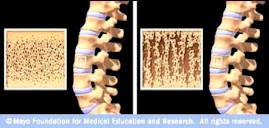
Osteoporotic Bone
Source: www.mayoclinic.com