Human Skeleton

Human Skeleton

WELCOME TO STRONTIUM FOR BONES BLOG

Have you experienced negative, and even dangerous, side effects from Fosamax (alendronate), Boniva (ibandronate), Actonel (risedronate), Reclast (zoledronic acid), Prolia (denosumab), Forteo (teriparatide), Tymlos (abaloparatide), or other drugs prescribed for osteoporosis? If you have, then rest assured there is a safe, effective treatment for this condition. Strontium, primarily in the form of strontium citrate, is taken orally once a day.

Visitors to my blog can leave comments or ask questions and can remain anonymous, if they wish. Their comments are relayed to my g-mail inbox. Below each post, the number of comments for that post is cited and underlined because it is a link. By clicking on that link below any post, a window opens so that a visitor can leave a comment. Ideally, visitors leave comments on posts most relevant to their comments. All comments to my posts are moderated by me.

Browse the posts and visit the link library of references.


Blog Archive

Wednesday, December 22, 2021

Summary Safety Review - Strontium - Risk of Heart and Circulatory Side Effects

Product

Oral natural health products containing strontium

Potential Safety Issue

Serious heart and circulatory side effects

Key Messages

·       Strontium is a naturally occurring mineral available as an ingredient in over-the-counter (OTC) natural health products. It is sold in various salt forms and can be used to help support bone health.

·       As a result of a European Medicines Agency's safety review (EMA) on the prescription dose of the ranelate form of strontium (strontium ranelate), Health Canada conducted a review of strontium. The EMA safety review found that the dose of 680 mg per day was beneficial for severe osteoporosis, but that it should not be used in patients who have pre-existing heart or circulatory problems.

·       Health Canada's review did not find information available on cardiovascular risk with the strontium ranelate form at doses less than 680 mg strontium per day, or with other non-ranelate forms of strontium at any dose. While uncertainties remain, Health Canada is taking a precautionary approach and recommending updates to the labels of products containing strontium, including informing consumers not to use these products if they have pre-existing heart or circulatory problems, such as heart attack, stroke or blood clot.

Overview

The European Medicines Agency completed a safety review of strontium ranelate, a drug available by prescription only in Europe at a dose of 680 mg per day and used to treat osteoporosis that is considered severe due to the high risk of fracture. Analysis demonstrated that the increased risk of heart and circulatory effects was only significant in patients with a current or past history of heart and circulatory problems. Health Canada started its safety review because the risk of heart and circulatory side effects is a serious health issue, and because strontium is found in licensed natural health products as strontium salts, including strontium citrate, strontium lactate, and strontium gluconate.

Use in Canada

·       In Canada, strontium is a mineral and classified as a natural health product ingredient. It is found in licensed natural health products in various salt forms, including strontium citrate, strontium lactate, and strontium gluconate.

·       At the time of the review, Health Canada had licensed 30 natural health products containing strontium (included in oral multi-ingredient products and in toothpastes). Of these, 16 provided daily doses of elemental strontium ranging from 4 mg up to 682 mg, in the forms of strontium citrate, strontium lactate, or strontium gluconate.

Safety Review Findings

·       There were no CanadianFootnote a or international reports of heart or circulatory side effects associated with the strontium salt forms licensed in Canada, including strontium citrate, strontium lactate, and strontium gluconate, at the time of the review.

·       Health Canada's review determined that strontium is the only component of strontium salt combinations that plays an active role in the body, while the salt parts like ranelate, lactate, citrate, and gluconate help with absorption of the strontium. There is not enough information available to compare how the different strontium salt combinations are absorbed in the body or the safety risk of heart or circulatory side effects with low dose strontium.

·       Health Canada's review did not find information available on cardiovascular risk with the strontium ranelate form at doses less than 680 mg/ day, or with other non-ranelate forms of strontium at any dose. While uncertainties remain, Health Canada is taking a precautionary approach and considers that strontium, regardless of the form it comes in, may have a potential risk of cardiovascular side effects in people who are already at risk.

Conclusions and Actions

·       Although available evidence for heart and circulatory side effects involved strontium ranelate taken at 680 mg per day only, a risk at lower doses of strontium ranelate and with other strontium salt combinations could not be ruled out.

·       While uncertainties remain, Health Canada is taking a precautionary approach and recommending that licence holders of those products providing adults with more than 4 mg of elemental strontium per day update the labelling to inform consumers not to use these products if they have, or are at high risk for heart disease, circulatory problems, or blood clots.

·       Health Canada has issued an Information Update to inform Canadians about the label revisions and potential risk of cardiovascular side effects.

·       Health Canada will continue to monitor safety information involving all salt forms of strontium, as it does for all health products on the Canadian market, and will take additional actions, if warranted.

Additional Information

The analysis that contributed to this safety review included scientific and medical literature, Canadian and international reports of side effects, and what is known about the use of this strontium both in Canada and internationally.

For additional information, contact the Marketed Health Products Directorate.

Footnote a

Canadian reports can be accessed through the Canada Vigilance Online Database.


https://www.canada.ca/en/health-canada/services/drugs-health-products/medeffect-canada/safety-reviews/summary-safety-review-strontium-risk-heart-circulatory.html


Saturday, June 19, 2021

How to Lose Weight Without Losing Bone

A higher-protein diet that emphasizes lean meats and low-fat dairy foods as sources of protein and calcium can mean weight loss without bone loss. The evidence is in bone scans taken throughout a new University of Illinois study. 

This is an important finding because many people, especially women in mid-life, are concerned with both obesity and osteoporosis. However, treating obesity often increases risk for osteoporosis because many people lose bone mass when they lose weight.

The research compared the results of a high-protein, dairy-intensive diet with a conventional weight-loss diet based on the food-guide pyramid. 

Study co-author Donald Layman, a U of I professor of nutrition, has previously reported that protein-rich weight-loss diets preserve muscle mass, help lower blood sugar and lipids, and improve body composition by targeting weight carried in the abdomen.

In the recent study, Layman's diet prescribed approximately 30 percent of all calories from protein, with an emphasis on lean meats and low-fat dairy products.

The scientists recruited and randomized 130 middle-aged, overweight persons at two sites--the U of I and Pennsylvania State University. Participants then followed either the higher-protein weight-loss diet or a conventional higher-carbohydrate weight-loss diet based on the food-guide pyramid for four months of active weight loss followed by eight months of weight maintenance.

Essentially, lean meats and low-fat milk, cheese, yogurt, etc. were substituted for some of the high-carbohydrate foods in the food-pyramid diet. Participants also ate five servings of vegetables and two to three servings of fruit each day.

Bone mineral content and density were measured with DXA scans of the whole body, lumbar spine, and hip at the beginning of the study, at four months, at eight months, and at the end of the 12-month period.

In the higher-protein group, bone density remained fairly stable, but bone health declined over time in the group that followed the conventional higher-carbohydrate diet. A statistically significant treatment effect favored the higher-protein diet group.

The combination and/or interaction of dietary protein, calcium from dairy, and the additional vitamin D that fortifies dairy products appears to protect bone health during weight loss.

Because higher-protein diets have been associated with elevated urinary calcium levels, some scientists have feared that these diets cause bone demineralization.

The U of I team measured these levels at the beginning and eight months into the study. Although the researchers did note increased amounts of urinary calcium in the higher-protein group, they attributed the source of the increased calcium to improved intestinal absorption of calcium rather than bone loss.

Other recent studies using radio-labeled calcium have shown that the higher urinary calcium levels associated with higher-protein diets are not coming from bone as some researchers had believed.

https://www.sciencedaily.com/releases/2008/06/080605113006.htm


Thursday, June 17, 2021

Taking Calcium and Magnesium Together

I always grin to myself when I read about not taking calcium and magnesium together because the two are together in many foods. It is true that if you take a large amount of calcium (e.g., 500 mg) with a smaller amount of magnesium (e.g., 250 mg), you will not absorb as much of the magnesium, but you will probably absorb the calcium better. We need magnesium to absorb and metabolize calcium and vitamin D. Below is a chart of calcium and magnesium in foods.  

Calcium and Magnesium in Foods (milligrams)

Collards (1 cup, boiled)
268 Ca
40 Mg
Orange juice, calcium-fortified (1 cup)
349 Ca
27 Mg
Oatmeal, fortified instant (1 packet)
98 Ca
36 Mg
Figs, dried (10 medium)
136 Ca
57 Mg
Tofu, calcium-set (1/2 cup)
861 Ca
73 Mg
Spinach (1 cup, boiled)
245 Ca
157 Mg
Soybeans (1 cup, boiled)
261 Ca
108 Mg
White beans (1 cup, boiled)
161 Ca
113 Mg
Mustard greens (1 cup, boiled)
165 Ca
18 Mg
Navy beans (1 cup, boiled)
128 Ca
96 Mg
Great northern beans (1 cup, boiled)
120 Ca
88 Mg
Black turtle beans (1 cup, boiled)
102 Ca
91 Mg
Swiss chard (1 cup, boiled)
102 Ca
152 Mg
Broccoli (1 cup, boiled)
62 Ca
33 Mg
Kale (1 cup boiled)
94 Ca
23 Mg
English muffin
101 Ca
21 Mg
Butternut squash (1 cup, boiled)
84 Ca
60 Mg
Pinto beans (1 cup, boiled)
79 Ca
86 Mg
Chick peas (1 cup, canned)
109 Ca
61 Mg
Sweet potato (1 cup, boiled)
76 Ca
54 Mg
Green beans (1 cup, boiled)
55 Ca
22 Mg
Barley (1 cup)
61 Ca
245 Mg
Brussels sprouts (8 sprouts)
60 Ca 
34 Mg
Navel orange (1 medium)
60 Ca
15 Mg
Raisins (2/3 cup)
54 Ca
35 Mg
Source: U.S. Department of Agriculture, Agricultural Research Service. 2011. USDA National Nutrient Database for Standard Reference, Release 26. 
*Nutrient Data Laboratory Home Page, http://ndb.nal.usda.gov/
https://www.pcrm.org/good-nutrition/nutrition-information/health...


    Saturday, March 6, 2021

    Defect in Renal Calcium Conservation and Postmenopausal Osteoporosis

    Although all postmenopausal women are estrogen deficient, women who have postmenopausal osteoporosis may have a defect, in addition to estrogen deficiency, that accounts for their higher rates of bone resorption and greater bone loss, relative to those who do not. To test the hypothesis that one defect is an impairment in renal calcium conservation, we measured renal calcium transport in 19 osteoporotic and 19 normal postmenopausal women, whose ages were 70 yr (range, 67–72) and 72 yr (range, 69–74), respectively. There was no difference between groups in values for serum ionized calcium and PTH concentrations or in renal filtered load of calcium. However, before PTH infusion, the osteoporotic women had lower values for tubular reabsorption of calcium (TRCa) of 96.8% vs. 98.0% and higher urinary calcium excretion of 0.194 mg/dL of glomerular filtrate (GF) vs. 0.125 mg/dL of GF than the normal women. After infusion of 200 U of synthetic PTH, TRCa increased and calcium excretion decreased comparably in both groups, so that the differences between groups after intervention remained: for TRCa, 98.3% vs.98.9%; and for calcium excretion, 0.099 mg/dL of GF vs. 0.066 mg/dL of GF. In conclusion, postmenopausal women with osteoporosis have a PTH-independent defect in renal calcium conservation. This defect is of sufficient magnitude to contribute to the greater negative calcium balance in postmenopausal women with osteoporosis vs. their postmenopausal peers.

    https://academic.oup.com/jcem/article/83/6/1916/2865261


    Sunday, October 4, 2020

    Supplements to Take Along with Strontium

    Both the Combination of Micronutrients for Bone (COMB) study and Melatonin-Micronutrients Osteopenia Treatment Study (MOTS) investigated using strontium in conjunction with other supplements. You cannot take strontium without taking sufficient calcium (from food and/or supplements) and vitamin D. You also need magnesium, which was not included in the MOTS protocol, and was provided at a very low dosage in the COMB study. 


    The COMB study for osteoporosis: 

    strontium citrate (680 mg) 

    D3 (2000 IU) 

    dietary sources of calcium

    magnesium (25 mg) 

    K2 (MK7) (100 mcg) 

    DHA (250 mg) 

    daily impact exercises were encouraged. 


    MOTS for osteopenia:

    strontium citrate (450 mg)

    D3 (2000 IU)

    K2 (MK7) (60 mcg)

    melatonin, 5 mg 

    These ingredients were called MSDK for melatonin, strontium citrate, vitamins D3 and K2.

    In addition to study medication, participants were allowed to take less than 1000 IU D3 and less than 1000 mg of calcium. Nearly 87% of the subjects in the MOTS study were taking either calcium/vitamin D3, multivitamins, and/or other dietary supplements.


    The BoneLady uses her own protocol for osteoporosis: 

    strontium citrate (682 mg),

    D3 (1300 IU)

    calcium (500 mg tablet, about 700 mg from dietary sources) 

    magnesium (450 mg)

    daily low-impact exercises  

    I do not take DHA, K2, or melatonin. I do take several other supplements: https://strontiumforbones.blogspot.com/2020/07/my-current-supplements.html


    Friday, October 2, 2020

    Strontium Citrate Studies

    There have been two one-year studies on SC (COMB and MOTS), several case studies, and two tests on monitoring bone strontium intake.

    Combination of Micronutrients for Bone (COMB) Study

    https://www.hindawi.com/journals/jeph/2012/354151/

    Melatonin-micronutrients Osteopenia Treatment Study (MOTS)

    https://www.ncbi.nlm.nih.gov/pmc/articles/PMC5310667/

    BMD increases by Varying Amounts with Strontium Citrate and Decreases by Varying Amounts after Discontinuation (three case studies)

    http://strontiumforbones.blogspot.com/2018/02/bmd-increases-by-varying-amounts-with.html

    In Memory of Sara Shackleford DeHart (links to her three case studies)

    http://strontiumforbones.blogspot.com/2018/01/in-memory-of-sara-shackleford-dehart.html

    Monitoring bone strontium intake in osteoporotic females self-supplementing with strontium citrate  with a novel in-vivo X-ray fluorescence based diagnostic tool

    http://strontiumforbones.blogspot.com/2014/10/monitoring-bone-st...

    Monitoring bone strontium levels of an osteoporotic subject due to self-administration of strontium citrate with a novel diagnostic tool, in-vivo XRF: a case study

    http://strontiumforbones.blogspot.com/2014/10/monitoring-bone-st...


      Wandering Skeleton

      Wandering Skeleton
      Artist: Joel Hoekstra

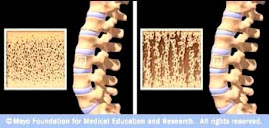
      Osteoporotic Bone

      Osteoporotic Bone
      Source: www.mayoclinic.com

      How Strontium Builds Bones

      Strontium is a mineral that tends to accumulate in bone. Studies have shown that oral doses of strontium are a safe and effective way to prevent and reverse osteoporosis. Doses of 680 mg per day appear to be optimal. See my "For More Information About Strontium" links section.

      Osteoporosis is caused by changes in bone production. In healthy young bones there is a constant cycle of new bone growth and bone removal. With age, more bone is removed and less new bone is produced. The bones become less dense and thus more fragile.

      Scientists believe that strontium works in two ways. It may stimulate the replication of pre-osteoblasts, leading to an increase in osteoblasts (cells that build bone). Strontium also directly inhibits the activity of osteoclasts (cells that break down bone). The result is stronger bones.

      When taking strontium, be sure to take 1200 mg calcium, 1000 IU vitamin D3, and 500 mg magnesium daily. It is best to take strontium late at night on an empty stomach. Calcium and strontium may compete with each other for absorption if taken together.