Introduction
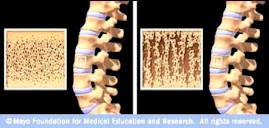
Osteoporosis is a condition involving the thinning of bones (bone
demineralization), leaving them brittle and more susceptible to fracture.
Ninety nice percent of calcium is stored in the bones, so sufficient calcium is
important in order to maintain or reach peak bone mass (PBM).
In the UK, an estimated 3 million people are suffering from osteoporosis,
with 1 in 2 women and 1 in 3 men over 50 years old breaking a bone at least
once, mainly due to poor bone health. Each month, 1,150 people die as a result
of a hip fracture. Osteoporosis mainly effects the older population, with 19.8
million people over the age of 50 in the UK. Since the 1960’s there has been a
7 fold increase in the number of osteoporosis cases. Each year osteoporosis
costs the NHS approximately 2.3 billion pounds.
Who is most at risk of osteoporosis?
The older population are more at risk of osteoporosis because bones
naturally become thinner as we get older. Post-menopausal women are
particularly at risk of osteoporosis because of the decrease in the female
hormone, estrogen. Those with higher salt intakes are increasing the amount of
bone demineralization that takes place.
Studies have also demonstrated that there is a correlation between salt
intake and calcium excretion in young and adolescent girls. It has been
suggested that this may result in a reduced peak bone mass, which would
increase the risk of osteoporosis later in life. Consuming a low salt
diet during adolescent years may therefore be important, to reduce the risk of
osteoporosis later in life.
How does Salt Contribute?
Studies dating back to the 1980’s have found possible links between salt
intake and urinary calcium (Ca) excretion.

Figure 1 – Changes in hip bone density with different urinary sodium
excretions.
|
A high salt intake increases calcium losses in the urine (calciuria), some
of which will be directly from the bones. One study found that for each
100mmol increase in salt intake, urinary Ca is increased by 1.4mmol. If
this loss is assumed to be from the bone, then this equates to about 1% extra
loss of bone each year. Over extended periods this would lead to
the weakening of bones and ultimately osteoporosis.
Both epidemiological studies and randomized trials have shown that a
decrease in salt intake reduces urinary calcium excretion. A study in
post-menopausal women showed that the loss of hip bone density over 2 years
was related to 24-hour urinary sodium at entry to the study, and was as
strong as that relating to calcium intake. It was calculated that a reduction
in salt intake from 10 to 5 g/day would have the same effect on hip bone
density as an increase in calcium intake of 1000mg/day, a difficult amount to
achieve without resorting to supplements (Fig 1). Another study has
suggested that in postmenopausal women with a sodium intake of more than or
equal to 3.4g/day (8.5g salt), a reduction in salt intake would benefit their
bone health.
|
Blood Pressure, Osteoporosis and Kidney Stones
Salt intake and blood pressure are strongly linked, and it is also
believed that patients with high blood pressure excrete more calcium in the
urine and are, therefore, at higher risk of osteoporosis and kidney stones.
Recently, a study showed sodium to be a major linking factor between
blood pressure and osteoporosis. The authors found that hip and spine Bone
Mass Density (BMD) were inversely correlated with a higher sodium excretion,
i.e. the higher the salt intake, the lower the BMD. They concluded that the
increase in calcium excretion is obligatory as a result of the increased
sodium in the diet (Fig 2). Another study showed that a 20mmHg
increase in BP is associated with 0.28mmol/day increase in Urinary Ca.
|
Figure 2 – the link
between salt intake, blood pressure and bone mineral loss.
|
Current Salt Intake & Dietary Advice
Almost everyone in the UK (and the rest of the Western world) eats too much
salt. The daily recommended amount in the UK is no more than 6 grams a day; the
current average salt intake is 8.6g salt a day although many people are eating
more than this.
People with or considered at risk of osteoporosis should ensure that they
keep their salt intake below the recommended maximum of 6g. This can be achieved
by simple changes, such as consuming less processed foods and checking product
labels before purchase. Consuming low salt dairy products such as milk will
also help maintain bone mass. Caffeine and fizzy drinks are thought to reduce
bone mass, and therefore should be kept to a minimum. An increase in Vitamin D,
Zinc and Copper may also be of help.
The original article with references is available here:
Also see my next post, "Americans Consume Too Much Sodium (Salt)," for information about salt intake in the U.S.A.