On May 25, 2010, the U.S. Food and Drug Administration (FDA) announced that it would add safety information about the possible increased risk for hip, wrist, and spine fractures to the prescription and over-the-counter (OTC) labels for Proton Pump Inhibitors (PPIs), which include esomeprazole (Nexium), omeprazole (Prilosec, Zegerid), and lansoprazole (Prevacid).
PPIs treat conditions such as gastroesophageal reflux disease (GERD), stomach and small intestine ulcers, and inflammation of the esophagus. Ironically, PPIs are commonly prescribed to treat side effects, such as dyspepsia or heartburn, commonly associated with bisphosphonates.
Dr. Amar R. Deshpande, an assistant professor of gastroenterology at the University of Miami Miller School of Medicine, said PPIs may disrupt the body's ability to absorb calcium, which, in turn, can increase the risk for fractures. He also believes this class of drugs is overused and often taken for too long.
The FDA is advising consumers to not stop taking PPIs until they have consulted with their doctors. However, patients should be aware of the increased risk for fractures. The highest risk was seen in people taking higher doses of PPIs, or among those who took them for a year or more. For people taking OTC proton pump inhibitors, the FDA said they should only be taken for 14 days to help ease frequent heartburn. If heartburn continues, people should see their doctor. Under no circumstances should over-the-counter PPIs be taken for more than three 14-day periods in a year, the agency said.
Human Skeleton

Friday, May 28, 2010


Wednesday, May 26, 2010
Strontium Ranelate Reduces Fracture Risk In The Elderly
According to a study by Ego Seeman et al., strontium ranelate produces an early and sustained reduction of both vertebral and nonvertebral fractures in women 80 years of age and older. More than 30% of all fragility fractures and 60% of hip fractures occur in women aged 80 and older, because of the high prevalence of osteoporosis and high incidence of falls. The aim of this study was to determine whether strontium ranelate, an agent that reduces the risk of vertebral and nonvertebral fractures in postmenopausal women >50 years of age, also reduces fractures in the elderly.
An analysis based on pooled data from two international, phase III, randomized, placebo-controlled, double-blind studies (the Spinal Osteoporosis Therapeutic Intervention [SOTI] and TReatment Of Peripheral OSteoporosis [TROPOS]) included 1488 women between 80 and 100 years of age followed for three years. Yearly spinal X-rays were performed in 895 patients. Only radiographically confirmed nonvertebral fractures were included.
The risk of vertebral, nonvertebral, and clinical (symptomatic vertebral and nonvertebral) fractures was reduced within one year by 59% (p = 0.002), 41% (p = 0.027), and 37% (p = 0.012), respectively. At the end of three years, vertebral, nonvertebral, and clinical fracture risks were reduced by 32% (p = 0.013), 31% (p =0.011), and 22% (p = 0.040), respectively. The medication was well tolerated, and the safety profile was similar to that in younger patients.
The authors concluded that treatment with strontium ranelate safely reduces the risk of vertebral and nonvertebral fractures in women with osteoporosis aged 80 and older. Even in the oldest old, it is not too late to reduce fracture risk.
J Bone Miner Res 2006;21:1113–1120. Published online on May 8, 2006; doi: 10.1359/JBMR.060404
An analysis based on pooled data from two international, phase III, randomized, placebo-controlled, double-blind studies (the Spinal Osteoporosis Therapeutic Intervention [SOTI] and TReatment Of Peripheral OSteoporosis [TROPOS]) included 1488 women between 80 and 100 years of age followed for three years. Yearly spinal X-rays were performed in 895 patients. Only radiographically confirmed nonvertebral fractures were included.
The risk of vertebral, nonvertebral, and clinical (symptomatic vertebral and nonvertebral) fractures was reduced within one year by 59% (p = 0.002), 41% (p = 0.027), and 37% (p = 0.012), respectively. At the end of three years, vertebral, nonvertebral, and clinical fracture risks were reduced by 32% (p = 0.013), 31% (p =0.011), and 22% (p = 0.040), respectively. The medication was well tolerated, and the safety profile was similar to that in younger patients.
The authors concluded that treatment with strontium ranelate safely reduces the risk of vertebral and nonvertebral fractures in women with osteoporosis aged 80 and older. Even in the oldest old, it is not too late to reduce fracture risk.
J Bone Miner Res 2006;21:1113–1120. Published online on May 8, 2006; doi: 10.1359/JBMR.060404
Tuesday, March 30, 2010
How Much Calcium Are You Getting?
To determine how much calcium to supplement, first figure out how much calcium you are already getting. The International Osteoporosis Foundation (IOF) has a calcium calculator to find out if you are getting enough calcium in your diet each day. Remember, women ages 19 to 50 need at least 1,000 mg of calcium daily. Women over 50 need at least 1,200 mg. Here is the link to the calculator:
http://www.iofbonehealth.org/patients-public/calcium-calculator.html
http://www.iofbonehealth.org/patients-public/calcium-calculator.html
Monday, March 29, 2010
Strontium With Insufficient Calcium and Magnesium , A Case Study
In 2008, Sara S. DeHart, MSN, Ph.D, published "Strontium and Osteoporosis: A Treatment Not Offered to American Women." The article presents her own case study of how she was treated for osteopenia by traditional medicine while continuing to fracture until she learned to treat herself with strontium citrate. I want to emphasize what she wrote about the importance of taking adequate levels of calcium and magnesium, along with the optimum levels of strontium citrate, and what happened to her before she realized this relationship.
"By that time (2006), I’d been investigating alternative therapies and added Strontium Bone Maker (1000 mg strontium citrate, 340 mg elemental strontium per day). I later increased the dosage to 2000 mg daily (680 mg elemental strontium), which is the dosage used in the strontium ranelate clinical trials (Meunier, Roux, Seeman, et al. 2004). The larger dosage led to a drop in my serum calcium level that was sufficient to cause muscle tetany in both hands. (Note I discontinued Actonel in 2007 and the muscle pain decreased significantly.) The larger dosage of strontium with insufficient calcium and magnesium caused the serum calcium level to drop. I increased my calcium + magnesium dosage and the serum calcium and ionized calcium levels returned to normal."
"Currently I am taking Osteo-MINS AM from the Tahoma Clinic in Renton, Washington, (700 mg per 3 capsules), though I have also used Strontium Support (AOR) from a Canadian firm. The Osteo-MINS AM appears to be the better formulation for my highly sensitive muscles. I take strontium two hours before breakfast so that it has cleared my digestive track prior to taking food or any calcium/magnesium. This is an important part of my supplementation program because without it my serum calcium level will drop and that has an effect on muscles throughout the body."
To read the entire article, see http://www.intrepidreport.com/archives/2608
"By that time (2006), I’d been investigating alternative therapies and added Strontium Bone Maker (1000 mg strontium citrate, 340 mg elemental strontium per day). I later increased the dosage to 2000 mg daily (680 mg elemental strontium), which is the dosage used in the strontium ranelate clinical trials (Meunier, Roux, Seeman, et al. 2004). The larger dosage led to a drop in my serum calcium level that was sufficient to cause muscle tetany in both hands. (Note I discontinued Actonel in 2007 and the muscle pain decreased significantly.) The larger dosage of strontium with insufficient calcium and magnesium caused the serum calcium level to drop. I increased my calcium + magnesium dosage and the serum calcium and ionized calcium levels returned to normal."
"Currently I am taking Osteo-MINS AM from the Tahoma Clinic in Renton, Washington, (700 mg per 3 capsules), though I have also used Strontium Support (AOR) from a Canadian firm. The Osteo-MINS AM appears to be the better formulation for my highly sensitive muscles. I take strontium two hours before breakfast so that it has cleared my digestive track prior to taking food or any calcium/magnesium. This is an important part of my supplementation program because without it my serum calcium level will drop and that has an effect on muscles throughout the body."
To read the entire article, see http://www.intrepidreport.com/archives/2608
Monday, March 22, 2010
Strontium And Calcium
For patients taking any strontium salt (e.g., strontium ranelate, strontium citrate) for osteoporosis, it is recommended that you obtain an adequate calcium intake as part of a well balanced diet. If you have difficulties obtaining adequate calcium from your diet, a calcium supplement may also be required. (All patients participating in the strontium ranelate research trials had an adequate calcium intake.) Take your calcium supplement or calcium-rich food at least two hours before or two hours after you have taken the strontium because calcium will prevent the absorption of strontium.
There is an upper limit to the amount of calcium that can be taken safely. It is recommended that you do not exceed 2000 - 2500 mg of calcium per day included in your food, drink and supplements. Consistently exceeding the upper limit may increase your risk of medical problems, including a high level of calcium in the blood (milk alkali syndrome), and may interfere with the absorption of other minerals such as iron. If you have a history of kidney stones, consuming a diet rich in calcium will not increase your risk of further stone formation. Most renal doctors do not restrict calcium intake for their patients these days.
Splitting your calcium intake into 500-mg doses is advisable, as the gut would not be able to absorb 1000 mg all at once. To maximize the absorption of your calcium tablet, take it at meal times with or after food. If you take iron tablets for other health reasons, avoid taking calcium at the same time by staggering the tablets throughout the day. This will ensure that both minerals are fully absorbed.
This information is from the National Osteoporosis Society, located in the United Kingdom, where strontium ranelate (Protelos) is an approved prescription drug for the treatment of postmenopausal osteoporosis. To obtain NOS publications and Information Sheets, go to www.nos.org.uk.
There is an upper limit to the amount of calcium that can be taken safely. It is recommended that you do not exceed 2000 - 2500 mg of calcium per day included in your food, drink and supplements. Consistently exceeding the upper limit may increase your risk of medical problems, including a high level of calcium in the blood (milk alkali syndrome), and may interfere with the absorption of other minerals such as iron. If you have a history of kidney stones, consuming a diet rich in calcium will not increase your risk of further stone formation. Most renal doctors do not restrict calcium intake for their patients these days.
Splitting your calcium intake into 500-mg doses is advisable, as the gut would not be able to absorb 1000 mg all at once. To maximize the absorption of your calcium tablet, take it at meal times with or after food. If you take iron tablets for other health reasons, avoid taking calcium at the same time by staggering the tablets throughout the day. This will ensure that both minerals are fully absorbed.
This information is from the National Osteoporosis Society, located in the United Kingdom, where strontium ranelate (Protelos) is an approved prescription drug for the treatment of postmenopausal osteoporosis. To obtain NOS publications and Information Sheets, go to www.nos.org.uk.
Thursday, March 11, 2010
FDA Safety Announcement About Bisphosphonates
Most readers who visit my blog have either already stopped taking bisphosphonates for osteoporosis or are seriously contemplating doing so and switching to strontium or something else. ABC News has recently reported on femur fractures occurring in some patients following several years on bisphosphonates. In response to those news reports and the outcry from viewers, on 03/10/2010, the FDA issued a Drug Safety Communication on bisphosphonates and femur fractures. Here is part of that announcement:
"Patients and healthcare professionals may have questions about oral bisphosphonate medications and atypical subtrochanteric femur fractures – fractures in the bone just below the hip joint. Oral bisphosphonates are commonly prescribed to prevent or treat osteoporosis in postmenopausal women. Common brand names of medications in this class include Fosamax, Actonel, Boniva, and Reclast."
"Recent news reports have raised the question about whether there is an increased risk of this type of fracture in patients with osteoporosis using these medications. At this point, the data that FDA has reviewed have not shown a clear connection between bisphosphonate use and a risk of atypical subtrochanteric femur fractures. FDA is working closely with outside experts, including members of the recently convened American Society of Bone and Mineral Research Subtrochanteric Femoral Fracture Task Force, to gather additional information that may provide more insight into this issue." See the entire FDA announcement at: http://www.fda.gov/Drugs/DrugSafety/PostmarketDrugSafetyInformationforPatientsandProviders/ucm203891.htm
Report any adverse events with the use of oral bisphosphonates to FDA's MedWatch program:
1-800-332-1088
1-800-FDA-0178 Fax
MedWatch Online2
Regular Mail: Use postage-paid FDA Form 35003
Mail to: MedWatch 5600 Fishers Lane
Rockville, MD 20852-9787
"Patients and healthcare professionals may have questions about oral bisphosphonate medications and atypical subtrochanteric femur fractures – fractures in the bone just below the hip joint. Oral bisphosphonates are commonly prescribed to prevent or treat osteoporosis in postmenopausal women. Common brand names of medications in this class include Fosamax, Actonel, Boniva, and Reclast."
"Recent news reports have raised the question about whether there is an increased risk of this type of fracture in patients with osteoporosis using these medications. At this point, the data that FDA has reviewed have not shown a clear connection between bisphosphonate use and a risk of atypical subtrochanteric femur fractures. FDA is working closely with outside experts, including members of the recently convened American Society of Bone and Mineral Research Subtrochanteric Femoral Fracture Task Force, to gather additional information that may provide more insight into this issue." See the entire FDA announcement at: http://www.fda.gov/Drugs/DrugSafety/PostmarketDrugSafetyInformationforPatientsandProviders/ucm203891.htm
Report any adverse events with the use of oral bisphosphonates to FDA's MedWatch program:
1-800-332-1088
1-800-FDA-0178 Fax
MedWatch Online2
Regular Mail: Use postage-paid FDA Form 35003
Mail to: MedWatch 5600 Fishers Lane
Rockville, MD 20852-9787
Subscribe to:
Posts (Atom)
Wandering Skeleton

Artist: Joel Hoekstra
Osteoporotic Bone
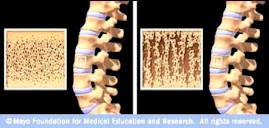
Source: www.mayoclinic.com